










Many individuals seeking body contouring face a common dilemma: is the issue stubborn fat or loose skin? If you are looking to refine your silhouette, choosing the right procedure is essential for achieving your desired outcome. For those seeking targeted fat removal, booking a consultation for vaser liposuction in Bristol offers a modern, minimally invasive solution. However, if excess skin is your primary concern, a surgical lift may be necessary instead. Preparing for your initial consultation helps you ask the right questions and align your expectations with what clinical procedures can realistically achieve. Understanding the fundamental differences between fat reduction and skin tightening ensures you select the safest, most effective path forward.
Understanding the Difference Between Fat and Skin Laxity
Before meeting with a surgeon, you must understand what each treatment actually targets. Liposuction procedures focus solely on removing subcutaneous fat deposits beneath the skin. If you have good skin elasticity, your skin will naturally shrink and conform to your new, slimmer contours after fat removal. However, if your skin has lost its elasticity due to ageing, significant weight loss, or pregnancy, removing the underlying fat can leave you with loose, sagging folds.
Skin excision, on the other hand, physically removes this stretched-out tissue. While advanced energy-based devices can provide mild tissue contraction, they cannot fix severe laxity. During your assessment, your practitioner will perform a pinch test to evaluate your skin quality. If the tissue bounces back quickly, you are likely a good candidate for fat reduction alone. If the skin remains stretched or feels thin and paper-like, surgical excision is usually the only way to achieve a firm, smooth appearance. Knowing this distinction beforehand prevents disappointment and helps you focus your consultation on the most appropriate surgical techniques for your body type. To ensure you get the best outcome, ask your surgeon to demonstrate how your skin will behave post-procedure. They can simulate the potential results of both approaches during your physical examination, giving you a clearer picture of whether you need volume reduction or structural tightening.
Evaluating Your Aesthetic Goals and Problem Areas
Different areas of the body respond uniquely to body contouring treatments. For instance, stubborn fat on the abdomen, flanks, or chin often responds beautifully to ultrasound-assisted fat removal. If you are targeting these areas, seeking vaser liposuction in Bristol allows you to address localised fat pockets with minimal downtime. The ultrasound energy selectively breaks down fat cells while preserving surrounding nerves and blood vessels, making it highly effective for definition.
Conversely, areas like the upper arms often suffer from severe skin sagging, commonly referred to as “bat wings.” If you have a significant amount of loose skin in this area, fat removal alone will worsen the sagging appearance. In such cases, undergoing arm reduction surgery in the UK is the standard clinical recommendation. This surgical procedure, also known as a brachioplasty, removes the redundant skin and tightens the underlying supportive tissue. While it results in a scar along the inner arm, it delivers a toned, contoured shape that liposuction alone simply cannot achieve. By identifying your primary trouble zones and assessing whether they suffer from excess volume or excess skin, you can enter your consultation with a clear, realistic set of aesthetic goals.
Assessing Scarring and Recovery Timelines
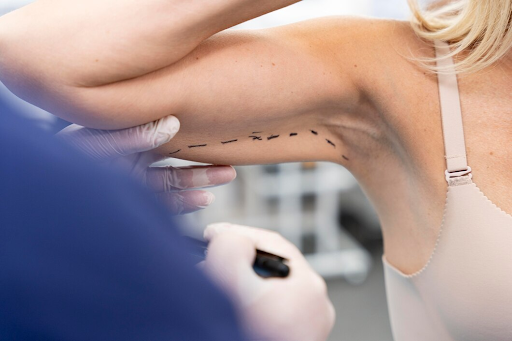
Another crucial factor in your decision-making process is your tolerance for scars and downtime. Skin excision procedures require incisions to remove the redundant tissue, which inevitably leaves permanent scars. For example, patients undergoing arm reduction surgery in the UK must accept a scar running from the armpit to the elbow. While skilled surgeons place these incisions as discretely as possible, managing post-operative scars requires commitment, including silicone gel applications and sun protection.
In contrast, liposuction techniques require only tiny puncture incisions, usually measuring just a few millimetres. These small entry points typically heal quickly and fade into barely noticeable marks over time. The recovery timeline also differs significantly between the two approaches. Liposuction patients often return to light activities within a few days, whereas excision surgeries require several weeks of restricted movement to ensure the incisions heal correctly without stretching. Discussing your lifestyle, work commitments, and scar tolerance with your surgeon will help determine which procedure fits your daily routine. If you cannot accommodate a lengthy recovery period or prefer to avoid long scars, you may choose to accept the limitations of a less invasive fat removal procedure.
What to Ask During Your Clinical Consultation
When you attend your appointment, you should treat it as a two-way interview. Your surgeon should explain the physiological reasons behind their recommendations. When discussing options like vaser liposuction in Bristol, ask the practitioner to show you before-and-after photos of previous patients with a similar skin tone and age to yours. This helps you gauge the level of skin contraction you can realistically expect from ultrasound technology.
Key Questions for Your Surgeon
● What is the ratio of excess fat to loose skin in my target areas?
● Will liposuction alone cause my skin to sag further?
● What are the realistic scar placements for an excision procedure?
● What compression garments will I need to wear during recovery?
A reputable surgeon will provide honest answers, even if it means telling you that a less invasive procedure will not deliver the results you want. They should explain the risks associated with each option, including fluid accumulation, asymmetrical healing, or temporary numbness. Gathering this detailed clinical information allows you to make an educated, pressure-free choice about your surgical journey.
Determining Your Candidacy for Combined Procedures
For many patients, the ideal solution is not an either-or choice, but rather a combination of both techniques. When addressing complex body changes, surgeons often pair fat extraction with surgical tightening to achieve the best contour. For instance, performing arm reduction surgery in the UK alongside targeted liposuction allows the surgeon to thin the fat layer before removing the excess skin, resulting in a much slimmer and more proportioned arm.
This combined approach is also common in abdominal contouring, where liposuction shapes the flanks while a tummy tuck removes loose skin from the lower stomach. During your consultation, ask if a staged or combined procedure would benefit your specific anatomy. While combining treatments increases the initial surgical time and cost, it often delivers a more comprehensive transformation in a single recovery period. Your surgeon will assess your overall health, body mass index, and healing capacity to ensure you can safely undergo a multi-step procedure. Prioritising safety over convenience ensures your contouring journey is both successful and durable.
Final Thoughts
Deciding between skin excision and VASER liposuction requires a realistic assessment of your skin elasticity, lifestyle, and aesthetic goals. While fat removal offers rapid recovery and minimal scarring, it cannot resolve the structural issues of stretched, redundant skin. Conversely, excision surgeries provide dramatic tightening but require longer recovery times and leave permanent scars. Consulting with a qualified, board-certified plastic surgeon is the most reliable way to determine the correct path for your body. By understanding the capabilities of each procedure and asking targeted questions during your consultation, you can confidently choose a treatment plan that delivers safe, beautiful, and long-lasting results.