






A small chip on a front tooth and a lifetime of struggling with loose dentures are very different problems. Yet both can affect how a person smiles, eats and feels in social situations. Modern dentistry has a different answer for each. For minor cosmetic flaws, composite bonding is a gentle, tooth-saving option. For people who have lost most or all of their teeth in one jaw, All-on-4 implants offer a fixed alternative to dentures.
This guide explains how each treatment works, who it may suit, and why the two should never be confused.
What Is Composite Bonding?
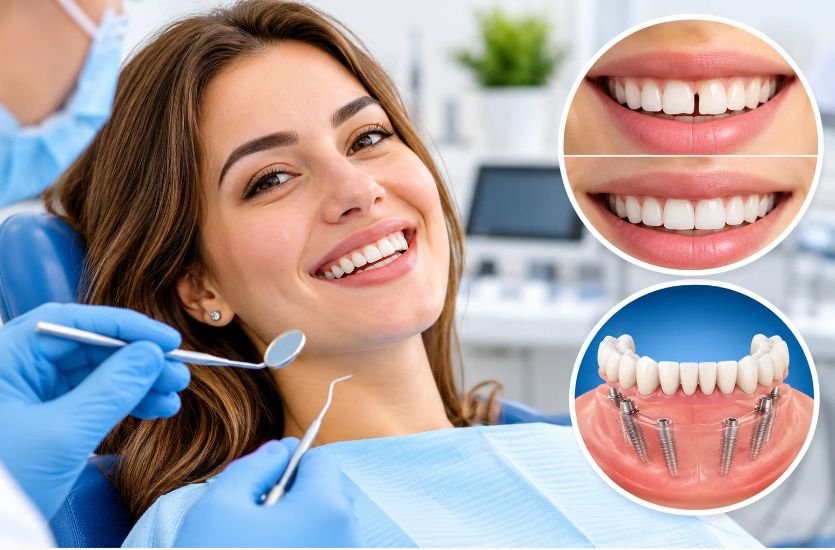
Composite bonding uses a tooth-coloured resin to change the shape, size or colour of a tooth. The resin is a mix of plastic and fine glass-like particles. The dentist applies it directly to the tooth, shapes it by hand and hardens it with a special light.
Because the work is built up on the tooth surface, it is usually considered a conservative treatment. Often little or none of the healthy tooth needs to be removed.
What Can It Improve?
Composite bonding is best suited to small, specific changes, such as:
- Chipped or slightly broken edges
- Small gaps between teeth
- Uneven or slightly misshapen teeth
- Minor, localised discolouration
It cannot fix every problem. Large fractures, heavy damage or serious bite issues may need crowns, veneers or another restoration instead. Active decay must be treated first, not simply covered over.
How the Treatment Usually Works
The exact steps vary from case to case, but a typical visit looks like this:
- Assessment: The dentist checks the teeth, gums, enamel and bite, and talks through the result the patient wants.
- Shade selection: A resin shade is chosen to blend with the natural teeth.
- Preparation: The tooth is cleaned and lightly treated so the adhesive can grip.
- Shaping: The resin is applied in layers and sculpted into the desired form.
- Curing: A light hardens the material.
- Finishing: The bite is checked, any excess is removed and the surface is polished.
Many people considering composite bonding in Middlesbrough are pleased to know that most cases can be completed in a single appointment, depending on the tooth and the amount of work required. Further details about the treatment are available at westmountdentalsurgery.co.uk.
Looking After Bonded Teeth
Composite is not as stain-resistant or as hard-wearing as porcelain. It can chip, lose its shine or pick up stains from tea, coffee, red wine and tobacco. Reported lifespans commonly range from about 3 to 10 years, depending on oral hygiene, bite forces and lifestyle.
Sensible habits help it last:
- Brush with fluoride toothpaste and clean between the teeth daily
- Avoid biting nails, pens or ice
- Limit staining foods and drinks
- Attend regular check-ups and professional cleans
- Ask about a night guard if teeth grinding is a problem
One advantage is that small chips can often be repaired rather than replaced.
What Is All-on-4?
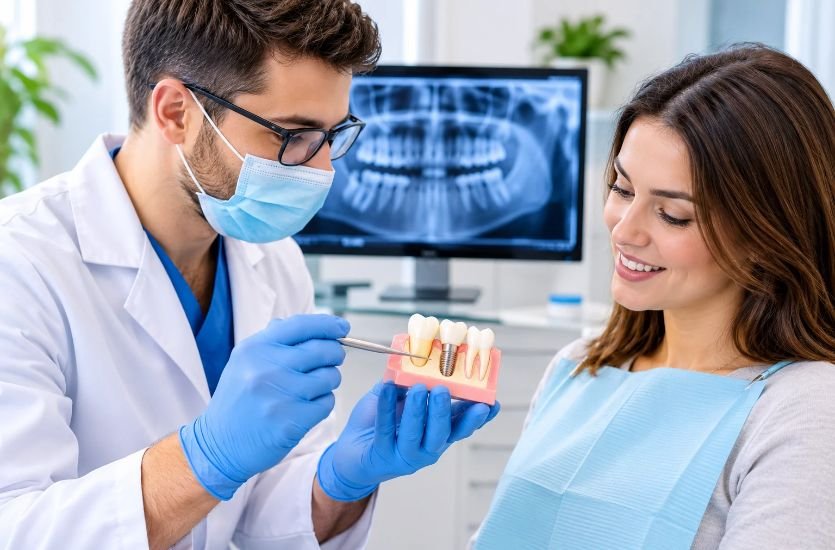
All-on-4 is a different treatment altogether. It replaces an entire upper or lower arch of teeth using just four dental implants. Implants are small titanium posts placed in the jawbone. Once they have fused with the bone, they act like artificial roots.
Instead of one implant per missing tooth, four implants support a fixed bridge of replacement teeth. Typically, two implants go in at the front of the jaw and two are placed at an angle towards the back.
Why Are the Back Implants Angled?
Angling the rear implants lets the dentist use more of the bone that is available. It can also help avoid sensitive areas such as the sinus or a nerve canal. In some cases this reduces the need for bone grafting, although it never guarantees that grafting will be unnecessary. Every jaw is different, and the plan depends on scans and a careful examination.
The Treatment Journey
For anyone considering All-on-4 in Middlesbrough, the treatment usually involves several stages, from the initial consultation to the final fitting. Further details about the procedure are available at westmountdentalsurgery.co.uk.
- Consultation and assessment: The dentist reviews oral health, general health, bone levels, smoking habits, oral hygiene and any teeth grinding.
- Imaging: X-rays, CT scans and dental impressions help plan the treatment.
- Surgery: Implants are placed under local or general anaesthetic, usually taking a few hours.
- Temporary teeth: Where the implants are stable enough, a temporary fixed arch may be fitted soon after surgery.
- Healing: The bone needs several months to bond with the implants. Mild swelling and discomfort are common early on.
- Permanent teeth: Once healing is complete, the temporary teeth are replaced with the final bridge.
Is It Right for Everyone?
No. All-on-4 may suit adults who have lost many teeth, have badly damaged teeth or are unhappy with removable dentures. However, factors such as low bone density, heavy smoking, poor oral hygiene, tooth grinding, uncontrolled diabetes and some autoimmune conditions can affect suitability.
Like all surgery, it carries risks. Implants may fail to fuse with the bone, and the bridge can develop problems such as loose screws or a fractured section. Cleaning around the implants matters a great deal, because plaque build-up can lead to gum infection and, in the long run, implant loss. Follow-up appointments are an important part of the process.
Composite Bonding vs All-on-4: The Key Differences
These treatments are not alternatives to each other. They solve entirely different problems.
| Composite bonding | All-on-4 | |
| Purpose | Improves existing teeth | Replaces a full arch of missing or failing teeth |
| Surgery | No | Yes |
| Typical scope | Individual teeth | Whole upper or lower jaw |
| Recovery | Usually minimal | Healing over several months |
Composite bonding cannot replace missing teeth. All-on-4 would be far too extensive for a small chip or gap on otherwise healthy teeth. A dentist decides which route makes sense after looking at the teeth, gums, bone, general health and the patient’s goals.
Practical Tips Before Booking
- Write down what bothers you most about your smile
- Ask what alternatives exist, such as veneers, crowns, dentures or implant-retained dentures
- Ask how long each option typically lasts and what maintenance it needs
- Mention any medical conditions, smoking or grinding habits
- Be realistic. Previews and mock-ups guide planning but cannot guarantee a final look
Final Thoughts
Choosing a dental treatment is easier when the options are clear. A chipped tooth and a failing set of teeth call for different approaches, and understanding that difference helps patients ask better questions. With a thorough assessment, realistic expectations and good aftercare, both treatments can help restore comfort and confidence.
Key Takeaways
- Composite bonding is a conservative treatment for minor chips, small gaps, uneven edges and localised discolouration.
- Most composite bonding cases can be completed in a single appointment, depending on the work required.
- Bonded teeth need regular cleaning and care because composite resin can chip, wear or become stained over time.
- All-on-4 replaces a full upper or lower arch of teeth using four strategically placed dental implants.
- Angled rear implants help make better use of available jawbone and may reduce the need for bone grafting.
- All-on-4 involves surgery and several months of healing before the final bridge is fitted.
- Smoking, uncontrolled diabetes, poor oral hygiene and teeth grinding can affect implant suitability.
- Composite bonding and All-on-4 address different dental problems and cannot be used interchangeably.
- A professional dental assessment helps determine the most suitable treatment based on oral health, individual needs and expected results.