









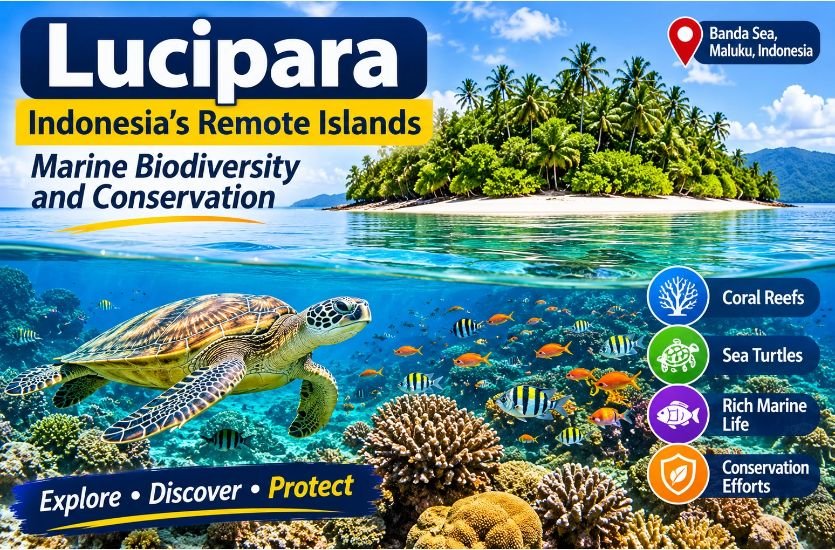
Lucipara is a remote group of coral islands located in the Banda Sea, within Indonesia’s Maluku province. Known for its beautiful marine environments, diverse underwater wildlife and relatively undisturbed coral reef ecosystems, Lucipara represents an important part of Indonesia’s natural heritage. Its isolated geographical position has helped preserve marine habitats that support numerous fish species, sea turtles and other ocean wildlife.
Unlike popular tropical destinations developed around hotels and large tourism facilities, Lucipara remains a relatively untouched island region. Its surrounding waters are particularly interesting to marine researchers, divers and conservation organizations because of their ecological importance. Scientific studies have identified the area as home to healthy coral reef communities and significant fish populations.
In recent years, Lucipara has also received greater attention through conservation initiatives involving Indonesian government agencies, environmental organizations and local communities. These efforts aim to protect its marine resources while supporting responsible fishing and sustainable tourism.
Quick Facts About Lucipara
| Category | Information |
|---|---|
| Name | Lucipara Islands |
| Alternative Name | Pulau-pulau Maisel |
| Country | Indonesia |
| Province | Maluku |
| Location | Banda Sea |
| Geographical Region | Molucca Islands |
| Island Formation | Small coral islands and reefs |
| Number of Islands | Seven |
| Major Ecosystem | Coral reefs and marine habitats |
| Notable Wildlife | Sea turtles, sharks, rays and tropical fish |
| Main Activities | Scuba diving, marine research and fishing |
| Conservation Focus | Marine biodiversity and sustainable fisheries |
| Nearest Major City | Ambon |
Where Are the Lucipara Islands Located?
The Lucipara Islands are situated in the central Banda Sea, part of the Indonesian archipelago in Southeast Asia. They belong to Maluku province, a region historically known for its numerous islands, marine resources and important position within Indonesia’s eastern maritime territory.
The islands are located approximately 210 kilometres south of Ambon, one of the major population centres in Maluku. Their remote position means that reaching Lucipara requires considerable planning, usually involving boat transportation and favourable sea conditions.
Lucipara consists of seven small coral cay islands distributed across the surrounding ocean. The island group is also known by the alternative name Pulau-pulau Maisel. Its geographical setting includes shallow reef environments, steep underwater slopes and deeper ocean waters.
The Banda Sea itself is an important part of Indonesia’s marine environment. Its location within the Coral Triangle connects numerous marine ecosystems and supports a wide range of underwater species. This geographical relationship contributes to the ecological importance of Lucipara.
Because of its distance from major population centres, the islands have comparatively limited infrastructure and human settlement. This isolation has helped maintain certain natural characteristics that make the area valuable for scientific research and environmental protection.
Geography and Natural Environment of Lucipara
Lucipara’s natural landscape is closely connected to its coral island formation and surrounding marine environment. Rather than consisting of large mountainous islands, the group is characterized by small, low-lying coral formations surrounded by tropical ocean waters.
Coral reefs play an essential role in shaping the underwater geography. These ecosystems create habitats for marine organisms, provide shelter for fish and contribute to the overall stability of the surrounding environment.
Some underwater areas feature steep reef walls that descend into deeper waters. These geological characteristics create different marine habitats within a relatively small geographical region. Shallow reef sections provide suitable environments for many coral-associated species, while deeper areas support different marine organisms.
The tropical climate of the Banda Sea influences water temperatures, ocean currents and seasonal weather conditions. These environmental factors affect marine life, coral growth and the accessibility of the islands.
Lucipara’s natural environment is also connected to the wider marine ecosystem of eastern Indonesia. Ocean currents transport nutrients and influence the movement of marine species between different island groups. Consequently, the islands are important not only as individual geographical features but also as part of a larger interconnected marine landscape.
History and Background of Lucipara
Lucipara has a historical identity that extends beyond its modern environmental significance. The islands have appeared in historical geographical references and travel accounts documenting maritime exploration in the Indonesian archipelago.
During the nineteenth century, American diplomat and traveler Edmund Roberts referred to the islands as Lucepara in his published travel account. His historical documentation provides an example of how the island group was recorded in earlier geographical literature.
The surrounding region has also been associated with traditional maritime activities and local communities. Fishing, ocean travel and the use of natural resources have historically played important roles in the lives of people across Maluku.
Although Lucipara does not have the extensive urban history of larger Indonesian islands, its geographical position has made it relevant to regional maritime activity.
The islands also have connections with communities that traditionally visit the area and maintain interests in its natural resources. These relationships are important when considering future conservation policies because protecting marine environments requires recognition of the people who depend on them.
Understanding this background helps explain why Lucipara should be viewed as both an ecological destination and a geographically significant part of Indonesia’s maritime heritage.
Marine Biodiversity and Wildlife Around Lucipara
One of the most important characteristics of Lucipara is its marine biodiversity. Its surrounding waters support a variety of underwater habitats that provide food, shelter and breeding environments for different marine organisms.
The combination of coral reefs, deeper ocean waters and relatively isolated island habitats creates favourable conditions for numerous species.
Sea Turtles
Sea turtles are among the most notable marine animals associated with Lucipara. The surrounding waters provide important habitats for different turtle species, including green turtles and hawksbill turtles.
Field observations conducted by conservation researchers have highlighted the presence of significant turtle populations in the region. During a 2021 expedition, researchers reported recording more than 1,100 turtles.
These observations demonstrate the ecological importance of the area. Sea turtles depend on healthy marine ecosystems throughout different stages of their lives, making habitat protection particularly important.
Protecting feeding grounds, migration routes and suitable breeding environments can contribute to the long-term survival of these animals.
Sharks and Rays
Sharks and rays are also part of Lucipara’s marine environment. Different species occupy various positions within the ocean’s food chain and contribute to the ecological balance of marine habitats.
Hammerhead sharks have been among the notable species reported in observations around the wider island region. Rays also contribute to the biodiversity of the surrounding waters.
Large marine predators are particularly important because they influence the structure of marine food webs. Their presence can also provide valuable information about the condition of an ecosystem.
However, these animals can be vulnerable to fishing pressure and habitat disturbance. Sustainable fisheries management and effective conservation measures are therefore important for maintaining their populations.
Tropical Fish and Other Marine Species
The coral reefs around Lucipara support numerous tropical fish species. These include groupers, barracudas, giant trevallies, Napoleon wrasse and other reef-associated fish.
Different species use the reefs for feeding, shelter and reproduction. The availability of suitable habitats helps maintain the diversity and abundance of marine life.
The surrounding waters also support larger oceanic species, demonstrating the ecological connection between shallow coral environments and deeper marine ecosystems.
Coral Reefs and Their Ecological Importance
Coral reefs are among the most valuable natural resources associated with Lucipara. These underwater structures support complex communities of marine organisms and provide important environmental services.
Healthy reefs offer shelter and feeding grounds for fish, invertebrates and other marine species. They also contribute to the productivity of nearby fishing areas.
A particularly important scientific study published in 2023 examined coral reef communities around the Lucipara Islands. Researchers conducted underwater surveys in October 2019 to investigate fish populations, coral cover and the overall condition of reef ecosystems.
The findings showed that the surveyed sites had medium to high coral cover and substantial fish biomass. All four surveyed locations exceeded the study’s cited conservation target for reef-fish biomass by approximately two to ten times.
The researchers also identified relatively abundant large predatory fish, suggesting that certain parts of Lucipara retain important ecological characteristics.
These findings are significant because coral reef ecosystems worldwide face increasing pressure from human activities, pollution, destructive fishing and climate change.
However, healthy reef conditions should not be interpreted as evidence that the entire island region is free from environmental threats. Continued scientific monitoring is necessary to understand changing conditions and identify areas requiring protection.
Tourism and Scuba Diving in Lucipara
Lucipara has considerable potential for marine tourism, particularly for visitors interested in scuba diving, underwater photography and remote natural environments.
Its coral reefs and diverse marine wildlife make the area attractive to experienced divers seeking destinations away from heavily developed tourist locations.
Scuba diving is one of the main activities associated with the islands. Divers can explore underwater reef formations, observe tropical fish and experience the marine environment of the Banda Sea.
The surrounding ocean also provides opportunities for observing larger marine animals. However, wildlife encounters depend on natural conditions and should never be guaranteed.
Unlike established tourist destinations, Lucipara has limited visitor facilities. Most visitors access the region through specialized liveaboard boats, which provide transportation and accommodation during diving expeditions.
Travel planning requires consideration of weather conditions, sea accessibility, transportation arrangements and environmental regulations. The remoteness of the islands also means that visitors should be properly prepared before travelling.
Responsible tourism can support environmental awareness and provide economic opportunities while minimizing unnecessary pressure on sensitive marine ecosystems.
Scientific Research and Environmental Studies
Scientific research has helped increase awareness of Lucipara’s ecological importance. Although the island group remained relatively understudied for many years, research projects have started providing more detailed information about its marine environments.
The 2023 coral reef study is particularly significant because it established important baseline information about fish communities and underwater habitats. Published in Marine and Freshwater Research, this scientific study of Lucipara’s coral reefs examined coral cover, reef fish diversity and biomass across four survey locations, providing valuable evidence about the ecological condition of this remote Indonesian island group.
Researchers used underwater visual census methods to examine reef fish populations and measure their abundance across selected survey locations.
The findings indicated that fish biomass was relatively high compared with many other surveyed reef environments in Indonesia and the wider Coral Triangle.
The research also identified relationships between reef structure and fish diversity. Different types of underwater habitats influenced the abundance and distribution of marine species.
Further research is still necessary to develop a more complete understanding of Lucipara. Additional studies covering sea turtles, sharks, smaller marine organisms, coral resilience and environmental changes could provide valuable information.
Modern research techniques, including underwater video monitoring, environmental DNA sampling and aerial mapping, can also help scientists collect more comprehensive ecological data.
These scientific activities provide a foundation for better conservation planning and responsible management of the surrounding marine resources.
Conservation Efforts and Environmental Challenges
Despite its relatively remote location, Lucipara faces environmental challenges that require long-term attention.
Destructive fishing practices are among the major concerns. Activities involving explosives or other harmful fishing methods can damage coral structures and reduce marine populations.
Marine pollution, changing ocean temperatures and climate-related impacts also present risks. Coral bleaching, habitat degradation and changes in marine species distribution can affect the stability of reef ecosystems.
Protecting Lucipara therefore requires cooperation between government authorities, environmental organizations, researchers and communities.
The Proposed Lucipara Marine Protected Area
One of the most important recent developments concerns the proposed marine protected area around Lucipara.
The Maluku provincial government has been working with the Yayasan Konservasi Alam Nusantara, the Coral Triangle Center and other partners to develop a conservation framework for the region.
The proposed protected area covers approximately 388,712.10 hectares. Its purpose is to protect important marine habitats while supporting sustainable use of natural resources.
In March 2026, government representatives and conservation organizations discussed collaboration opportunities, management planning and a roadmap for the proposed protected area.
An integrated field survey was subsequently conducted from October 15 to October 29, 2026. According to the Lucipara marine protected area survey, the initiative involved ecological assessments, fisheries research, habitat mapping and studies of the relationship between marine resources and local communities. The findings are intended to support a science-based management and zoning plan for the proposed protected area.
Researchers also examined coral reef conditions, sea turtle habitats, marine mammals, fish spawning areas and other environmental characteristics.
The survey is an important step toward developing an evidence-based management and zoning plan. However, the proposed protected area should not be confused with a fully designated marine protected area. Formal government designation remains a separate process.
The Role of Local Communities
Local communities have an important role in the future of Lucipara’s marine environment.
Although the islands themselves have limited permanent settlement, people from surrounding areas use the wider marine region for fishing and other activities.
Conservation policies therefore need to consider both ecological requirements and the economic needs of communities that depend on marine resources.
Sustainable fisheries management can help maintain fish populations while allowing responsible economic activities to continue.
Involving local stakeholders in decision-making can also improve environmental monitoring and encourage long-term support for conservation initiatives.
A successful approach should balance biodiversity protection, sustainable livelihoods and responsible marine tourism.
Why Lucipara Is Important to Indonesia
Lucipara represents an important natural asset within Indonesia’s extensive maritime territory. Its coral reefs, marine wildlife and geographical position contribute to the country’s wider environmental significance.
Indonesia is located within the Coral Triangle, a region internationally recognized for its exceptional marine biodiversity. Protecting important habitats in this region contributes to broader efforts to maintain healthy ocean ecosystems.
Lucipara is especially valuable because scientific research has identified relatively healthy reef communities and substantial fish populations in its surrounding waters.
The islands also demonstrate why remote marine environments require proper conservation planning. Geographic isolation can reduce some forms of human pressure, but it can also make monitoring and enforcement more difficult.
Developing effective management strategies can help protect these natural resources while creating opportunities for sustainable fisheries and carefully managed marine tourism.
The region’s importance extends beyond its immediate geographical boundaries because healthy marine ecosystems contribute to wider ecological connections throughout the Banda Sea.
The Future of Lucipara
The future of Lucipara will depend largely on how its natural resources are managed over the coming years.
Scientific research, government planning and community participation provide an important foundation for protecting the islands and their surrounding marine environments.
The proposed marine protected area could become a significant part of these efforts if its management framework is supported by effective monitoring, appropriate regulations and cooperation among stakeholders.
Sustainable tourism may also create opportunities for the region. However, development must account for the islands’ remote location and the limited capacity of sensitive marine habitats to absorb additional human activity.
Climate change remains another long-term concern. Rising ocean temperatures, coral bleaching and other environmental pressures could affect marine biodiversity even in areas with relatively low human populations.
Continued research and conservation investment will therefore be essential.
Lucipara’s ecological value is not simply based on its attractive tropical scenery. Its importance comes from the marine habitats, wildlife populations and natural processes that support the wider Banda Sea ecosystem.
Frequently Asked Questions About Lucipara
Where is Lucipara located?
Lucipara is a group of remote coral islands situated in the Banda Sea in Maluku province, eastern Indonesia.
What is Lucipara famous for?
Lucipara is known for its coral reefs, marine biodiversity, sea turtles, underwater wildlife and relatively remote natural environment.
How many islands are in the Lucipara group?
The Lucipara island group is commonly described as consisting of seven small coral islands.
Are the Lucipara Islands inhabited?
The islands have limited permanent settlement and are generally described as uninhabited. However, communities with traditional connections to the region continue to use some of its natural resources.
Can tourists visit Lucipara?
Yes. Visitors can explore the region through specialized boat expeditions, particularly liveaboard diving trips. Access requires careful travel planning because of the islands’ remote location.
What marine animals can be found around Lucipara?
The surrounding waters support sea turtles, sharks, rays, barracudas, groupers, giant trevallies and numerous other marine species.
Why is Lucipara important for conservation?
Lucipara contains valuable coral reef ecosystems and important marine habitats. Scientific studies have identified relatively high reef-fish biomass, while conservation initiatives aim to protect biodiversity and promote sustainable fishing.
Is Lucipara a protected marine area?
A marine protected area has been proposed for the Lucipara region. Government agencies and conservation partners are developing scientific assessments and management plans as part of the process toward official designation.
Conclusion
Lucipara is an important group of remote Indonesian islands with considerable geographical, ecological and environmental significance. Its coral reefs, diverse marine wildlife and relatively isolated location make it a valuable part of the Banda Sea ecosystem.
Scientific research has demonstrated the importance of its underwater habitats, while recent conservation initiatives highlight the need for responsible management and long-term environmental protection.
As Indonesia continues developing its marine conservation strategies, Lucipara offers an important opportunity to demonstrate how biodiversity protection, sustainable fisheries and carefully managed tourism can work together.
Preserving the islands’ natural environment will require continued scientific research, effective government policies and meaningful community participation. Readers can also explore more informative articles on technology, business, lifestyle, travel and other interesting subjects through Expand Magazine. With appropriate management, Lucipara can remain an important marine ecosystem for future generations.