

Start with the job
A flight controller should be chosen for the work it performs in a complete aircraft, not as an isolated specification. Its job is to read pilot inputs and sensor data, then coordinate the motors through the ESC. That role connects it to every other major decision in the build. Before comparing listings, write down the aircraft size, intended flying style and the parts already selected. This simple note prevents a popular component from becoming an expensive mismatch. Good FPV builds begin with a system view: the airframe, power source, propulsion, electronics and pilot equipment must work together under real flight loads.
Build compatibility before checkout
The most important checks are mounting format, processor, UART count, video system, receiver, firmware target and connector layout. Read each product page with those questions open beside it. Measurements and electrical ratings are not decoration; they describe the boundaries within which the part can operate safely. Compare them with the frame manual, the wiring plan and the components on the bench. If a detail is missing, do not fill the gap with an assumption. Confirm it before soldering. A few minutes of compatibility work is more useful than changing several parts after the first powered test.
Choose for the way you fly
There is rarely one universal best option. In this category, pilots may choose among AIO boards, standalone controllers and matched FC ESC stacks. A compact and light setup may suit a smaller aircraft, while a more robust arrangement can make sense for sustained load or a larger platform. Think about where and how the aircraft will fly: relaxed practice, technical freestyle, racing, filming or longer-distance cruising. The right component is the one that supports that mission without adding unnecessary weight, complexity or current demand. This is why a copied parts list should be treated as a reference, not a rule.
Use specifications to compare candidates
When comparing several options, focus on measurable differences rather than marketing language. Confirm the physical footprint first, then the electrical range, interfaces, included hardware and expected operating conditions. A clean comparison table can reduce the choice to two or three viable candidates. At that point, consider repairability and spares. FPV aircraft experience vibration and impacts, so a selection that can be maintained sensibly is often better than one that only looks impressive on paper. Keep the decision tied to the actual aircraft, not to a theoretical maximum specification.
Use the category page as a checklist
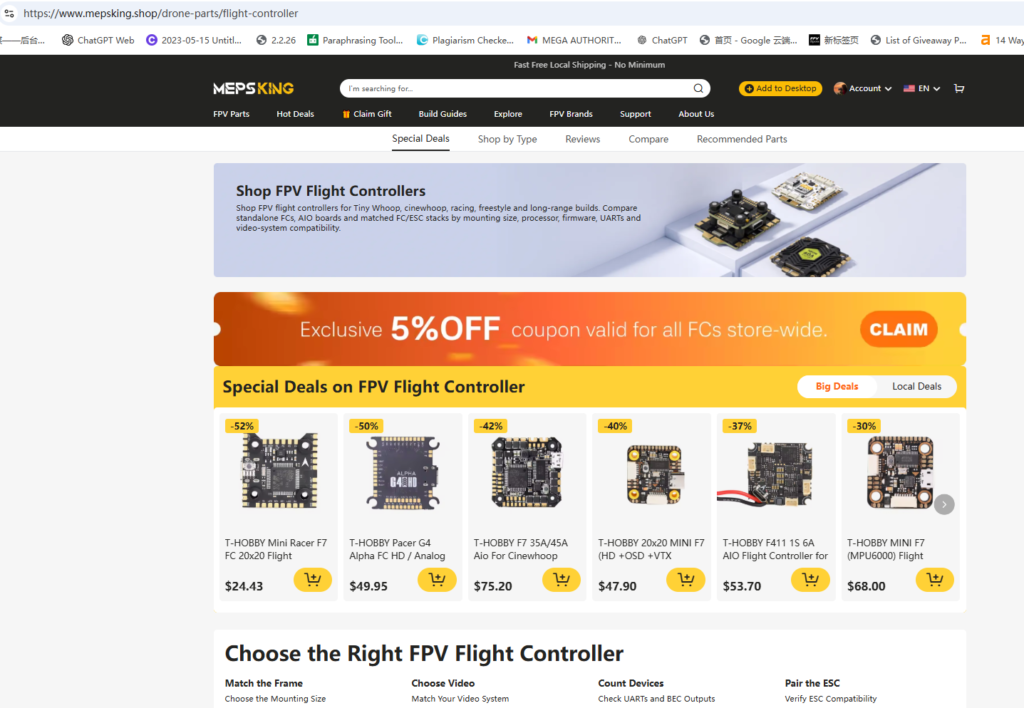
A focused fpv flight controller category can make research faster when it helps pilots compare compatible options in one place. Use it to identify candidates, then return to the build checklist before adding anything to the cart. Verify the component against the required voltage, size, connector or mounting system; then verify the adjacent components it must work with. This sequence keeps the keyword search useful for the reader while preserving the practical discipline that good FPV assembly requires.
Plan a safe first setup
New parts deserve a careful first setup. The common problems in this category include insufficient ports, wrong mounting holes, rushed soldering and an unsupported peripheral plan. Avoid rushing directly to an aggressive setting or a long first flight. Inspect the part and wiring, use appropriate safety equipment, and make sure the workspace is clear. Keep a simple record of the component version, relevant settings and any changes made during setup. If a problem appears later, that record turns troubleshooting from guesswork into a controlled process. It also makes it easier to restore a known-good configuration after maintenance.
Source with the whole build in mind
A useful shopping decision accounts for the rest of the build, including tools, connectors, spares and the next likely repair. A practical parts source such as MEPSKING can be useful when the same build requires connected categories, clear specifications and replacement parts. The value is not in adding more items to an order. It is in avoiding missing adapters, incompatible hardware and last-minute substitutions. For a first build, buy the essentials and a small set of consumables. For an established build, prioritize exact replacement compatibility so that a repair does not create a new variable in the setup.
Test in a controlled sequence
The first evaluation should be deliberate: checking sensor orientation, receiver input, motor order, firmware settings and configuration backup. Stop if there is unusual heat, vibration, a warning, a poor connection or behavior that does not match the configuration. Change one variable at a time and note the result. This applies whether the pilot is assembling a small indoor quad or refining a five-inch platform. A structured first test protects the equipment and teaches the pilot what the component contributes to the aircraft’s feel and reliability.
Make the final decision
Before purchasing, answer five questions: does it fit physically, operate within the intended electrical range, work with the selected adjacent components, suit the flying goal and have a sensible repair path? If each answer is clear, the choice is usually sound. That method is more durable than chasing a single headline number. It produces an FPV build that is easier to assemble, easier to inspect and more predictable in the air. The best result is not simply a part that turns on; it is a setup that lets the pilot fly with confidence and maintain it with purpose.
Keep the build record current
After the aircraft is flying well, save the information that made it work. Record the exact flight controller version, related settings, connector choices, battery system and preferred replacement parts. Photograph the wiring before closing the frame and keep a note with the purchase details. This turns future maintenance into a short, predictable job instead of an exercise in reconstruction. It also gives the pilot a trustworthy baseline when experimenting with a different propeller, payload or tune. Consistent records are a small habit with a large effect on safe, repeatable FPV ownership.