








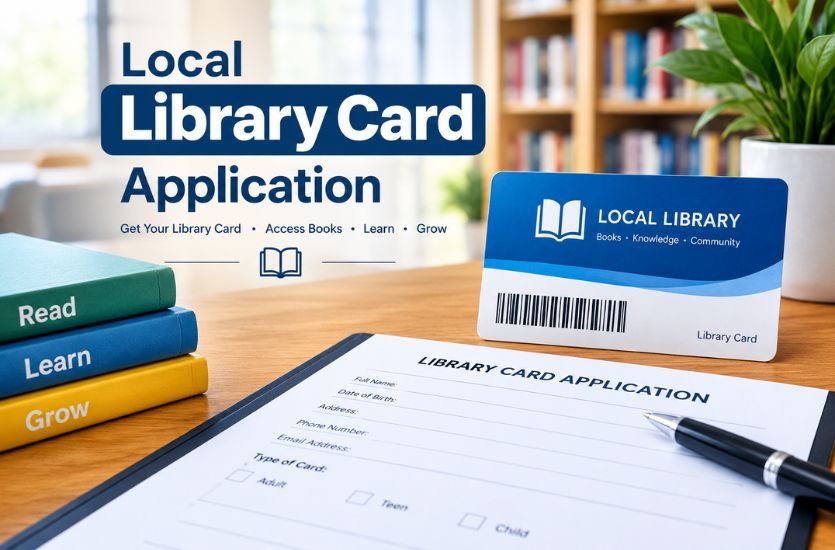
A library card is more than a simple identification card. It provides access to books, digital resources, research databases, educational materials, and other services offered by a public library. For many people, obtaining a card is the first step toward using these resources regularly. The local library card application process is generally straightforward, although the exact requirements can differ depending on the library system, location, and applicant’s age.
Most libraries ask applicants to provide basic personal information and confirm that they live, work, study, or otherwise qualify for services within the library’s designated service area. Some libraries accept applications online, while others require applicants to visit a library branch. Understanding the general process can make applying for a library card easier and help applicants prepare the appropriate information before starting.
Quick Bio: Local Library Card Application
| Detail | Information |
|---|---|
| Topic | Local library card application |
| Purpose | Registering for library services |
| Application Method | Online, in person, or both |
| Common Requirements | Identification and proof of address |
| Eligibility | Depends on the local library |
| Available Services | Books, digital resources, databases, and more |
| Children’s Applications | Often require parent or guardian involvement |
| Cost | Frequently free for eligible residents, but policies vary |
What Is a Local Library Card Application?
A local library card application is the registration process used by a library to create a borrowing account for an eligible individual. The application allows the library to collect information needed to identify the cardholder, communicate about the account, and provide access to library services.
The exact application can look different from one library system to another. Some libraries use traditional paper forms, while others provide online registration forms. Certain systems may issue a temporary digital card after an online application, followed by an in-person verification process if a physical card is required.
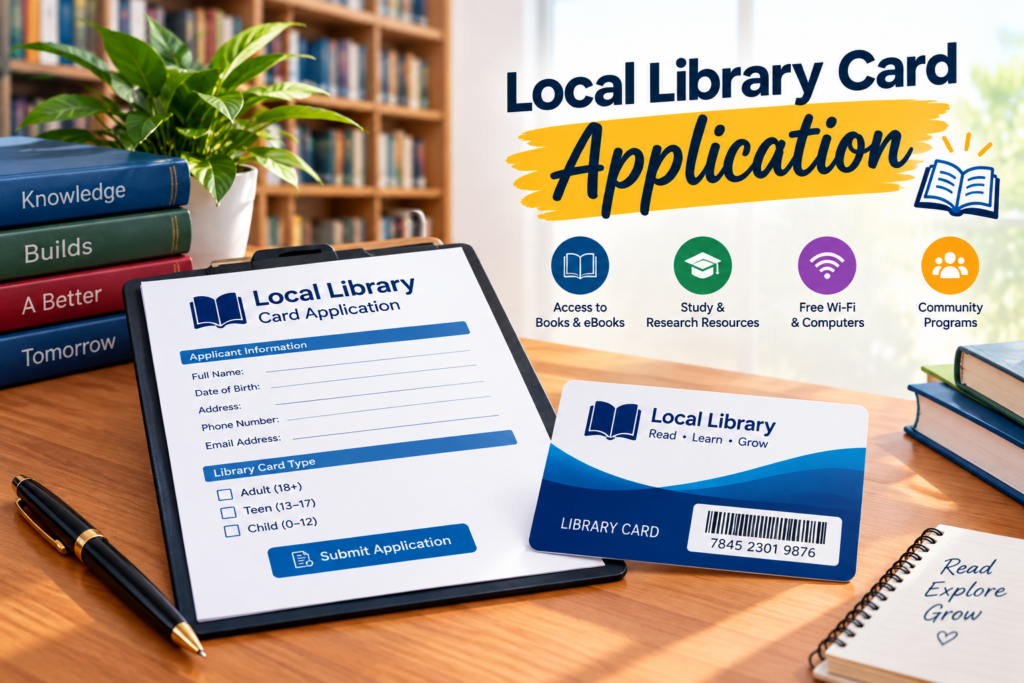
The application normally asks for information such as the applicant’s full name, date of birth, residential address, telephone number, and email address. Libraries may also ask applicants to agree to borrowing rules and other policies before the account is activated.
Who Can Apply for a Library Card?
Eligibility is determined by the individual library system. Many public libraries provide free cards to people who live within their service area. Some also extend borrowing privileges to people who work, attend school, own property, or have another qualifying connection with the community.
Nonresident policies can vary considerably. A person who does not live within the library’s normal service area may still be eligible for a card, but the library could have additional requirements or charge a nonresident fee.
Before completing a local library card application, applicants should check the specific eligibility rules of their local library. This prevents delays caused by applying under the wrong category or failing to provide documentation required for a particular type of membership.
Information Usually Required on the Application
Most library applications request basic information that helps establish an applicant’s identity and contact details. The information requested is generally intended to create an accurate library account and support communication about borrowed materials or other services.
A typical application may request the applicant’s legal name, date of birth, home address, telephone number, and email address. The library may also ask for a mailing address if it differs from the residential address.
Some applications include a section for an emergency contact or parent and guardian information, particularly when the applicant is a child. The exact information requested depends on the library’s policies and the type of account being created.
Applicants should provide accurate and current information. An incorrect address or outdated contact detail can make it difficult for the library to send important account notifications or verify eligibility.
Documents Needed for a Local Library Card Application
Identification requirements vary by library, but many systems ask applicants to show an acceptable form of identification. A government-issued photo ID is commonly accepted, although individual libraries may recognize other documents.
Proof of address is another common requirement. Libraries use this information to determine whether an applicant lives within the service area and qualifies for resident borrowing privileges. Depending on the library, acceptable proof may include an official document, utility statement, lease document, government correspondence, or another record showing the applicant’s current address.
Not every library requires exactly the same combination of documents. Some may accept one document that establishes both identity and address, while others may ask for separate forms of verification.
For this reason, applicants should review their library’s current requirements before visiting a branch. Bringing the correct documentation can make the registration process faster and reduce the possibility of needing a second visit.
How to Apply for a Library Card Online
Many modern library systems offer some form of online registration. An online local library card application can be convenient because applicants can enter their information from home rather than completing the entire process at a branch.
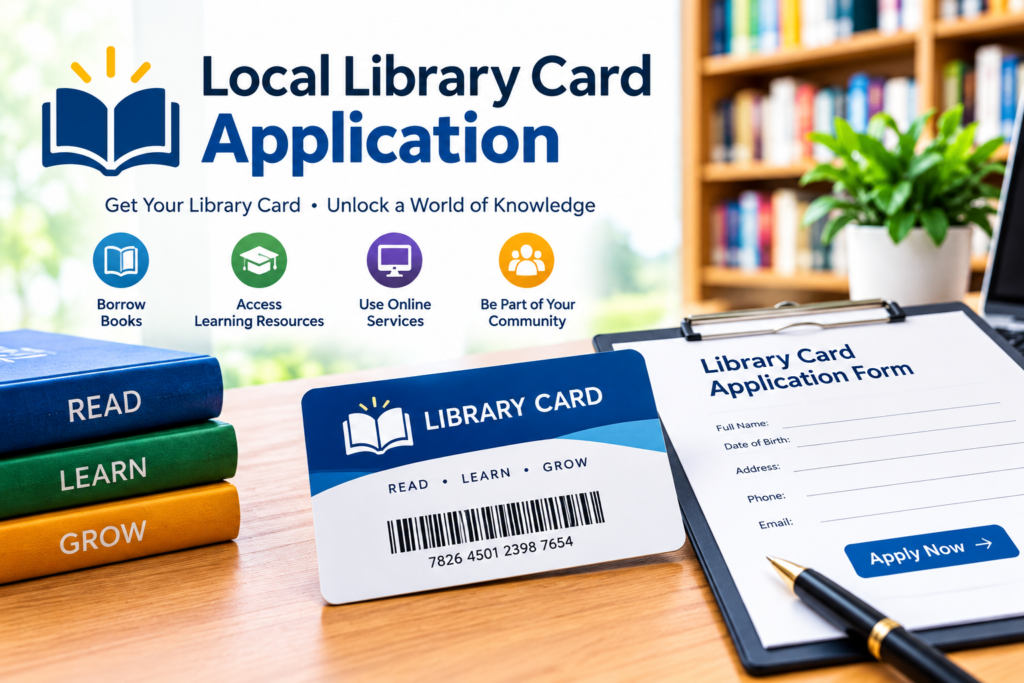
The applicant normally visits the library system’s official website and locates the library card or membership section. The online form may request personal information, contact details, eligibility information, and an email address.
After submitting the application, the library may provide a temporary account number or digital card. Some systems allow immediate access to selected digital resources, while others require additional verification before the account becomes fully active.
Online registration does not always eliminate the need for an in-person visit. Some libraries require applicants to present identification or proof of address before receiving a permanent physical card. The specific procedure depends on the library system.
Applying for a Library Card in Person
People who prefer face-to-face assistance can usually apply at a library branch if the local system offers in-person registration. This option can be particularly useful for people who have questions about eligibility or are unsure which documents to bring.
At the branch, an applicant typically completes a registration form and provides the required identification or address verification. Library staff can review the application and explain any additional requirements.
If the application is approved, the library may issue a physical card during the same visit. Some systems may need additional time to verify information before the account becomes fully active.
In-person registration can also be useful for children, older adults, or applicants who have difficulty completing online forms.
Library Cards for Children and Teenagers
Libraries often have separate procedures for children and teenagers. A minor may need a parent or legal guardian to complete or authorize the application, depending on the library’s rules.
The parent or guardian may be asked to provide identification and proof of address. Some libraries also have age-specific policies governing borrowing privileges, online resources, or responsibility for materials borrowed under a minor’s account.
Parents should check the local library’s requirements before completing an application for a child. Requirements can differ even between libraries located in neighboring communities.
A library card can give young readers access to age-appropriate books, educational materials, digital resources, research tools, and community programs. However, the specific services available to minors depend on the library system.
What Can You Access With a Library Card?
The services connected to a library card extend beyond traditional book borrowing. Depending on the library, cardholders may be able to borrow printed books, magazines, audiobooks, DVDs, educational materials, and other physical resources.
Digital services have also become an important part of modern library membership. Eligible cardholders may receive access to electronic books, digital audiobooks, online newspapers, research databases, educational platforms, music, movies, and other digital collections.
Some library systems provide additional resources such as computer access, Wi-Fi, study spaces, educational programs, technology equipment, or community events. The availability of these services depends on the individual library.
A library card therefore acts as a gateway to a broader collection of educational and recreational resources rather than simply serving as a card for checking out books.
Is a Library Card Free?
Many public libraries provide cards without charge to eligible residents. However, the cost structure depends on the library system and its membership policies.
People who live outside the normal service area may sometimes be required to pay a fee. Other special membership categories can also have different terms.
Applicants should not assume that every library follows the same pricing policy. Checking the current rules of the specific local library is the most reliable way to determine whether an application or membership carries a fee.
What Happens After Applying?
After submitting a library card application, the library generally reviews the information provided and verifies eligibility when necessary. If everything meets the requirements, the applicant receives a library account and card.
For online applications, the applicant may receive confirmation by email or through the library’s website. Some systems provide immediate access to certain digital resources, while others require in-person verification.
For applications completed at a branch, library staff may issue the card immediately if the documentation is sufficient. In other cases, the account may require additional processing.
Applicants should keep their card information secure and notify the library if the card is lost or stolen. They should also update their contact information when their address, telephone number, or email changes.
How to Find Your Local Library
Finding the correct library is an important step before starting a local library card application. Public library systems often operate multiple branches, and different branches may follow the same overall membership policy while offering different services.
A person can usually find their local library through their city, county, municipal, or regional library system. The library’s official website is generally the best place to confirm branch locations, opening hours, eligibility requirements, application procedures, and current documentation rules.
People who have recently moved should pay particular attention to residency requirements. A library may require proof of the new address before changing an existing account or issuing a new card.
Common Reasons an Application May Need Additional Verification
A library card application may require additional verification when the information provided does not clearly establish eligibility. An incomplete application can also delay registration.
For example, an applicant may provide an outdated address, an identification document that does not meet the library’s requirements, or information that differs between documents. Online applications can also require additional verification before a permanent card is issued.
These situations do not necessarily mean that the applicant is ineligible. They may simply mean that the library needs additional information before activating the account.
Applicants can reduce delays by checking the library’s requirements in advance and making sure their information is complete and accurate.
Keeping Your Library Account Updated
Obtaining a library card is only the beginning of maintaining an active library account. Cardholders should keep their personal information current and follow the library’s borrowing policies.
An updated address and contact information can help ensure that notices about borrowed materials, account changes, or library services reach the correct person. Cardholders should also report a lost or stolen card promptly so that unauthorized use can be addressed according to library policy.
Libraries may periodically ask members to confirm or update their information. Responding to these requests can help keep the account accurate and active.
Local Library Card Application: What to Know Before Applying
The local library card application process is usually simple, but the details depend on the library system serving a particular community. Eligibility rules, identification requirements, proof-of-address requirements, online registration options, fees, and services can all differ.
Applicants should begin by identifying the library that serves their area and reviewing its current membership requirements. Preparing the appropriate identification and address information can make the process more efficient.
Whether the application is completed online or at a library branch, a library card can provide access to a wide range of physical and digital resources. For students, families, researchers, readers, and community members, it can be a practical way to access educational information and other library services.
The most important step is to follow the specific instructions provided by the local library rather than relying on general assumptions. Once the account is approved, cardholders can explore the resources and services available under their membership and make full use of their local library.
Frequently Asked Questions
How do I complete a local library card application?
The process usually involves providing personal information, confirming eligibility, and submitting required identification or proof of address. Some libraries offer online applications, while others require registration at a branch.
Do I need proof of address for a library card?
Many libraries request proof of address, particularly when determining resident eligibility. However, the exact documentation accepted varies between library systems.
Can I apply for a library card online?
Some libraries provide online applications or digital library cards. Others require applicants to complete registration in person. The available options depend on the local library.
Can children get their own library cards?
Children can often receive library cards, but the process may require authorization or participation from a parent or legal guardian. Age requirements and procedures vary by library.
Is a library card free?
Library cards are often free for eligible residents of a public library’s service area. Nonresident applicants or certain special membership categories may have different fees or conditions.
What can I do with a library card?
Depending on the library, a card may provide access to physical books and other materials as well as eBooks, audiobooks, research databases, educational resources, computers, and other services.
What should I do if I lose my library card?
Cardholders should contact their library as soon as possible and report the card as lost. The library can explain the replacement procedure and any applicable fees or account requirements.