
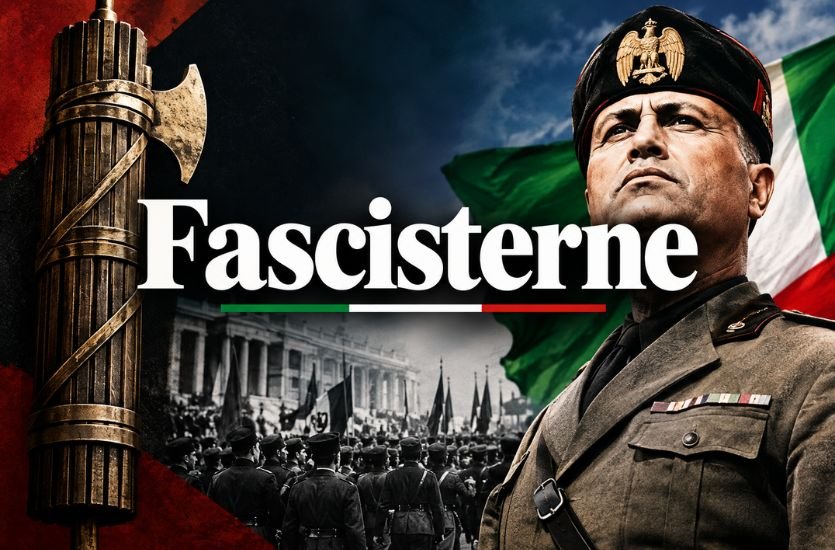
The word fascisterne is a Danish term that can be translated into English as “the fascists.” It is the definite plural form of the Danish word fascist and is commonly used when referring to a group of people associated with fascism. Understanding the meaning of fascisterne requires looking at both Danish grammar and the historical development of fascism in Europe.
The term can appear in historical writing, political discussions, news reporting, and descriptions of conflicts involving fascist movements. Although it is closely connected with the history of fascism, fascisterne does not refer to one particular organization in every context. Its exact meaning depends on the people or movement being discussed.
Quick Answer
Fascisterne is a Danish word meaning “the fascists” in English. It is the definite plural form of fascist and may refer to members or supporters of fascist movements, including historical fascist groups in Europe.
What Does Fascisterne Mean?
Fascisterne literally means “the fascists” and is used to describe multiple people identified as fascists. The word is formed from the Danish noun fascist, with the ending -erne indicating the definite plural form.
The meaning is therefore similar to saying “the fascists” in English. It does not automatically identify a particular political party or organization. A reader needs to examine the surrounding context to determine which fascists are being discussed.
For example, a historical text about Italy may use fascisterne when discussing supporters of Benito Mussolini. A Danish historical text might use the word when discussing Danish fascist or National Socialist movements during the 1930s and 1940s.
Fascisterne in Danish Language
Understanding the grammar behind fascisterne makes the term easier to interpret. In Danish, fascist refers to a fascist person, while fascister means fascists. When the definite plural form is required, fascisterne means “the fascists.”
The related word fascisme means fascism, while fascistisk means fascist or fascistic. These words are connected but should not be treated as interchangeable because they describe different grammatical concepts.
The distinction is particularly useful when translating Danish historical or political material into English. Depending on the sentence, fascisterne may refer to a specific group that has already been mentioned or to fascists more generally.
What Is Fascism?
Fascism is a form of authoritarian and ultranationalist politics that became especially influential in Europe during the twentieth century. It generally rejected liberal democracy and emphasized strong political leadership, national unity, discipline, and opposition to perceived political enemies.
Fascist movements often used propaganda, political organization, mass mobilization, and violence to gain and maintain power. Their approaches varied between countries, meaning that fascism did not develop in exactly the same way everywhere.
The term is most strongly associated with Italy, where Benito Mussolini established the Fascist movement after the First World War. Italian Fascism later became one of the most important models for other authoritarian and far-right movements in Europe.
Where Did Fascism Begin?
Modern fascism emerged in Italy after the First World War. Benito Mussolini founded the Fasci Italiani di Combattimento in 1919, and the movement eventually developed into the National Fascist Party.
Mussolini became prime minister in 1922 after the March on Rome. His government progressively dismantled democratic institutions and established an authoritarian dictatorship. The Italian Fascist regime used state propaganda, political repression, and a highly centralized political system.
The Italian experience became historically important because fascist ideas and political methods influenced movements in other European countries.
Fascisterne and Italian Fascism
When fascisterne is used in a discussion about Italian history, it may refer to the followers and members of Mussolini’s Fascist movement. These individuals supported a political system centered on nationalism, authoritarian leadership, and the Fascist state.
Italian Fascists promoted the idea that individual interests should be subordinated to the interests of the nation and state. The movement also attempted to create a highly organized society in which political opposition was heavily restricted.
The historical meaning of fascisterne in this context is therefore closely connected with the Italian Fascist movement and its supporters.
Fascisterne in Danish History
Denmark also had fascist and National Socialist political movements during the interwar period. One of the most significant organizations was the Danmarks Nationalsocialistiske Arbejderparti, commonly known as DNSAP.
DNSAP was founded in 1930 and developed under the leadership of Frits Clausen from 1933. The party was strongly influenced by German National Socialism and promoted nationalist, antisemitic, anti-democratic, and authoritarian ideas.
When Danish historical sources use fascisterne, the term may therefore appear in discussions concerning Danish fascism, National Socialism, political movements during the occupation of Denmark, or resistance to fascist and Nazi forces.
Who Were the Danish Fascists?
Danish fascist politics developed during a period when authoritarian and far-right movements were gaining influence across Europe. Several political organizations and groups promoted versions of fascist or National Socialist ideology.
DNSAP became the most prominent Danish National Socialist party. It attempted to gain electoral support and establish a political system inspired by German National Socialism. However, it never achieved the level of political dominance experienced by Hitler’s movement in Germany.
The Danish political environment, the country’s parliamentary traditions, and the limited popularity of National Socialism restricted the movement’s electoral success. Nevertheless, Danish fascist and Nazi organizations remain an important subject in the country’s twentieth-century political history.
Fascisterne and World War II
The meaning of fascisterne also becomes important when studying the political conflicts surrounding the Second World War. Fascist and Nazi movements were active across Europe, while resistance organizations and Allied forces opposed the Axis powers.
In Denmark, German occupation began in April 1940. During the occupation, Danish Nazi organizations and individuals who cooperated with German authorities became part of a complicated political and social environment.
After liberation in 1945, Denmark experienced a process of reckoning with collaboration and political cooperation with the occupying power. The history of Danish fascism is therefore closely connected with the broader history of the occupation and the Second World War.
Fascism and Nazism: Are They the Same?
Fascism and Nazism are closely related but are not exactly the same ideology. Fascism originated in Italy and is particularly associated with Mussolini, while Nazism developed in Germany under Adolf Hitler and the National Socialist German Workers’ Party.
Both movements rejected liberal democracy and promoted authoritarian leadership, aggressive nationalism, political repression, and mass mobilization. However, Nazi ideology placed an especially central emphasis on racial hierarchy, antisemitism, and biological concepts of race.
For this reason, translating fascisterne simply as “Nazis” can be inaccurate. The correct translation is generally “the fascists,” unless the context specifically identifies the people being discussed as Nazis or National Socialists.
How Is Fascisterne Used Today?
In modern Danish, fascisterne can still be used when discussing historical fascist movements or people described as fascists. Its meaning depends heavily on context.
In historical writing, the term may refer to supporters of Mussolini, European fascist movements, Danish fascists, or other groups associated with fascist ideology. In political commentary, it may sometimes be used as a broader label for people accused of supporting authoritarian or extreme nationalist ideas.
Because political language can be highly subjective, it is important to distinguish between the historical definition of fascism and the modern use of the word as a political accusation.
Why Is the Word Fascisterne Important?
Fascisterne is useful for understanding Danish discussions of European political history because it connects language with the history of fascism. A person researching Danish newspapers, historical documents, books, or political discussions may encounter the word when reading about fascist movements.
Knowing that the term means “the fascists” makes it easier to understand the context without assuming that it represents the name of a particular organization.
The word also demonstrates how historical terminology can carry different meanings depending on the period and subject. A reference to fascisterne in a text about Mussolini has a different specific context from the same word appearing in a discussion of Danish politics during the Second World War.
Frequently Asked Questions About Fascisterne
What does fascisterne mean in English?
Fascisterne means “the fascists” in English. It is the definite plural form of the Danish word fascist.
Is fascisterne the name of a political party?
No. Fascisterne is normally a Danish grammatical form meaning “the fascists.” It is not automatically the official name of a particular political party or organization.
What is the difference between fascist and fascisterne?
Fascist refers to one fascist person, while fascisterne refers to a group of fascists and translates as “the fascists.”
Does fascisterne mean Nazis?
Not necessarily. Fascism and Nazism are related historical ideologies, but they are not identical. Fascisterne should normally be translated according to its literal meaning and the context in which it appears.
What is fascisme in Danish?
Fascisme is the Danish word for fascism, the political ideology associated particularly with Mussolini’s Italy and later fascist movements in Europe.
Why is fascisterne important in Danish history?
The term can appear in discussions of Danish and European fascism, including the history of Danish National Socialism, DNSAP, the German occupation of Denmark, and political developments surrounding the Second World War.
Conclusion
Fascisterne is a Danish word meaning “the fascists.” Although its linguistic meaning is straightforward, its historical significance depends on the context in which it is used. The word can describe fascists in Italy, Denmark, or other countries and should not automatically be interpreted as referring to Nazis or one specific organization.
Understanding fascisterne also provides a useful starting point for exploring the broader history of fascism, including its development in Italy, its spread across Europe, and the emergence of fascist and National Socialist movements in Denmark. By separating the linguistic meaning of the word from the different historical movements it may describe, readers can understand the term more accurately.