

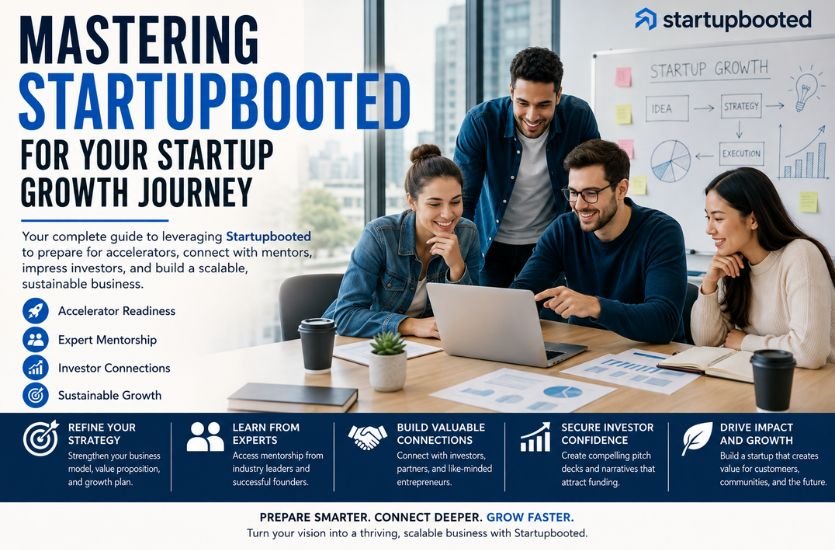
The Entrepreneur’s Quest for the Right Launchpad
Every successful startup begins with a bold idea, but only a small percentage ever evolve into sustainable businesses. The difference rarely comes down to ambition alone. More often, success depends on having the right guidance, strategic resources, and access to opportunities at the right moment. For founders navigating the competitive startup ecosystems of the United States and the United Kingdom, identifying those opportunities can feel like searching for a single lighthouse in a storm of endless advice, funding options, and accelerator programs.
The modern entrepreneurial landscape offers countless paths to growth. Incubators, accelerators, venture studios, mentorship programs, and investor networks all promise to help transform innovative concepts into thriving companies. Yet the abundance of choices often creates an entirely different challenge: determining which opportunities genuinely deliver long-term value and which simply add more noise to an already demanding journey.
This is where understanding platforms such as Startupbooted becomes increasingly valuable. Rather than viewing startup acceleration as merely a route to funding, successful founders recognize it as an opportunity to sharpen their strategy, refine their business model, strengthen their investor narrative, and build relationships that continue creating value long after an accelerator program ends. Preparation becomes just as important as participation.
This article explores what founders should know before pursuing world-class accelerator opportunities and how Startupbooted fits into that preparation process. You’ll discover how leading accelerator ecosystems operate, what distinguishes exceptional startup applications from average ones, why compelling storytelling matters as much as technology, and how strategic preparation can significantly improve your chances of attracting investors, mentors, and commercial partners.
While headlines often focus on million-dollar investments and impressive valuations, the true advantage of high-quality startup acceleration lies elsewhere. The greatest value comes from compressing years of entrepreneurial learning into a matter of months. It comes from receiving honest feedback from experienced founders, industry experts, and investors who have already navigated the challenges you’re facing today. Instead of learning every lesson through expensive mistakes, entrepreneurs gain access to practical guidance that accelerates smarter decision-making. For ambitious founders, that knowledge can become the most valuable investment of all.
Understanding the Global Accelerator Landscape: The Startupbootcamp Blueprint
To appreciate why preparation matters so much, it’s important to understand how leading startup accelerators actually operate. Among the most recognized names in the global startup ecosystem is Startupbootcamp, an accelerator network that has built its reputation by supporting early-stage companies through industry-focused programs spanning multiple sectors. Rather than functioning solely as an investment firm, Startupbootcamp combines mentorship, corporate partnerships, industry expertise, and structured acceleration into an intensive development experience designed to help startups grow rapidly.
One of the defining characteristics of the organization is its emphasis on vertical specialization. Instead of adopting a one-size-fits-all approach, Startupbootcamp develops accelerator programs around specific industries such as financial technology, cybersecurity, healthcare, sustainability, energy, artificial intelligence, and other emerging sectors. This specialized structure allows participating startups to receive guidance from mentors and corporate partners who understand the unique challenges, regulations, and market dynamics of their respective industries.
Its international presence has also made Startupbootcamp a recognizable name among entrepreneurs seeking global expansion. With accelerator programs operating across multiple regions, founders gain exposure not only to investors but also to experienced executives, multinational corporations, strategic partners, and international markets. For startups based in the US or UK, this broader network can provide valuable insights into scaling beyond domestic markets while establishing meaningful commercial relationships abroad.
However, joining a prestigious accelerator is far from easy. Competition is exceptionally intense, with thousands of startups applying for a limited number of places. Successful applicants rarely rely solely on innovative technology or a promising product. Instead, they demonstrate a deep understanding of their market, present a compelling business narrative, validate customer demand, and communicate a clear vision for sustainable growth. This reality highlights why platforms such as Startupbooted can play an important role in helping founders prepare before entering these highly competitive selection processes.
Another distinguishing feature of accelerator programs is their pace. Rather than allowing founders to develop gradually over several years, accelerators compress learning into an intense schedule of mentorship sessions, workshops, customer validation, investor meetings, product refinement, and strategic decision-making. The environment is deliberately demanding because rapid execution often reveals weaknesses—and opportunities—that might otherwise remain hidden for months. Founders who embrace continuous feedback and adapt quickly are typically the ones who extract the greatest value from the experience.
Beyond funding, accelerators increasingly serve as bridges between startups and established corporations. Many programs prioritize commercial partnerships that enable startups to test solutions with enterprise customers, launch pilot projects, and secure early revenue. For many entrepreneurs, these opportunities prove even more valuable than initial investment because they validate market demand while creating sustainable business momentum.
This shift reflects a broader evolution within the startup ecosystem. Today’s leading accelerators are no longer focused exclusively on helping startups raise capital. Instead, they aim to develop resilient businesses capable of solving real-world problems, building scalable operations, and establishing lasting competitive advantages. Understanding this philosophy is essential for founders preparing their applications, and it is precisely where thoughtful preparation through Startupbooted can provide a meaningful competitive edge.
The Pitch Deck: Your Gateway to the Accelerator
A remarkable product may solve a genuine problem, but without a compelling story, even the most innovative startup can struggle to capture attention. Before founders gain access to mentors, investors, or accelerator resources, they must first convince decision-makers that their vision deserves a place among hundreds—or even thousands—of applicants. This is where a carefully crafted pitch deck becomes one of the most valuable assets in a startup’s journey. For entrepreneurs preparing through Startupbooted, understanding the psychology behind an effective pitch is just as important as presenting impressive numbers.
Every accelerator receives applications from founders who are passionate about their businesses. Many have excellent ideas, talented teams, and promising technologies. Yet only a small percentage progress to interviews because selection committees are evaluating far more than the product itself. They look for founders who understand their market, communicate with confidence, demonstrate strategic thinking, and clearly explain why their business is positioned to succeed where others have failed.
An exceptional pitch deck does more than summarize a business plan. It tells a story that guides investors through a logical journey. It begins with a meaningful problem, introduces an innovative solution, validates market demand with credible evidence, explains the business model, highlights competitive advantages, demonstrates traction, and concludes with a compelling vision for the future. Every slide should build anticipation for the next, creating a narrative that is informative, memorable, and persuasive.
This storytelling approach is one of the areas where Startupbooted can provide significant value. Rather than relying on generic templates filled with standard layouts and predictable messaging, founders can focus on developing a presentation that reflects the unique identity of their startup. Investors rarely remember ordinary presentations, but they often remember founders who communicate their vision with clarity, authenticity, and purpose.
Visual presentation also plays a crucial role. A professional pitch deck is not about decorative graphics or unnecessary animations. Instead, it emphasizes clean design, logical organization, concise messaging, and visual consistency that supports the story being told. Every chart, illustration, and statistic should reinforce the startup’s value proposition rather than distract from it. When investors review dozens of presentations in a single day, clarity becomes a competitive advantage.
Equally important is demonstrating a realistic understanding of the market opportunity. Investors appreciate ambition, but they also expect evidence. Strong applications combine market research, customer validation, competitive analysis, and measurable traction to show that the founders have moved beyond assumptions. Whether the startup has acquired paying customers, built strategic partnerships, completed successful pilot programs, or achieved meaningful user engagement, every milestone strengthens the credibility of the overall narrative.
Financial projections deserve similar attention. Rather than presenting overly optimistic forecasts designed to impress, experienced investors prefer realistic assumptions supported by logical reasoning. Founders who openly acknowledge challenges while presenting practical strategies for overcoming them often inspire greater confidence than those who promise flawless execution. Authenticity frequently carries more weight than exaggerated optimism.
Another characteristic of successful accelerator applicants is their ability to explain complex ideas in simple language. Many startups operate within highly technical industries such as artificial intelligence, cybersecurity, biotechnology, or fintech. However, investors represent diverse backgrounds, and not every reviewer possesses deep technical expertise. An effective pitch therefore translates sophisticated technology into clear business value by answering one fundamental question: why should customers care?
Preparation extends far beyond the presentation itself. Founders should anticipate difficult questions regarding competition, customer acquisition costs, scalability, revenue generation, regulatory risks, intellectual property, and long-term sustainability. The strongest entrepreneurs view these questions not as obstacles but as opportunities to demonstrate strategic thinking and adaptability. Confidence during an investor meeting is rarely spontaneous—it is usually the result of thorough preparation.
Perhaps the greatest benefit of developing a strong pitch is that it forces founders to refine their own thinking. Every revision challenges assumptions, clarifies priorities, and exposes weaknesses that might otherwise remain hidden. By the time the presentation reaches its final version, the startup often possesses a clearer strategy than when the process began. In this sense, the pitch deck becomes more than an application document—it becomes a blueprint for the company’s future direction.
For founders using Startupbooted as part of their preparation, the objective should never be to create the longest or most visually elaborate presentation. The real goal is to communicate confidence, credibility, and opportunity within a concise, engaging narrative that resonates with investors and accelerator selection committees alike. When every slide contributes to a coherent story and every claim is supported by meaningful evidence, founders dramatically improve their chances of progressing from application to interview—and ultimately to acceleration itself.
Navigating the Intensity: Mentorship and the Human Element
Gaining acceptance into a respected accelerator is a significant achievement, but it is only the beginning of a far more demanding journey. Once the program starts, founders quickly discover that the real challenge is no longer securing a place—it is making the most of every opportunity available. Accelerator environments are intentionally intense, requiring entrepreneurs to absorb feedback rapidly, make high-stakes decisions under pressure, and continuously refine both their business and leadership skills. This is where the preparation offered through Startupbooted becomes especially valuable, helping founders enter the experience with greater confidence and clarity.
Unlike traditional business development, startup acceleration compresses months—or even years—of learning into a matter of weeks. Every day introduces new workshops, mentor sessions, investor meetings, customer interviews, product reviews, and strategic discussions. The pace can be overwhelming, particularly for first-time founders who are simultaneously managing product development, fundraising, hiring, and customer acquisition. Those who succeed are rarely the ones with the most polished ideas at the outset. Instead, they are the founders who remain adaptable, open-minded, and willing to evolve.
At the heart of every successful accelerator lies one of its greatest assets: mentorship. Access to experienced entrepreneurs, investors, corporate executives, and industry specialists provides insights that are difficult to obtain elsewhere. These mentors have often built companies themselves, navigated economic uncertainty, raised investment, experienced failure, and ultimately learned lessons that cannot be found in textbooks. Their guidance enables founders to avoid common mistakes while accelerating smarter decision-making.
However, mentorship delivers value only when founders know how to use it effectively. Many entrepreneurs make the mistake of seeking constant validation instead of constructive criticism. The most successful founders understand that honest feedback—even when uncomfortable—is often the fastest route to improvement. Rather than defending every decision, they approach conversations with curiosity, asking thoughtful questions and remaining willing to challenge their own assumptions.
This mindset aligns closely with the philosophy behind Startupbooted, where preparation is not simply about producing polished presentations but about developing strategic thinking. Founders who have already clarified their business model, customer value proposition, competitive positioning, and growth strategy are better equipped to engage in meaningful discussions with mentors. Instead of spending valuable time explaining basic concepts, they can focus on solving deeper strategic challenges that genuinely move the business forward.
Another important lesson founders learn during acceleration is that not every piece of advice should be followed blindly. Every mentor brings unique experiences, biases, and perspectives shaped by their own entrepreneurial journey. Occasionally, two highly respected advisors may offer completely opposite recommendations. Rather than viewing this as confusing, experienced founders recognize it as an opportunity to evaluate multiple viewpoints before making informed decisions that align with their own vision.
Critical thinking therefore becomes one of the most valuable entrepreneurial skills. Strong founders listen carefully, identify recurring themes across different conversations, evaluate evidence objectively, and implement changes that genuinely strengthen the business. This balanced approach allows them to benefit from mentorship without losing sight of their original mission.
The human element extends beyond formal mentoring sessions. Accelerator cohorts create an environment where founders learn just as much from one another as they do from industry experts. Every participant faces different challenges, whether related to fundraising, product development, hiring, legal compliance, or customer acquisition. Through informal conversations, collaborative problem-solving, and shared experiences, entrepreneurs build relationships that often continue long after the accelerator concludes.
These peer connections frequently become one of the most enduring outcomes of the entire program. Founders celebrate each other’s successes, exchange valuable introductions, share lessons learned from failures, and create networks that continue generating opportunities years into the future. In many cases, today’s fellow participant becomes tomorrow’s investor, strategic partner, customer, or co-founder.
At the same time, the demanding nature of startup acceleration places significant pressure on founders personally. Long working hours, continuous uncertainty, and constant performance expectations can easily lead to exhaustion if not managed carefully. Sustainable success requires more than intelligence and determination; it also demands resilience, emotional discipline, and the ability to remain focused under pressure.
Resilience is not about avoiding setbacks but about responding constructively when they occur. Every startup experiences unexpected obstacles, whether through product delays, investor rejection, changing market conditions, or unsuccessful experiments. Founders who view these moments as learning opportunities rather than personal failures consistently recover more quickly and continue building momentum.
Preparation through Startupbooted can help entrepreneurs develop this resilient mindset before entering high-pressure environments. By refining business strategies, strengthening investor narratives, anticipating difficult questions, and practicing effective communication, founders reduce uncertainty and increase confidence. Instead of reacting emotionally to every challenge, they approach obstacles with greater clarity and strategic focus.
Ultimately, accelerator success is determined less by who enters with the strongest business plan and more by who learns, adapts, and improves the fastest. Technology evolves, markets change, customer needs shift, and unexpected challenges emerge. Founders who embrace continuous learning position themselves to navigate uncertainty with confidence while transforming feedback into measurable progress.
The accelerator experience is therefore not simply about building a better startup. It is about becoming a better entrepreneur. When founders combine expert mentorship, meaningful collaboration, disciplined execution, and thoughtful preparation through Startupbooted, they gain far more than access to funding—they develop the mindset, relationships, and leadership capabilities needed to build businesses that can thrive in an increasingly competitive global marketplace.
Sustainability and Impact: The New Frontier
The definition of startup success has evolved dramatically over the past decade. While rapid growth, strong revenue, and successful fundraising remain important milestones, today’s investors, customers, and corporate partners increasingly evaluate businesses through a broader lens. They want to know not only whether a company can generate profit but also whether it can create meaningful, long-term value for society. As a result, sustainability, ethical innovation, and measurable impact have become central pillars of modern entrepreneurship. For founders preparing through Startupbooted, understanding this shift is essential for building a startup that remains competitive in the years ahead.
Modern accelerator programs are adapting to these changing expectations by supporting startups that address real-world challenges alongside commercial opportunities. Whether the focus is climate technology, digital healthcare, financial inclusion, clean energy, education, cybersecurity, or responsible artificial intelligence, investors are increasingly drawn to businesses that solve meaningful problems while demonstrating sustainable growth potential. This evolution reflects a simple reality: companies that improve people’s lives often create stronger, more resilient businesses in the process.
For founders in the United States and the United Kingdom, this trend presents a significant opportunity. Consumers have become more informed and selective than ever before. They expect businesses to operate transparently, protect customer data, embrace diversity, reduce environmental impact where possible, and contribute positively to their industries. Companies that integrate these principles into their business models often build deeper customer trust and stronger brand loyalty, giving them a lasting competitive advantage.
This changing investment landscape also influences how founders present their businesses. Investors increasingly ask questions that extend beyond financial forecasts. They want to understand how a startup approaches governance, manages ethical challenges, protects user privacy, develops inclusive products, and plans for long-term sustainability. A founder who demonstrates thoughtful leadership in these areas often inspires greater confidence than one focused solely on rapid expansion.
Preparation through Startupbooted enables entrepreneurs to incorporate these broader considerations into their overall strategy rather than treating them as afterthoughts. Instead of simply emphasizing market size and projected revenue, founders can develop a more comprehensive narrative that highlights responsible leadership, customer value, operational resilience, and long-term vision. This balanced approach resonates with investors who seek businesses capable of generating sustainable returns rather than short-lived growth.
Innovation itself is also becoming increasingly collaborative. Many successful startups now work closely with established corporations, research institutions, universities, government agencies, and nonprofit organizations to accelerate product development and market adoption. Accelerator programs often facilitate these partnerships by connecting founders with industry leaders who possess valuable expertise, infrastructure, and distribution networks. Such collaborations enable startups to validate ideas more efficiently while reducing the risks associated with entering competitive markets.
Another defining characteristic of modern entrepreneurship is global thinking. Digital technology has made it possible for startups to serve international customers from their earliest stages. Consequently, founders must consider cultural differences, regulatory environments, localization strategies, cybersecurity standards, and international market dynamics much earlier than previous generations of entrepreneurs. Building with scalability in mind from the outset significantly increases the likelihood of sustainable long-term growth.
This global perspective is particularly relevant for entrepreneurs using Startupbooted to prepare for accelerator applications. Investors increasingly favor founders who understand not only their local markets but also the broader economic trends shaping global industries. Demonstrating awareness of emerging technologies, changing consumer behaviors, and international opportunities signals strategic maturity and strengthens overall credibility.
Sustainability should also be viewed through the lens of business resilience. Markets fluctuate, technologies evolve, customer expectations change, and economic conditions remain unpredictable. Startups that prioritize adaptability, continuous learning, responsible decision-making, and operational efficiency are generally better positioned to withstand uncertainty. Sustainable growth is not achieved by pursuing every opportunity but by making disciplined choices that support long-term objectives.
Ultimately, impact-driven entrepreneurship is no longer a niche concept—it is becoming a defining characteristic of successful modern startups. Businesses that combine innovation with responsibility, profitability with purpose, and ambition with integrity are increasingly shaping the future of the global economy. For founders leveraging Startupbooted as part of their entrepreneurial journey, embracing this broader vision can create stronger investor confidence, deeper customer relationships, and a more resilient foundation for lasting success.
Conclusion: From Startupbooted to Sustainable Success
Every entrepreneurial journey begins with uncertainty. Even the most successful founders started with questions, obstacles, and moments of doubt. What separates lasting businesses from those that fade away is rarely a single breakthrough idea. Instead, it is the willingness to prepare relentlessly, learn continuously, adapt quickly, and execute consistently. In today’s highly competitive startup ecosystem, success belongs to founders who combine innovation with strategic thinking and ambition with disciplined execution.
Throughout this guide, we’ve explored how Startupbooted can support entrepreneurs in preparing for the realities of startup acceleration. From developing compelling investor narratives and building persuasive pitch decks to maximizing mentorship opportunities and embracing sustainable growth strategies, every stage of preparation contributes to stronger decision-making and greater long-term potential. The goal is not simply to gain acceptance into an accelerator but to emerge as a founder capable of leading a business through rapid growth, constant change, and increasing competition.
Equally important is recognizing that accelerators are catalysts—not guarantees of success. The resources, mentorship, and networks they provide create extraordinary opportunities, but lasting results depend on how effectively founders apply those advantages. Preparation, curiosity, resilience, and a commitment to continuous improvement remain the qualities that consistently distinguish exceptional entrepreneurs from the rest.
As the global startup landscape continues to evolve, founders who invest in both personal development and strategic preparation will be best positioned to seize emerging opportunities. Markets will change, technologies will advance, and customer expectations will continue to evolve, but businesses built on strong fundamentals, authentic leadership, and meaningful value creation will always remain competitive.
If you’re preparing for your next stage of growth, let Startupbooted become more than just a resource—make it part of your entrepreneurial strategy. Strengthen your vision, refine your story, sharpen your execution, and approach every opportunity with confidence. The startups that shape tomorrow are built by founders who prepare today. Your journey toward sustainable growth, stronger partnerships, and lasting impact begins with the decisions you make now.