








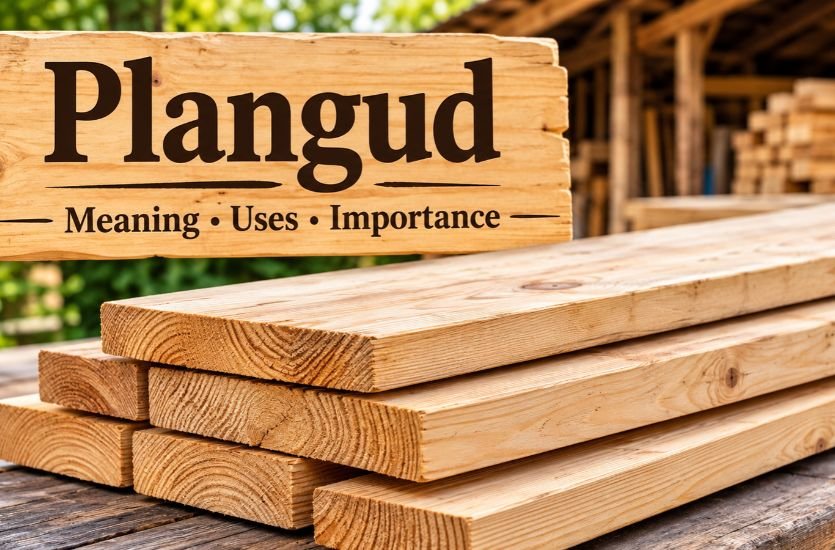
The word Plangud may seem unfamiliar to people who encounter it while searching for information about languages, construction materials, or wooden products. However, the term has a straightforward linguistic meaning in Estonian. It is the plural form of the word “plank,” which refers to a relatively thick wooden board commonly produced by cutting timber. These boards have been used for generations in construction, woodworking, flooring, fencing, and other practical applications.
Although Plangud is primarily associated with wooden planks in its established Estonian meaning, the word has also appeared in different contexts across the internet. Some online publications describe it as a planning concept or productivity-related term. Understanding the original meaning, practical applications, and modern online usage helps explain why people search for Plangud and what information they should expect to find.
Quick Facts About Plangud
| Detail | Information |
|---|---|
| Term | Plangud |
| Language | Estonian |
| Singular Form | Plank |
| Plural Form | Plangud |
| English Meaning | Planks or thick wooden boards |
| Word Type | Noun |
| Main Association | Timber and wooden materials |
| Common Applications | Construction, flooring, fencing, woodworking |
| Material | Wood |
| Related Concept | Wooden planking |
What Is Plangud?
Plangud is an Estonian word used to describe multiple wooden planks or relatively thick boards. The singular form is “plank,” while “plangud” refers to more than one. According to Estonian language references, a plank is generally a thick, narrow wooden board produced by sawing timber.
The term is particularly relevant when discussing wood products and traditional building materials. Wooden planks can be prepared in different dimensions and finishes depending on their intended purpose. Some are used in structural projects, while others are processed for furniture, decorative surfaces, or outdoor installations.
Unlike a specific commercial product, Plangud does not identify one particular type of wood, manufacturer, or construction technique. Its meaning depends on the surrounding context. A timber supplier might use it when describing a collection of wooden boards, while a construction professional might encounter it in technical descriptions of wooden structures.
The Meaning and Linguistic Background of Plangud
Understanding the linguistic background of Plangud makes the term easier to recognize. Estonian is a Finno-Ugric language spoken primarily in Estonia. Like many other languages, it uses grammatical changes to express singular and plural forms.
The word “plank” represents the singular form, whereas “plangud” represents its plural form. This grammatical difference explains why the English translation changes from plank to planks.
The Estonian dictionary records plank as a wooden board and provides examples of its plural usage. Its explanatory dictionary also describes the word in connection with relatively thick wooden boards and gives examples involving floors, benches, fences, and boats.
The word therefore has an established connection with everyday materials rather than being exclusively a modern internet expression. Its appearance in English-language searches reflects growing interest in unusual foreign-language terms and their meanings.
Common Uses of Plangud
Wooden planks are versatile materials that can serve different purposes depending on their thickness, length, wood species, and quality. Their practical value comes from their strength, adaptability, and ability to be processed into different shapes.
1. Construction and Building Projects
Wood is also widely used in material handling, where wooden pallets support the storage and transportation of construction supplies and other goods.
The dimensions and strength of the wood determine whether it is suitable for a particular application. Structural projects require materials that meet appropriate engineering and building requirements. Ordinary decorative boards should not automatically be considered suitable for load-bearing purposes.
2. Wooden Flooring
Wooden planks are widely associated with traditional and modern flooring. They can create natural-looking surfaces in residential properties, commercial buildings, and other interior spaces.
Flooring boards are available in different wood species, colours, patterns, and finishes. Some retain their natural appearance, while others receive protective coatings to improve their resistance to everyday wear.
The quality of installation and preparation also influences the final appearance and durability of a wooden floor.
3. Fences and Outdoor Structures
Another important application of wooden planks is fencing. Multiple boards can be arranged vertically or horizontally to create boundaries around residential properties, gardens, and outdoor areas.
Wooden fences offer a traditional appearance and can be adapted to different architectural styles. However, outdoor timber is exposed to moisture, sunlight, insects, and changing temperatures. Appropriate wood selection and protective treatment can help improve its lifespan.
4. Furniture Manufacturing
Furniture makers also work with wooden planks when producing tables, benches, shelves, cabinets, and other household products.
The natural appearance of timber makes it useful for furniture that combines practical functionality with visual appeal. Depending on the design, manufacturers may sand, cut, polish, stain, or join individual boards to achieve the desired result.
Hardwood and softwood varieties offer different characteristics, making material selection an important part of furniture production.
5. Boatbuilding and Marine Applications
Wooden planks have a long history in traditional boatbuilding. Craftspeople have used carefully shaped boards to create the outer surfaces of wooden boats and other watercraft.
Different construction methods arrange the boards in different ways. Traditional techniques include overlapping plank arrangements and smooth, edge-to-edge construction.
Marine applications require careful attention to timber selection, sealing, and construction quality because wooden structures must withstand prolonged exposure to water and changing environmental conditions.
Different Types of Wood Used for Planks
Planks can be produced from several types of trees. Each species has its own physical characteristics, appearance, durability, and suitability for different applications.
Pine is a commonly used softwood because it is relatively easy to process and is suitable for many general woodworking and construction projects. Its availability also makes it a practical option in numerous markets.
Spruce is another softwood used in building and woodworking. It is relatively lightweight and can be processed into boards for suitable construction applications.
Oak is a popular hardwood known for its strength, attractive grain, and durability. It is frequently selected for furniture, flooring, and decorative woodwork.
Birch offers a relatively smooth appearance and is used in furniture manufacturing, interior applications, and other woodworking projects.
The appropriate choice depends on the intended application, environmental conditions, budget, and required performance. Not every wood species is suitable for every project.
Important Factors When Selecting Wooden Planks
Choosing suitable wooden planks requires more than simply considering their appearance. Buyers and construction professionals need to evaluate several characteristics before selecting a particular material.
Wood quality: For additional technical information about wood properties, timber selection, and material performance, readers can consult the USDA Wood Handbook.
Dimensions: Length, width, and thickness should match the requirements of the intended project. Incorrect dimensions can create installation difficulties and material waste.
Moisture content: Wood naturally absorbs and releases moisture. Boards with unsuitable moisture levels may shrink, expand, or become distorted after installation. Proper drying and storage are therefore important.
Surface condition: The surface should be examined for rough edges, damage, and unwanted imperfections. Some projects require smooth, finished boards, while others can use rough-sawn timber.
Treatment and protection: Depending on the application, wood may require protective treatments against moisture, insects, or fungal damage. Outdoor and indoor materials may have different requirements.
Considering these factors helps buyers select materials that are appropriate for their projects rather than relying on appearance alone.
Plangud in Modern Online Searches
Although its established linguistic meaning relates to wooden planks, Plangud has gained attention in various online discussions. People searching for the term may encounter articles that describe it as a digital planning platform, productivity concept, or organizational approach.
These descriptions can create confusion because they are not necessarily connected to the original Estonian word. A website or publication can adopt an unfamiliar term as a name for its content, but that does not automatically establish a new dictionary meaning.
Some online discussions associate Plangud with organizing responsibilities, setting goals, managing schedules, and improving personal productivity. These activities are common elements of general planning practices. However, there is insufficient independent evidence to establish Plangud as an officially recognized productivity framework or a verified software platform.
For this reason, readers should consider the context in which they encounter the term. In an Estonian language or timber-related context, it refers to wooden planks. In a website or business context, it may be used as a name or branding expression.
Why Is Understanding Plangud Important?
Understanding unfamiliar terms can help people interpret information more accurately, especially when searching across different languages and industries.
For construction professionals, recognizing the meaning of Plangud can make timber-related descriptions easier to understand. It can also help people researching wooden materials identify relevant information about boards, dimensions, and applications.
For general readers, learning the linguistic background provides a clearer explanation of why the word appears differently from its English equivalent. It also demonstrates how grammatical structures can change the appearance of words across languages.
The term provides an example of how a relatively ordinary word in one language can become an unusual search keyword in another. Its different online uses also demonstrate why checking reliable information is important before accepting claims about a product, platform, or concept.
Frequently Asked Questions About Plangud
What does Plangud mean in English?
Plangud is an Estonian plural form of plank. Its English meaning is generally translated as planks or wooden boards.
Is Plangud a singular or plural word?
Plangud is plural. Its singular form is plank, which refers to an individual wooden board.
What are Plangud used for?
Wooden planks are commonly used in construction, flooring, furniture manufacturing, fencing, decking, and traditional boatbuilding.
Is Plangud a type of wood?
No. Plangud is not the name of a particular wood species. It refers to multiple wooden planks, which can be produced from different types of timber.
Is Plangud a digital planning platform?
Some online publications use the name in planning and productivity-related contexts. However, its status as an established digital platform has not been independently verified.
Which materials can be used to produce Plangud?
Wooden planks can be produced from different tree species, including pine, spruce, birch, and oak. The selection depends on the intended application and required characteristics.
Is Plangud still relevant today?
Yes. Wooden planks remain useful in modern construction, furniture production, flooring, and various woodworking applications. The term also continues to appear in online searches about its linguistic meaning.
Conclusion
Plangud is an Estonian plural word associated with wooden planks and relatively thick timber boards. Its practical meaning connects it with several traditional and modern applications, including construction, flooring, fencing, furniture manufacturing, and boatbuilding. The material itself can come from different tree species and requires appropriate selection according to its intended use.
Although some online publications associate Plangud with planning and productivity concepts, these interpretations should be distinguished from its established linguistic meaning. Understanding this difference provides a more accurate picture of the term and helps readers evaluate the information they encounter online.