









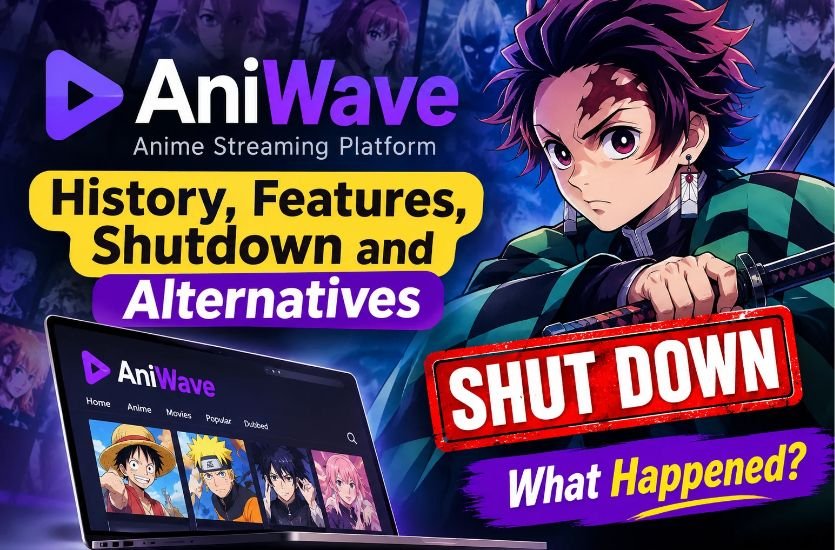
AniWave was once one of the most recognized names in online anime streaming. It attracted millions of visitors who wanted to watch Japanese animated series and movies through a convenient web-based platform. Known for its extensive anime collection, subtitle and dubbing options, and accessible interface, the website developed a large international audience. However, its history was not without controversy because it distributed copyrighted entertainment without proper authorization.
AniWave was not originally launched under that name. It was previously known as 9Anime, an anime streaming website that established its presence years before the rebranding. In August 2023, the platform adopted the AniWave identity following copyright-related complaints and internet service provider restrictions. Its popularity continued under the new name, but the service eventually disappeared in August 2024 during a major wave of online piracy website shutdowns.
The closure left many anime viewers searching for information about the platform, its history, and alternative ways to watch their favorite shows. Even in 2026, AniWave remains a frequently discussed name among anime enthusiasts who remember its previous streaming experience.
Quick Facts About AniWave
| Detail | Information |
|---|---|
| Website Name | AniWave |
| Previous Name | 9Anime |
| Website Type | Anime Streaming Website |
| Original Launch | 2016 (as 9Anime) |
| Rebranding Date | August 2, 2023 |
| Shutdown Date | August 2024 |
| Main Content | Anime Series and Movies |
| Content Languages | Japanese, English Subtitles and English Dubbing |
| Accessibility | Web Browser |
| Business Model | Free, Advertising-Supported Access |
| Original Website Status | Shut Down |
| Main Audience | International Anime Fans |
What Was AniWave?
AniWave was an online anime streaming website that provided access to a wide selection of Japanese animated entertainment. It became popular among viewers looking for anime series, movies, and individual episodes without purchasing a traditional streaming subscription.
The platform was particularly recognized for its extensive collection of titles from different anime genres. Visitors could explore action, adventure, comedy, drama, fantasy, romance, science fiction, and other categories. This variety helped it attract viewers with different entertainment preferences.
One of its notable characteristics was the availability of subtitled and dubbed anime. Subtitled versions allowed viewers to experience Japanese voice performances while reading translated dialogue. English-dubbed versions offered another option for audiences who preferred watching anime in English.
Unlike conventional streaming services, AniWave did not operate through a standard paid subscription model. However, its free access was associated with copyright concerns because much of the content was distributed without the necessary authorization from copyright holders.
AniWave eventually became more than just a streaming website for its audience. It developed a recognizable online identity and attracted a community of anime enthusiasts who regularly visited the platform to discover and watch animated entertainment.
The History of AniWave and Its Connection to 9Anime
Understanding AniWave’s history requires looking at the website that existed before it. The platform’s development began under the name 9Anime, which became established in the online anime-streaming market before its eventual rebranding.
The Beginning of 9Anime
9Anime emerged around 2016 as an online destination for people interested in Japanese animation. At that time, anime was becoming increasingly popular among international audiences, with viewers searching for convenient ways to access both classic productions and newer releases.
The website attracted attention by offering a collection of anime titles through a browser-based experience. Its growing library and accessibility helped it develop a substantial audience over the following years.
As its popularity increased, 9Anime became a recognizable name in the unofficial anime-streaming community. However, its distribution of copyrighted material also created legal challenges and attracted attention from copyright enforcement organizations.
The Rebranding to AniWave in 2023
On August 2, 2023, 9Anime announced that it would change its name to AniWave, following ongoing DMCA-related issues and restrictions imposed by multiple internet service providers. The operators explained that the decision followed ongoing DMCA-related issues and restrictions imposed by multiple internet service providers.
The rebranding introduced a different identity while maintaining the familiar service experience for existing visitors. The transition also reflected the difficulties faced by unofficial streaming websites attempting to maintain their online presence amid copyright enforcement activities.
Although the name changed, the platform remained connected to its original 9Anime identity. Many existing users recognized AniWave as the continuation of the website they had previously visited.
The Shutdown in August 2024
AniWave’s operation eventually came to an end in August 2024. On August 27, visitors began encountering a farewell message instead of the familiar streaming interface.
The closure happened during a broader shutdown involving several major unauthorized movie and television streaming websites. On August 29, 2024, the Alliance for Creativity and Entertainment announced its support for Vietnamese authorities in an operation against a major piracy network, during the same period that AniWave and other related streaming websites disappeared.
The farewell message marked the end of the original service and encouraged visitors to consider legitimate paid streaming platforms. Its disappearance became an important moment in the history of online anime streaming.
Main Features That Made AniWave Popular
AniWave developed its audience through several features that made its website convenient for anime enthusiasts. Although the original service is no longer operating, its historical features help explain why it attracted so much attention.
Extensive Anime Collection
One of AniWave’s most recognizable characteristics was its wide selection of anime content. Visitors could find series from different periods, including older productions and more recent releases.
The collection covered multiple genres, giving viewers opportunities to explore different types of Japanese animation. This variety was particularly appealing to people who enjoyed discovering lesser-known titles alongside popular anime productions.
Subtitled and Dubbed Versions
Language accessibility was another important part of AniWave’s appeal. The platform offered subtitled and dubbed versions of various anime titles.
Subtitles helped international viewers follow Japanese dialogue while retaining the original voice performances. English dubbing provided an alternative for people who preferred listening to translated dialogue rather than reading subtitles throughout an episode.
Multiple Streaming Sources
AniWave was also known for providing different streaming sources for certain episodes. These options were intended to give visitors alternative playback choices when one source experienced technical problems.
However, the reliability and quality of third-party streaming sources could vary. Their availability also depended on the content and external hosting services.
Search and Browsing Options
Finding specific anime titles was an important part of the platform’s browsing experience. Its search and navigation features helped visitors locate series, discover episodes, and explore different categories.
This organization made the website relatively straightforward to navigate, particularly for returning visitors who already knew which anime they wanted to watch.
Watchlists and Bookmarks
The platform also offered features that allowed users to organize their preferred anime titles. Watchlists and bookmarks helped viewers keep track of series they planned to watch or had already discovered.
These features contributed to the convenience of the overall experience and were among the aspects remembered by some former users.
Why Did AniWave Become So Popular?
AniWave’s popularity resulted from a combination of accessibility, content variety, and an established audience inherited from 9Anime.
One major factor was its free-access model. Many viewers were interested in watching anime without committing to monthly subscription payments. This made the platform particularly attractive to people who did not have access to affordable licensed streaming services in their regions.
Its extensive collection also played an important role. Instead of focusing on a limited selection of popular productions, AniWave offered anime from various genres and release periods. This gave viewers more opportunities to discover different series.
The platform’s international accessibility helped it develop an audience beyond Japan. Subtitles and English dubbing made its content easier to understand for people who were not familiar with Japanese.
Its previous identity also contributed to its success. Since 9Anime already had an established following, the transition to AniWave did not require the platform to build an entirely new audience from the beginning.
According to historical reporting by TorrentFreak, AniWave received approximately 170 million visits per month shortly before its shutdown. This figure demonstrates the scale of its former audience, although it should not be interpreted as current website traffic.
Why Did AniWave Shut Down?
AniWave’s shutdown was connected to the wider problem of copyright infringement in online entertainment distribution.
Anime productions involve considerable work from animation studios, directors, writers, voice actors, artists, and other professionals. Copyright laws protect the distribution and commercial use of these productions. Streaming websites generally need appropriate authorization or licensing agreements to make copyrighted content available legally.
AniWave operated outside the conventional licensing system for much of its content. As a result, it faced the same broader copyright enforcement concerns affecting other unauthorized streaming platforms.
Its closure occurred during a significant international operation targeting piracy websites. The Alliance for Creativity and Entertainment confirmed its involvement in an operation supported by Vietnamese authorities against a major piracy network in August 2024.
However, it is important to distinguish the wider enforcement operation from the exact circumstances of AniWave’s closure. Not every technical or legal detail surrounding the shutdown was publicly established.
The disappearance of AniWave demonstrated how copyright enforcement can affect even websites that have developed large international audiences. It also highlighted the importance of legitimate distribution channels in supporting the people and companies responsible for producing anime.
Is AniWave Still Working in 2026?
The original AniWave service shut down in August 2024 and has not been verified as having officially returned.
Nevertheless, people searching for AniWave may still encounter websites using the same name, branding, or familiar interface. These websites should not automatically be considered official versions of the original platform.
Some operators may use established streaming brands because their names remain recognizable among former visitors. However, a similar design or working video player does not prove that a website is connected to the original owners.
This situation creates confusion for people who remember the original service and want to revisit it. Unverified websites may also introduce different security and privacy concerns.
Anyone researching AniWave should distinguish between the historical platform and unrelated websites currently using similar branding. The original service’s shutdown remains the most important fact when discussing its current status.
Is AniWave Safe to Use?
The safety question surrounding AniWave requires understanding the difference between its original operation and websites that currently use its name.
The original service is no longer operating. Therefore, visitors cannot assume that a currently accessible website using AniWave branding follows the same practices or has the same ownership.
Unofficial streaming websites can expose visitors to misleading advertisements, unexpected redirects, suspicious downloads, and fraudulent browser notifications. Some pages may also imitate legitimate services to encourage users to provide personal information.
A website’s familiar appearance does not guarantee that it is trustworthy. Similarly, a browser security symbol alone does not establish that the website distributes content legally or protects users from every potential risk.
Visitors should avoid downloading unknown applications, installing unfamiliar browser extensions, or entering passwords and payment details on unverified websites. Keeping browsers and security software updated is also an important part of general online safety.
It is worth remembering that simply opening an unfamiliar website does not automatically mean a device has been infected. The level of risk depends on what happens afterward, including whether the visitor downloads files, grants permissions, installs software, or shares sensitive information.
Best Legal Alternatives to AniWave
Following AniWave’s shutdown, anime viewers have several legitimate streaming services to consider. Their content libraries, subscription prices, and availability differ depending on the country.
Crunchyroll
Crunchyroll is one of the best-known streaming services dedicated to anime. Its collection includes television series, movies, and different genres of Japanese animation.
The platform provides licensed content and offers various viewing options depending on the subscription plan and regional availability. It is particularly relevant for viewers who regularly watch anime and want access to a dedicated anime-focused service.
Netflix
Netflix is a general entertainment streaming platform with a growing collection of anime titles. Its catalog includes original productions, licensed Japanese animated series, and selected anime movies.
Although it is not exclusively focused on anime, it provides an option for viewers who want to access animated content alongside movies, documentaries, and television programs.
HIDIVE
HIDIVE is another streaming service specializing in Japanese animation. It offers a selection of licensed anime titles, including series that may not be available on other platforms.
Its collection and availability vary by region, so viewers should check whether the service operates in their country before subscribing.
Tubi
Tubi is a free, advertising-supported streaming service that offers movies and television programs. Its available collection includes selected anime titles in supported regions.
Unlike unofficial streaming websites, Tubi operates through licensed content distribution. However, its anime selection may be more limited than services dedicated entirely to Japanese animation.
AniWave’s Impact on the Online Anime Community
AniWave’s popularity reflected a broader change in how international audiences discovered Japanese animation. Online streaming made it easier for viewers to explore anime without depending entirely on television broadcasts or physical media.
The platform also demonstrated the demand for extensive anime collections and accessible viewing experiences. People wanted convenient ways to discover different genres, follow ongoing series, and revisit older productions.
However, its shutdown highlighted an important issue within the entertainment industry. Free access does not necessarily mean that content is being distributed legally or that the creators receive appropriate compensation.
Anime production requires the combined efforts of many professionals and organizations. Licensing agreements and legitimate distribution platforms help support these creative industries and provide a sustainable way for audiences to enjoy their work.
AniWave’s history therefore represents both the popularity of online anime streaming and the challenges associated with unauthorized content distribution.
Frequently Asked Questions About AniWave
What was AniWave?
AniWave was an unofficial online anime streaming website that offered access to Japanese animated series and movies. It was previously known as 9Anime before changing its name in August 2023.
Is AniWave the same as 9Anime?
Yes. AniWave was the rebranded version of 9Anime. The website changed its identity on August 2, 2023, following copyright-related complaints and internet service provider restrictions.
When did AniWave shut down?
The original AniWave service shut down in August 2024. Visitors encountered a farewell message on August 27, marking the end of its operation.
Why was AniWave popular?
AniWave attracted viewers through its extensive anime collection, free access, subtitled and dubbed content, browsing features, and established international audience.
Is AniWave still available in 2026?
The original AniWave service has not been verified as having returned. Websites currently using its name should be treated as unverified rather than assumed to be official continuations.
Was AniWave a legal streaming platform?
AniWave was associated with the unauthorized distribution of copyrighted anime content. Its operation raised copyright concerns because much of the material was made available without the necessary authorization.
What are the best alternatives to AniWave?
Crunchyroll, Netflix, HIDIVE, and Tubi are examples of legitimate streaming services offering anime content. Their availability and catalogs depend on regional licensing agreements.
Was AniWave connected to HiAnime?
No. AniWave was the successor to 9Anime, while HiAnime followed a separate naming history involving Zoro.to and AniWatch. They should not be treated as the same platform.
Conclusion
AniWave remains a recognizable name in the history of online anime streaming. Originally established as 9Anime, the platform changed its identity in August 2023 and continued attracting a substantial international audience. Its extensive anime collection, free-access model, and convenient browsing experience contributed to its popularity.
However, copyright-related challenges and the wider enforcement against unauthorized streaming websites formed an important part of its history. The original service eventually shut down in August 2024, leaving behind a large community of former visitors.
In 2026, AniWave should primarily be understood as a discontinued streaming platform rather than an active official service. Its story highlights the changing landscape of online entertainment and the importance of legitimate streaming options for supporting anime creators and the industry.
For more informative articles covering technology, entertainment, and digital developments, readers can explore Expand Magazine.