








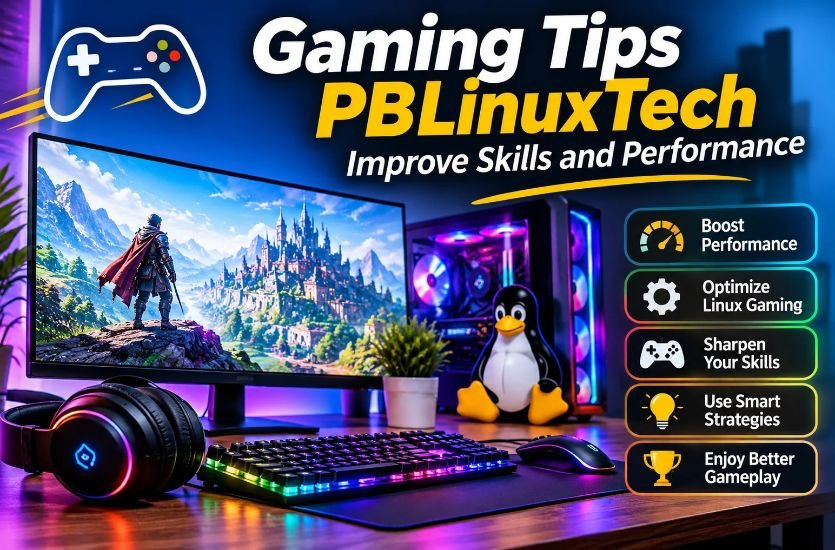
Gaming has evolved from a casual pastime into a competitive and technology-driven activity enjoyed by millions of people worldwide. Whether someone plays action games, strategy titles, sports simulations, or multiplayer adventures, improving performance requires more than simply spending hours in front of a screen. Players need suitable settings, reliable hardware, practical strategies, and a clear understanding of the games they enjoy. This is where gaming tips PBLinuxTech becomes a useful topic for exploring smarter gaming habits and better performance.
Gaming tips PBLinuxTech brings together practical ideas for improving gameplay, optimizing computer performance, understanding gaming technology, and developing stronger skills. It also highlights the importance of Linux gaming tools, system compatibility, and responsible gaming practices. Beginners can use these principles to build confidence, while experienced players can apply them to refine their techniques and improve their overall gaming experience.
Quick Answer: What Are Gaming Tips PBLinuxTech?
| Detail | Information |
|---|---|
| Main topic | Gaming advice and performance improvement |
| Primary focus | Better gameplay, gaming strategies, and optimization |
| Target audience | Beginners, casual gamers, and experienced players |
| Platforms | PC, Linux, consoles, and mobile |
| Technical subjects | FPS, graphics settings, drivers, and compatibility |
| Main objective | Improve gaming skills and create a smoother experience |
Gaming tips PBLinuxTech refers to practical gaming guidance covering gameplay techniques, computer optimization, Linux gaming, and useful technology insights. Its central purpose is to help players make informed decisions, improve their skills, and get more value from their gaming setups.
Understanding the Importance of Gaming Tips PBLinuxTech
Gaming performance depends on several connected factors. A player might understand a game’s mechanics but struggle because of inconsistent frame rates, uncomfortable controls, or poor network conditions. Similarly, a computer with powerful hardware cannot automatically make someone a skilled player. Technical performance and personal ability work together to shape the overall experience.
The gaming tips PBLinuxTech approach considers both sides. It encourages players to understand their equipment while developing the skills required to perform well in different gaming environments. This combination is especially useful for people who want to improve without immediately spending money on expensive hardware.
Another important aspect is adaptability. Every game has different requirements, control systems, objectives, and challenges. Techniques that work well in a competitive shooter might not be suitable for a racing simulation or strategy game. Learning how to evaluate individual games helps players select the right settings and develop appropriate strategies.
1. Choose the Right Gaming Settings
Settings have a significant influence on comfort, responsiveness, and visual performance. Many beginners start playing with default configurations without considering whether those settings suit their hardware or personal preferences.
Graphics settings should be adjusted according to the computer’s capabilities. High-quality textures, advanced shadows, reflections, and demanding lighting effects can improve visual presentation but may also reduce performance. Players using entry-level systems can often achieve smoother gameplay by lowering demanding graphical options.
Resolution is another important consideration. Higher resolutions provide sharper images but require more graphics processing power. Finding a balance between image quality and frame rate is often more beneficial than selecting the highest available settings.
Control sensitivity also deserves attention. In shooting games, extremely high mouse sensitivity can make accurate aiming difficult, while very low sensitivity may limit movement speed. Players should experiment with different configurations and maintain settings that allow comfortable and consistent control.
2. Improve FPS and Overall Gaming Performance
Frames per second, commonly known as FPS, indicate how many frames a computer displays each second. A stable frame rate can make gameplay feel smoother and improve the responsiveness of controls.
However, higher FPS is not always the only performance objective. Frame-time consistency also matters because sudden variations can create noticeable stuttering, even when the average frame rate appears acceptable.
Players can improve system performance by keeping graphics drivers updated, closing unnecessary background applications, and checking whether their computers are experiencing overheating. Dust accumulation, restricted airflow, and demanding background processes can affect performance during extended gaming sessions.
Storage and memory also influence the experience. Modern games may require substantial storage space and system memory. Installing games on an SSD can reduce loading times compared with traditional hard drives, although it does not automatically increase FPS in every situation.
The most effective optimization method is to identify the actual performance limitation before changing multiple settings. Monitoring CPU usage, GPU utilization, memory consumption, temperatures, and frame times can help reveal whether the problem comes from hardware limitations or software configuration.
3. Develop Better Gaming Skills Through Consistent Practice
Technical improvements can make games run better, but personal skills determine how effectively players use the available resources. Consistent practice is one of the most reliable ways to develop stronger gaming abilities.
Players should focus on understanding the mechanics of their chosen games instead of concentrating exclusively on winning. Learning movement techniques, attack patterns, defensive abilities, map layouts, and character strengths can improve decision-making over time.
In competitive games, aim training and reaction exercises can help develop accuracy and coordination. However, practicing without a clear objective may produce limited results. Players should identify their weaknesses and work on specific areas during each session.
For example, someone struggling with accuracy can spend time practicing controlled movements rather than immediately entering competitive matches. A strategy game player might benefit more from studying resource management and planning than repeatedly playing without evaluating previous decisions.
Reviewing mistakes is equally important. Understanding why a particular move failed can prevent similar errors in future matches. This habit encourages players to learn from experience rather than depending entirely on instinct.
4. Understand Linux Gaming and Its Advantages
Linux has become an increasingly capable platform for PC gaming. Although Windows remains widely used, Linux offers flexibility, customization, and access to several gaming technologies that make it an interesting alternative.
One of the most important developments in Linux gaming is Steam Proton, a compatibility tool that allows many Windows games to run on Linux through Steam. Proton is a compatibility tool that allows many Windows games to run on Linux through Steam. It uses technologies such as Wine and DXVK to help translate Windows-related functions into forms supported by Linux systems.
However, compatibility varies between individual games. Some titles work smoothly, while others may experience graphical problems, missing features, or multiplayer restrictions. Anti-cheat systems can also affect whether certain competitive games operate correctly.
Linux users should therefore check game compatibility before purchasing or installing a title. Understanding these limitations helps avoid unnecessary troubleshooting and creates more realistic expectations.
Another advantage of Linux is the ability to customize the desktop environment and system configuration. Experienced users can adjust services, manage applications, and choose software according to their requirements. This flexibility makes Linux particularly interesting for gamers who enjoy understanding how their computers work.
5. Use Useful Linux Gaming Tools
Linux gaming involves several tools that help users manage performance, monitor hardware, and improve compatibility. Learning about these applications can make troubleshooting easier.
Steam and Proton
Steam provides a convenient environment for managing games, updates, multiplayer features, and digital purchases. Its Proton compatibility layer allows many Windows games to run on supported Linux distributions.
Players can select different Proton versions when troubleshooting compatibility problems. However, changing versions does not guarantee that every game will work correctly. Testing compatibility and checking known issues are important parts of the process.
GameMode
GameMode is a Linux utility developed by Feral Interactive that can temporarily apply selected system optimizations when supported games are running. It can temporarily apply selected system optimizations when supported games are running. Depending on the configuration, these adjustments may involve CPU performance preferences and other system settings.
It is important to understand that GameMode does not guarantee higher FPS. Its actual benefits depend on the hardware, operating system, game, and existing configuration.
MangoHud
MangoHud is a performance-monitoring overlay designed for Linux applications and games. It can display useful information such as FPS, frame times, CPU usage, GPU usage, temperatures, and memory consumption.
This information helps players understand how their systems behave during gameplay. Instead of changing random settings, they can use performance measurements to identify potential problems.
Wine and DXVK
Wine is a compatibility layer that allows certain Windows applications to run on Linux without requiring a traditional Windows installation. DXVK translates Direct3D 9, 10, and 11 graphics calls into Vulkan.
These technologies are important components of the Linux gaming ecosystem. They help expand game compatibility, although results depend on individual titles, drivers, and system configurations.
6. Optimize Your Gaming Hardware
A good gaming experience does not always require the most expensive equipment. Understanding existing hardware and using it efficiently can make a considerable difference.
The graphics processing unit, or GPU, handles most of the visual rendering in modern PC games. Its capabilities influence resolution, graphical effects, and achievable frame rates. The central processing unit, or CPU, manages game logic, calculations, background tasks, and other important operations.
Memory is another consideration. Insufficient RAM can cause performance problems, particularly when demanding games run alongside browsers, recording software, and other applications. Players should check individual game requirements before deciding whether a memory upgrade is necessary.
Cooling is equally important. Computers generate heat during intensive workloads, and inadequate cooling can cause components to reduce their operating speeds. Keeping air vents clear, cleaning dust filters, and maintaining proper airflow help protect system stability.
Peripherals also affect comfort and control. A reliable mouse, comfortable keyboard, suitable headset, and properly configured controller can improve the overall experience. Choosing equipment should depend on the type of games played rather than simply purchasing products marketed specifically for gaming.
7. Improve Internet Connectivity for Online Gaming
Online gaming requires a stable internet connection, especially in competitive multiplayer environments. A fast connection is useful, but download speed alone does not determine whether online gameplay feels responsive.
Latency, commonly called ping, measures the time required for data to travel between a player’s device and a game server. High latency can cause delayed responses, while unstable latency can create inconsistent gameplay.
Packet loss is another problem. It occurs when some data packets fail to reach their destination. This can result in interrupted communication, unusual character movement, and delayed actions.
Using a wired Ethernet connection can provide more consistent connectivity than Wi-Fi in many environments. Players using wireless networks should consider router placement, signal interference, and the number of connected devices.
Selecting an appropriate game server can also help reduce latency. A geographically closer server may provide a better connection, although actual performance depends on network routing and server conditions.
For Linux users, checking network settings and identifying background downloads can help diagnose connection problems. Keeping applications updated and avoiding unnecessary network activity during competitive matches may also improve consistency.
8. Learn Game-Specific Strategies and Mechanics
Every gaming genre requires different skills. Players who understand these differences can develop more effective techniques instead of relying on one general approach.
In first-person shooters, accuracy, positioning, map awareness, movement, and reaction time are important. Players should learn weapon characteristics, understand available cover, and avoid unnecessary engagements.
Strategy games require a different mindset. Resource management, planning, timing, and understanding opponents’ decisions often matter more than quick reactions. Players should evaluate available resources and consider the long-term consequences of their actions.
Racing games reward consistency, braking control, cornering techniques, and track knowledge. Learning the layout of a circuit and understanding how different vehicles behave can improve lap times.
Role-playing games often involve character development, equipment selection, exploration, and understanding combat systems. Players can benefit from studying abilities and choosing upgrades that support their preferred playing style.
The central lesson is that improvement requires understanding the specific mechanics of each game. This makes game knowledge an essential part of the broader gaming tips PBLinuxTech approach.
9. Maintain Healthy Gaming Habits
Gaming should remain an enjoyable activity rather than becoming a source of unnecessary physical or mental strain. Long sessions without breaks can contribute to tiredness, reduced concentration, and discomfort.
Players should take regular breaks, maintain comfortable seating positions, and avoid placing excessive strain on their eyes and wrists. Proper lighting and an appropriate screen position can also make extended gaming sessions more comfortable.
Sleep is another important factor. Playing late into the night can interfere with regular sleeping schedules, particularly when games involve competitive matches or continuous progression systems. Maintaining a balanced routine helps support concentration and everyday responsibilities.
Responsible gaming also includes managing spending. Players should understand the difference between essential purchases and optional upgrades. In-game purchases, subscriptions, and expensive gaming equipment should be considered carefully rather than bought impulsively.
Healthy habits support long-term enjoyment and allow players to approach games with better focus.
10. Avoid Common Gaming Mistakes
Many players struggle because they repeat habits that prevent improvement. One common mistake is changing several settings simultaneously. When performance changes, it becomes difficult to identify which adjustment caused the difference.
Another problem is copying professional players’ configurations without considering individual hardware and preferences. Professional settings are not automatically suitable for every player.
Ignoring system temperatures is also risky. Consistent overheating can affect stability and may indicate inadequate cooling or a hardware problem. Players should investigate unusual temperature increases rather than assuming they are normal.
Some users also install unofficial performance tools or modified game files from untrusted sources. These downloads can contain malware, compromise accounts, or violate game rules. Using trusted software and keeping security protections active is a safer approach.
Finally, focusing entirely on winning can make gaming frustrating. Players should recognize gradual improvement, learn from unsuccessful matches, and understand that different games require different levels of experience.
11. Explore Gaming Technology and Future Trends
The gaming industry continues to develop through improvements in hardware, software, artificial intelligence, and internet infrastructure, making gaming technology an important area of interest for players. Understanding these developments helps players make informed decisions about their gaming setups.
Artificial intelligence is becoming increasingly important in game development. Developers use AI-related technologies to improve non-player character behavior, generate certain game elements, support animation workflows, and create more responsive environments.
Cloud gaming is another growing area. It allows players to stream games from remote servers instead of depending entirely on powerful local hardware. This can make demanding games accessible on devices with limited processing capabilities. However, a reliable internet connection and low latency remain important requirements.
Virtual reality and augmented reality are also expanding the possibilities of interactive entertainment. These technologies introduce new ways to experience games through immersive environments and interactive controls.
Meanwhile, hardware manufacturers continue developing more powerful graphics processors, faster storage technologies, and improved display systems. These advancements provide additional opportunities for better visual quality and smoother gameplay.
Gaming tips PBLinuxTech can help readers understand these developments and recognize which technologies offer practical benefits for their individual needs.
12. How to Build a Better Gaming Setup on a Budget
Building an effective gaming setup does not require purchasing every expensive accessory. A practical approach starts with identifying the equipment that needs improvement.
Players should first evaluate their current computers or gaming devices. Checking processor specifications, available memory, graphics capabilities, and storage can reveal whether an upgrade is necessary.
For users experiencing long loading times, an SSD may provide a noticeable improvement. Those struggling with insufficient memory may benefit from a suitable RAM upgrade, provided their systems support it.
A graphics card upgrade can be valuable for players who want better visual performance, but it should be selected according to the processor, power supply, case dimensions, and intended gaming resolution.
Budget-conscious gamers should also consider free optimization options before spending money. Updating drivers, adjusting graphics settings, removing unnecessary startup applications, and improving cooling can address several common performance issues.
The best setup is not necessarily the most expensive one. It is the setup that meets the player’s requirements while providing reliable performance and comfortable everyday use.
13. Make Gaming More Enjoyable Through Better Planning
Planning can improve both casual and competitive gaming experiences. Players who understand their objectives are more likely to use their time effectively and avoid unnecessary frustration.
Before starting a game, it can help to identify what needs attention. Someone learning a new title might focus on understanding controls and basic mechanics, while an experienced player could work on improving a particular skill.
Organizing game libraries also makes it easier to manage storage and updates. Removing games that are no longer used can free up space for new installations. Players should also maintain updated backups of important game saves where supported.
For multiplayer gaming, communication and teamwork are essential. Respectful communication, clear coordination, and understanding team responsibilities can improve cooperation.
Players should also recognize when they need a break. Continuing to play while frustrated or exhausted may lead to poor decisions and reduce enjoyment. A balanced approach allows gaming to remain a positive recreational activity.
Frequently Asked Questions About Gaming Tips PBLinuxTech
What is gaming tips PBLinuxTech?
Gaming tips PBLinuxTech is a gaming-related keyword covering practical advice about gameplay, computer optimization, Linux gaming, gaming tools, and performance improvement. It brings together technical knowledge and useful strategies for different types of players.
How can beginners improve their gaming skills?
Beginners can improve by learning game mechanics, practicing regularly, adjusting control settings, and studying their mistakes. Starting with manageable challenges and gradually developing more advanced techniques can also build confidence.
Does Linux support modern PC games?
Yes, Linux supports many modern PC games through native versions and compatibility technologies such as Steam Proton and Wine. However, not every game is compatible, and some multiplayer titles have additional anti-cheat restrictions.
Which Linux tools are useful for gaming?
Steam Proton, GameMode, MangoHud, Wine, and DXVK are useful technologies within the Linux gaming ecosystem. They support game compatibility, performance management, monitoring, and graphics translation.
How can I increase FPS without upgrading my computer?
Players can try lowering demanding graphics settings, updating drivers, closing unnecessary applications, checking temperatures, and reducing background activity. The results depend on the hardware and the source of the performance limitation.
Is high FPS more important than graphics quality?
It depends on the type of game and individual preferences. Competitive games often benefit from higher and more consistent frame rates, while visually focused single-player games may prioritize graphical quality. A suitable balance usually provides the best experience.
Can gaming performance improve with practice?
Yes. Regular and purposeful practice can improve accuracy, reaction time, game knowledge, decision-making, and familiarity with controls. Reviewing mistakes and focusing on specific weaknesses can make practice more effective.
Conclusion
Gaming continues to evolve through new technologies, improved hardware, and changing player expectations. Developing better gaming skills requires a combination of knowledge, practice, suitable equipment, and responsible habits. Understanding graphics settings, optimizing system performance, maintaining stable internet connectivity, and learning game-specific strategies can all contribute to a better experience.
Gaming tips PBLinuxTech provides a useful framework for exploring these areas, particularly for players interested in both general gaming improvement and Linux-based gaming environments. By understanding tools such as Proton, GameMode, and MangoHud, users can make more informed technical decisions while improving their overall gaming experience.
Ultimately, becoming a better gamer is not simply about having expensive equipment or achieving the highest frame rate. It involves learning consistently, understanding technology, making thoughtful adjustments, and enjoying games in a balanced and responsible way.