

Introduction
In the vast and often murky landscape of the internet, new terms and entities emerge with alarming frequency. Some fade into obscurity, while others leave a lasting impact, whether for better or worse. One such name that has surfaced in recent years, sparking curiosity and concern, is incfidelibus. You may have encountered this term in forums, social media, or perhaps in reference to a specific online service. But what exactly does incfidelibus mean, and why has it become a topic of discussion?
The answer, as is often the case with internet phenomena, is layered and complex. For some, incfidelibus represents a specific type of digital service provider. For others, the name evokes a deeper historical and linguistic meaning that stretches back centuries. This article aims to unravel the enigma surrounding incfidelibus, exploring its dual identity as both a modern digital entity and a term rooted in historical tradition. We will delve into the origins of the word, examine the public perception of the service associated with it, and extract valuable lessons that can protect you from potential online pitfalls.
In essence, we are peeling back the layers on the phenomenon known as incfidelibus, providing you with the clarity and understanding needed to navigate your digital life safely. Whether you are a curious internet user, a business professional, or someone seeking online security solutions, understanding the story of incfidelibus offers a crucial lesson in digital literacy.
The Historical Roots of Incfidelibus
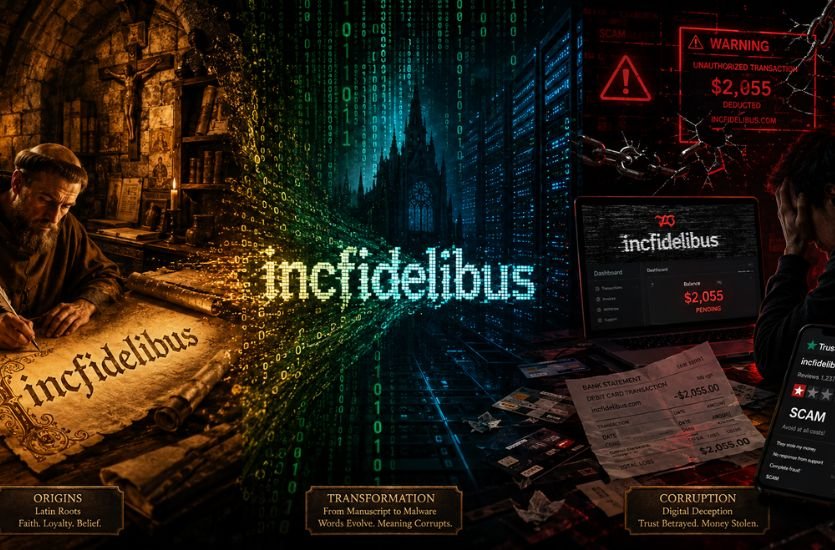
To truly understand the modern context, we must first travel back in time. The term incfidelibus is not a modern invention; it is a word with deep historical and linguistic roots. It originates from Latin, the language of the Roman Empire and the Catholic Church, which has heavily influenced Western culture and law.
Latin Origins and Ecclesiastical History
The word is a Latin noun form, specifically the dative or ablative plural of “infidelis” . In its simplest translation, “infidelis” means “unfaithful” or “unbelieving.” The root word, “fidelis,” translates to “faithful,” giving us the well-known term “fidelis” as in the Marine Corps motto, “Semper Fidelis,” meaning “Always Faithful.” The prefix “in-” negates this, creating the concept of one who is without faith or loyalty.
In the context of the ecclesiastical language of Rome, the term “infidelis” was used to denote all those outside the Church, including non-Christians, Jews, and Muslims . This distinction was formalized in canon law, where those who had received baptism were considered “the faithful,” and those who had not were labeled as “infidels” . It is crucial to understand that in this historical context, being classified as an infidel was not necessarily a moral judgment but rather a legal and theological categorization related to one’s membership in the Church. The thought was that negative infidelity was not a sin but a consequence of original sin .
“In Partibus Infidelium”
The specific formulation “incfidelibus” is closely related to the canonical term “in partibus infidelium.” This Latin phrase translates to “in the regions of the infidels” . Historically, this title was appended to the names of bishops who held titular sees—dioceses that had been conquered by non-Christian powers, particularly during the spread of Islam . These bishops had no actual authority in the regions but held the titles as a matter of tradition and honor .
So, what does this historical tangent have to do with a modern website? The choice of such a name by a contemporary business is almost certainly deliberate and provocative. By naming itself incfidelibus, an entity taps into a deep well of cultural and historical significance. It creates an image of operating outside established norms, perhaps appealing to a niche audience that understands the historical resonance. It suggests a service that operates on the fringes or in contested territories. Understanding this historical layer is the first step in decoding the message that the founders of incfidelibus intended to send.
Incfidelibus in the Modern Digital Age
Leaving the world of ancient texts and ecclesiastical law, we arrive at the present day, where the name incfidelibus has been resurrected and repurposed. In the modern digital ecosystem, incfidelibus refers to a specific website and online service that once operated, offering digital security and monitoring solutions. To understand its modern profile, we need to look at how it presented itself and how the public received it.
Services Offered
According to information on its former website, incfidelibus presented itself as a provider of “general hacking services” . The company claimed to offer ethical hacking solutions, with a key service being “cell phone monitoring” . This likely involved software or services designed to spy on cell phone activities, such as monitoring WhatsApp messages, call logs, and other phone data.
The marketing angle suggested a tool for people who needed to keep an eye on someone else’s digital footprint—perhaps suspicious partners, concerned parents, or employers monitoring company-owned devices. However, as with many services that delve into the gray area of digital privacy and surveillance, the line between “ethical” and “invasive” can easily blur. The company’s slogan, promising “the best general hacking services,” aimed to attract customers seeking powerful, and arguably covert, solutions.
The Public Perception
The reputation of incfidelibus, however, tells a very different story from its bold marketing claims. The public perception, as documented on platforms like Trustpilot, paints a picture of deep dissatisfaction and financial loss. Reviews from late 2019 and early 2020, just before the website was shut down, highlight a pattern of alarming customer experiences.
One of the most common complaints was that incfidelibus failed to deliver on its promises. Customers reported paying significant sums of money—one user reported being charged $2,055, while another paid €1,645—only to receive a static dashboard that did not function as advertised . The service allegedly could not retrieve the data it had promised to provide.
Adding insult to injury, the company apparently used a classic upselling technique, convincing customers to pay for additional items. One user was told to buy “storage space from the hosting company” for an additional $1,800 to access the data . Another was instructed to purchase a secure server for €2,800 and a VPN for €100 . After paying these exorbitant fees and getting no results, the customers were ghosted; the company stopped responding to all communication.
This leads to the most damning accusation of all: incfidelibus was not a legitimate hacking service but a well-executed scam. As one user put it, “They are not certified Hackers rather a scammers who do fraud with innocent people” . The users felt “useless, non-cooperative and make false promises,” and ultimately lost thousands of dollars .
The Legacy and Key Lessons of Incfidelibus
Though the website incfidelibus is now defunct and cannot be reviewed on Trustpilot, its story remains a powerful cautionary tale for anyone navigating the online world . The legacy of incfidelibus is not about the technology it claimed to offer, but about the red flags and behavioral patterns that characterize a sophisticated online scam. By dissecting this case, we can equip ourselves with the knowledge to avoid similar pitfalls in the future.
The Ultimate Scam
The experience of incfidelibus customers follows a textbook pattern of online fraud. First, there is the lure of a highly specific and sensitive service: digital hacking, monitoring, and surveillance. This appeals to people who are in a vulnerable or desperate position, making them more likely to ignore warning signs.
Next comes the promise of a money-back guarantee. This builds trust and creates a sense of security, encouraging the victim to part with a large sum of money. However, as the review states, “poor me I even didn’t get the service from the day one, all I got was merely a static dash board” . The guarantee was rendered meaningless because the service was never actually delivered.
Then, there is the critical red flag: continued requests for more money. This is a common tactic used to exploit the “sunk cost fallacy.” After investing a substantial amount, a victim is told they just need to buy one more thing—more storage, a secure server, a VPN—to unlock the service. This not only extracts more money but also delays the inevitable moment when the victim realizes they have been scammed, as they believe they are simply waiting for the next step to be completed.
The incfidelibus story also highlights the importance of third-party verification. All the negative experiences that have been cited were shared on independent review platforms. These platforms are vital resources for consumers. If a company is not transparent about its ownership, location, or team, it is a massive red flag. The victims of incfidelibus noted they “only have an email and a revolute bank account as info” . Legitimate businesses usually have verifiable physical addresses, phone numbers, and established leadership teams.
A Modern Take on the “Regions of the Infidels”
In a twist of irony, the name incfidelibus becomes a metaphor for the very problem it represents. In the digital world, customers who fall for these scams are operating “in the parts of the infidels”—a dangerous, unregulated territory on the internet. The incfidelibus scam is a cautionary tale that the digital frontier is not for the unprepared. It reminds us that behind a clever name and a professional-looking website, there can be nothing but empty promises and financial ruin.
How to Protect Yourself from Online Scams
The fall of incfidelibus serves as a stark reminder that the internet can be a dangerous place. However, by adopting a few key habits, you can significantly reduce your risk of falling victim to scams. The story of those who lost thousands to incfidelibus offers a clear lesson: it is far better to be skeptical and cautious than to be trusting and sorry.
Red Flags in Digital Services
When considering a digital service, especially one as sensitive as “hacking” or “monitoring,” watch out for these red flags:
- Promises of “Ethical Hacking” or “Spying”: Legitimate cybersecurity professionals work to protect you, not to help you spy on people. If a company is trying to sell you spyware, it is already operating in a morally and legally grey area.
- Lack of a Verifiable Business Identity: A physical address, a verifiable phone number, and real names of the leadership team are hallmarks of a legitimate business. If a company is hiding these details, it is a major warning sign.
- Upselling and Additional Fees: A legitimate service provider will be upfront about all costs. If you are charged a fee and then told you must pay more to get the service to work, it is likely a scam. This was a critical warning sign that the reviewers of incfidelibus missed .
- Pressure Tactics: Scammers often create a false sense of urgency to prevent you from thinking critically. They might claim a “limited-time offer” or that your account is about to be disabled, pressuring you into a hasty decision.
The Importance of Digital Literacy
In an environment where services like incfidelibus can prey on desperation or a lack of technical knowledge, digital literacy is your best defense. This means:
- Research the Company: Before engaging a company for a sensitive service like digital monitoring, do thorough research. Look for reviews on multiple independent platforms, not just the company’s own website.
- Identify the Problem, Not the Solution: The victims of incfidelibus were likely looking for a specific tool. Instead, they should have clearly defined their problem. For instance, a suspicious employer should have considered legitimate HR software. A person suspecting a partner should consider relationship counseling or legal advice.
- Read the Fine Print: Be wary of vague terms and conditions. If a company does not clearly explain its refund policy, data handling practices, or the terms of its service, it is not a trustworthy company.
Ultimately, the story of incfidelibus is a powerful lesson that when something seems too good to be true, it almost certainly is. By staying informed and exercising a healthy dose of caution, you can navigate the digital world safely, avoiding the types of devastating financial and emotional losses experienced by those who crossed paths with incfidelibus.
Conclusion
The story of incfidelibus is a fascinating and sobering journey through history, language, and modern digital life. We began by uncovering the ancient roots of the word, tracing it back to the Latin “infidelis” and the ecclesiastical concept of the “unfaithful.” This historical context gave the name a powerful, provocative aura, possibly intended to lend an air of mystery and authority to a modern business venture.
However, our investigation into the modern incarnation of incfidelibus as a web-based “hacking service” reveals a stark reality. The promise of high-tech surveillance and “ethical hacking” was merely a facade for a sophisticated financial fraud operation. The lamentations of scammed customers—who lost thousands of dollars and received nothing but silence in return—serve as a powerful reminder of the dangers lurking in the unregulated corners of the internet.
In the end, incfidelibus is not a story about a groundbreaking technology or a historical phenomenon. It is a cautionary tale about the importance of digital literacy, skepticism, and due diligence. It demonstrates that names can be deceiving and that in the digital world, the line between a legitimate service and a fraudulent operation can sometimes be very thin.
The key takeaways are clear: always be wary of services that promise too much, require significant upfront payments, and fail to provide a verifiable identity. If you find yourself in a situation where you need a service like the one incfidelibus claimed to offer, always seek out reputable, established providers with verifiable track records and clear, transparent pricing. Don’t let desperation cloud your judgment. By learning from the mistakes of those scammed by incfidelibus, you can protect yourself and your finances from falling into similar traps in the future.
Frequently Asked Questions
What does incfidelibus mean?
Incfidelibus is a Latin word. It is the dative or ablative plural form of “infidelis,” which translates to “unfaithful” or “unbelieving.” It is closely related to the ecclesiastical term “in partibus infidelium,” which means “in the regions of the infidels” .
What services did incfidelibus offer?
Incfidelibus.com claimed to offer “general hacking services,” with a specific emphasis on “cell phone monitoring” to spy on activities like WhatsApp and call logs . It marketed itself as an “ethical hacking” service.
Is incfidelibus a legitimate company?
Based on numerous user reviews on Trustpilot, incfidelibus was not a legitimate company. It was widely reported as a scam that took thousands of dollars from customers for services it could not provide . Its website is now closed.
What happened to customers who used incfidelibus?
Customers who used incfidelibus reported losing significant amounts of money, often being charged for the service and then being told to pay more for additional “necessary” components like storage or secure servers. The company failed to deliver any services and eventually stopped responding to its customers .