

Introduction
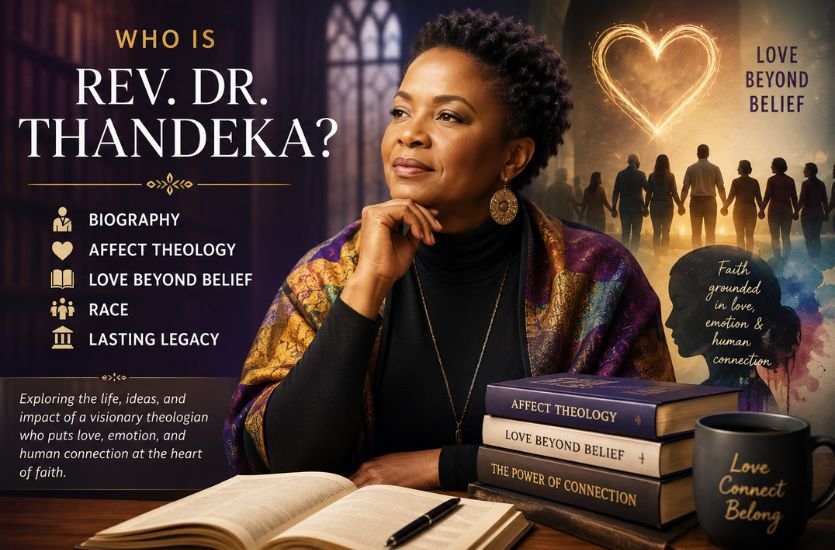
What if the deepest foundation of faith wasn’t belief at all, but the human capacity to love, connect, and experience belonging? That thought challenges centuries of religious tradition, yet it lies at the heart of the groundbreaking work of Rev. Dr. Thandeka. At a time when millions of people identify as spiritual rather than religious and many struggle to reconcile faith with science, her ideas offer a refreshing and intellectually compelling alternative. Instead of asking people what they believe, she invites them to explore what they genuinely feel—and why those emotions matter. In this in-depth feature, Expand Magazine examines how her groundbreaking ideas continue to shape conversations about spirituality, identity, and human connection.
The journey of Rev. Dr. Thandeka is as fascinating as the theology she has developed. From an accomplished Emmy Award-winning television producer to an internationally respected theologian, minister, author, and public intellectual, she has consistently challenged conventional assumptions about religion, identity, and the human experience. Her work bridges theology, philosophy, psychology, and affective neuroscience to create a framework that speaks to both believers and skeptics alike.
Rather than presenting religion as a collection of doctrines or rigid traditions, Rev. Dr. Thandeka argues that authentic spiritual life begins with emotional awareness, compassionate relationships, and the transformative experience of feeling genuinely loved. Her pioneering concept of Affect Theology has influenced scholars, ministers, and spiritual communities across the United States, the United Kingdom, and beyond, encouraging a more inclusive understanding of faith that transcends denominational boundaries.
This article explores the remarkable life, groundbreaking ideas, and lasting influence of Rev. Dr. Thandeka, examining how her work continues to reshape conversations about spirituality, race, identity, neuroscience, and the profound human need for connection.
From Television to Theology: The Extraordinary Journey of Rev. Dr. Thandeka
The remarkable career of Rev. Dr. Thandeka demonstrates that life’s most meaningful callings often emerge through unexpected paths. Born Sue Booker in New Jersey in 1946, she grew up in an intellectually stimulating environment where religion, education, and thoughtful conversation played an important role in daily life. Her father served as a Baptist minister whose theological education included studying under renowned scholars such as Reinhold Niebuhr and Paul Tillich, while her mother pursued a career as an artist. This unique combination of theological inquiry and creative expression would later become evident in Thandeka’s own work, blending rigorous academic thought with profound emotional insight.
Despite these early influences, her first professional ambitions were rooted not in ministry but in journalism and media. She earned degrees in journalism from the University of Illinois and Columbia University before building an impressive sixteen-year career in television production. During this period, she directed, produced, and wrote hundreds of television programs while earning widespread professional recognition, including an Emmy Award. This experience shaped her exceptional ability to communicate complex ideas in ways that were both intellectually engaging and emotionally accessible.
Her years in broadcasting also cultivated a deep appreciation for storytelling. As a producer and talk show host, she observed how personal narratives could inspire empathy, challenge assumptions, and create meaningful dialogue. These communication skills would later become invaluable in her theological work, allowing her to connect academic scholarship with the everyday experiences of ordinary people.
A defining moment in her personal journey arrived in 1984 when Archbishop Desmond Tutu bestowed upon her the Xhosa name “Thandeka,” meaning “beloved.” More than a symbolic gesture, the name became deeply intertwined with the theological vision she would later develop. Throughout her career, the concept of being genuinely loved—and helping others experience that same sense of acceptance and belonging—has remained one of the central themes of her ministry and scholarship.
Determined to explore religion at a deeper intellectual level, Rev. Dr. Thandeka pursued a Master of Arts in the History of Religions at UCLA before completing a Ph.D. in Philosophy of Religion and Theology at Claremont Graduate University, where she studied under the influential theologian John B. Cobb. Her academic training provided the philosophical foundation that would later support her innovative theological contributions.
Her journey reached another significant milestone in 2001 when she was ordained as a Unitarian Universalist minister. Unlike many scholars who remain confined to academic institutions, Rev. Dr. Thandeka brought together practical ministry, theological research, and public engagement. She combined the investigative curiosity of a journalist, the communication skills of a television producer, the analytical discipline of a philosopher, and the compassionate heart of a pastor.
This diverse professional background distinguishes Rev. Dr. Thandeka from many contemporary theologians. Her work consistently reflects an understanding that ideas alone rarely transform lives. Instead, genuine transformation occurs when intellectual insight connects with emotional experience. That conviction would eventually become the cornerstone of her groundbreaking theological framework and establish her as one of the most distinctive voices in modern liberal theology.
The Birth of Affect Theology: Why Rev. Dr. Thandeka Believes Feeling Comes Before Belief
The most influential contribution of Rev. Dr. Thandeka to contemporary theology is the development of Affect Theology, an innovative framework that shifts the focus of religious life away from rigid doctrines and toward the emotional experiences that shape human existence. Rather than defining faith by intellectual agreement with specific beliefs, Affect Theology asks a more fundamental question: What do human beings experience before they begin to interpret those experiences through religious language?
This seemingly simple question has profound implications. For centuries, theological debates have often centered on competing doctrines, sacred texts, and philosophical arguments about truth. While these discussions remain valuable, Rev. Dr. Thandeka argues that they frequently overlook the very experiences that inspire religious belief in the first place. Before people develop creeds, rituals, or theological systems, they encounter emotions such as love, wonder, fear, grief, gratitude, hope, and belonging. According to her work, these affective experiences provide the foundation upon which spiritual understanding is later built.
This perspective offers a compelling alternative for an era in which many individuals struggle to identify with traditional religious institutions while continuing to seek meaning, purpose, and authentic connection. By emphasizing lived experience rather than doctrinal conformity, Rev. Dr. Thandeka presents a vision of spirituality that is accessible to people from diverse religious, philosophical, and cultural backgrounds.
Her ideas draw significant inspiration from the nineteenth-century theologian Friedrich Schleiermacher, who argued that religion originates not primarily in rational thought but in humanity’s “feeling of absolute dependence.” Although this concept has long influenced liberal theology, Rev. Dr. Thandeka expands it in a distinctly modern direction. Instead of treating feeling as merely a philosophical category, she explores how contemporary neuroscience can deepen our understanding of religious experience.
A central aspect of her scholarship involves integrating theology with insights from affective neuroscience, a field dedicated to understanding the biological foundations of emotion. Drawing upon the pioneering research of neuroscientist Jaak Panksepp, she argues that emotions are not superficial reactions but deeply rooted biological processes that influence perception, decision-making, relationships, and spiritual awareness.
This interdisciplinary approach distinguishes Rev. Dr. Thandeka from many contemporary theologians. Rather than positioning science and religion as opposing worldviews, she demonstrates how each discipline can illuminate different dimensions of the same human experience. Neuroscience explains the biological mechanisms through which emotions arise, while theology explores the meaning and significance people assign to those emotional experiences.
Her influential work, The Embodied Self, reflects this commitment to bridging intellectual traditions. By bringing together philosophy, theology, psychology, and neuroscience, she proposes that authentic spirituality cannot be understood solely through abstract reasoning. Human beings are embodied creatures whose thoughts, emotions, relationships, and physical existence continuously shape one another. Spiritual life, therefore, is not something detached from ordinary experience but something deeply woven into the emotional fabric of everyday living.
Perhaps the most transformative aspect of Affect Theology is its rejection of the assumption that belief must always precede spiritual experience. Rev. Dr. Thandeka suggests the opposite may often be true. Individuals frequently encounter profound moments of compassion, awe, forgiveness, or unconditional acceptance long before they develop a theological explanation for those experiences. The interpretation comes later; the experience comes first.
This distinction has significant implications for contemporary religious communities. It creates space for people who identify as religious, spiritual, questioning, or even secular to engage in meaningful conversations about shared human experiences without requiring complete agreement on doctrine. Instead of asking whether people hold identical beliefs, Affect Theology encourages communities to ask whether they cultivate empathy, compassion, and genuine human connection.
For many readers in the United States and the United Kingdom, where institutional religious participation has declined while interest in spirituality continues to evolve, this approach offers a particularly relevant framework. It acknowledges intellectual diversity while affirming that emotional connection remains a universal human reality. In doing so, Rev. Dr. Thandeka provides a theological vision capable of speaking to an increasingly pluralistic society.
Learning to Be White: Rev. Dr. Thandeka’s Exploration of Race, Identity, and Emotional History
While Affect Theology established Rev. Dr. Thandeka as a leading theological thinker, her influence extends well beyond discussions of spirituality. Her book Learning to Be White: Money, Race, and God in America represents one of her most widely discussed and intellectually provocative contributions, offering an emotionally focused examination of racial identity in American society.
Rather than limiting the discussion to political structures or institutional systems, Rev. Dr. Thandeka examines the emotional development of white identity and asks how historical experiences continue to shape personal and collective behavior. Her work invites readers to consider whether race is not only a social or political construct but also an emotional one, formed through generations of inherited narratives, cultural expectations, and deeply embedded psychological experiences.
Importantly, the arguments presented in Learning to Be White should be understood as Rev. Dr. Thandeka’s theological and interpretive framework, rather than universally accepted conclusions within psychology or neuroscience. Her analysis combines theological reflection, historical interpretation, and insights drawn from emotional development to offer a distinctive perspective on race and identity.
According to her interpretation, many conversations about racism focus primarily on external behaviors while overlooking the emotional conditions that make those behaviors possible. She argues that unresolved feelings—including shame, fear, anxiety, confusion, anger, grief, and emotional disconnection—can profoundly influence how individuals understand themselves and relate to others.
In her view, these emotional patterns are not simply individual experiences but are often reinforced through families, communities, cultural traditions, and historical narratives. By bringing these hidden emotional dynamics into public conversation, Rev. Dr. Thandeka encourages readers to explore difficult questions that extend beyond politics alone. How do inherited emotional wounds influence identity? What role does fear play in maintaining social divisions? Can genuine reconciliation occur without emotional healing?
These questions distinguish her work from many conventional discussions of race. Rather than focusing exclusively on assigning blame, she seeks to understand the emotional mechanisms that sustain division and prevent authentic human connection. Her objective is ultimately pastoral as well as intellectual. She believes that confronting painful emotional realities creates opportunities for healing, compassion, and renewed relationships across racial boundaries.
Whether readers agree with every aspect of her analysis or not, Learning to Be White has become an important contribution to conversations surrounding race, theology, and identity because it challenges familiar assumptions and encourages deeper reflection. Instead of offering simplistic solutions, Rev. Dr. Thandeka asks readers to examine the emotional foundations of cultural life—an approach that aligns closely with the broader principles of Affect Theology.
This emphasis on emotional awareness reflects a consistent theme throughout her scholarship. Whether discussing spirituality, religious experience, or racial identity, Rev. Dr. Thandeka repeatedly argues that meaningful transformation begins not with abstract ideas alone but with an honest engagement with human feeling. By addressing the emotional dimensions of identity, she seeks to create pathways toward greater understanding, reconciliation, and genuine community in an increasingly divided world.
The “Love Beyond Belief” Project: Rev. Dr. Thandeka’s Vision for a More Compassionate World
The philosophical ideas developed by Rev. Dr. Thandeka ultimately converge in one inspiring vision: Love Beyond Belief. More than the title of a project or theological initiative, this phrase captures the essence of her life’s work. It reflects her conviction that authentic human connection is not built upon unanimous agreement over doctrine but upon the universal experience of being genuinely loved, accepted, and valued.
In an increasingly polarized world, where religious traditions, political ideologies, and cultural identities often divide communities, Rev. Dr. Thandeka offers a remarkably hopeful alternative. She argues that lasting spiritual communities are not sustained simply because members share identical beliefs. Rather, they flourish when people consistently create environments where compassion, trust, and emotional safety become everyday realities.
This perspective has proven especially influential within Unitarian Universalism, a tradition that welcomes individuals with diverse theological convictions. Because members may identify as Christian, Humanist, Buddhist, Jewish, Pagan, Agnostic, or Atheist while belonging to the same congregation, questions naturally arise about what truly binds the community together. Rev. Dr. Thandeka answers that question with remarkable clarity: the shared experience of unconditional care is more enduring than any shared creed.
Her Theology of Personal Experience provides a practical framework for cultivating this kind of community. Rather than asking participants to memorize doctrines or defend theological positions, the approach encourages individuals to reflect honestly on their own emotional and spiritual lives. The goal is not intellectual conformity but authentic transformation.
At the heart of this framework is the recognition that meaningful change often begins with what Rev. Dr. Thandeka describes as a genuine “change of heart.” Such moments may appear ordinary at first—a feeling of forgiveness after years of resentment, unexpected hope during grief, or profound peace after prolonged anxiety. Yet these experiences often reshape how people understand themselves, others, and the world around them.
Personal transformation, however, cannot flourish in isolation. According to Rev. Dr. Thandeka, emotional growth requires supportive communities intentionally built upon compassion, empathy, and mutual care. Religious congregations, small groups, and faith communities become places where individuals feel safe enough to explore vulnerability, confront painful emotions, and develop healthier relationships.
Perhaps the most distinctive feature of her theology is its commitment to doctrinal freedom. Individuals are encouraged to interpret their transformative experiences according to their own worldview. One person may understand an experience as the presence of God, another as psychological healing, another as human solidarity, and another through neuroscience or philosophy. For Rev. Dr. Thandeka, these differing explanations need not become barriers. The shared emotional reality matters more than agreement about its interpretation.
This emphasis on emotional belonging over theological uniformity offers an especially compelling response to the spiritual challenges of the twenty-first century. As growing numbers of people seek communities where questions are welcomed rather than discouraged, her work demonstrates that diversity of belief need not prevent unity of purpose.
Impact and Legacy: Why Rev. Dr. Thandeka Continues to Shape Modern Theology
The influence of Rev. Dr. Thandeka extends far beyond individual congregations. Over several decades, she has become an internationally respected scholar, speaker, author, and minister whose work continues to shape discussions across theology, philosophy, race studies, psychology, and religious leadership.
Her scholarship has reached audiences throughout the United States, the United Kingdom, and Europe, where she has delivered keynote addresses, participated in theological conferences, and engaged with scholars exploring the future of liberal religion. Her writings have appeared in respected academic journals, while her contributions to major theological reference works have further established her reputation within contemporary religious scholarship.
Academic recognition, however, represents only one aspect of her legacy. Unlike scholars whose work remains confined to universities, Rev. Dr. Thandeka has consistently emphasized practical ministry. Through congregational consulting, leadership development, and small-group ministry initiatives, she has worked directly with religious communities seeking healthier, more compassionate ways of nurturing spiritual growth.
Her interdisciplinary approach has also encouraged fresh dialogue between fields that have often been viewed as separate. By bringing theology into conversation with neuroscience, psychology, philosophy, and emotional development, she has challenged both religious leaders and academics to reconsider long-standing assumptions about faith and human nature.
Perhaps her greatest contribution lies in demonstrating that intellectual rigor and emotional authenticity are not opposing values. Throughout her career, Rev. Dr. Thandeka has shown that serious scholarship can remain deeply compassionate and that theological inquiry can serve practical human flourishing rather than abstract debate alone.
As conversations surrounding spirituality continue to evolve, her ideas remain remarkably relevant. Younger generations increasingly seek communities that prioritize authenticity, empathy, inclusion, and emotional well-being. Many are less interested in defending rigid doctrines than in discovering meaningful ways to cultivate purpose, belonging, and compassion. In many respects, Rev. Dr. Thandeka’s work anticipated this cultural shift decades before it became widely recognized.
Her enduring legacy is therefore measured not only by published books or academic citations but by the countless individuals and communities inspired to build relationships grounded in understanding rather than division, curiosity rather than certainty, and love rather than fear.
Conclusion
The remarkable story of Rev. Dr. Thandeka illustrates how one person’s willingness to challenge conventional thinking can reshape an entire field of study. From her early success as an Emmy Award-winning television producer to her distinguished career as a theologian, minister, author, and public intellectual, she has consistently encouraged people to reconsider what lies at the heart of authentic spiritual life.
Through the development of Affect Theology, she has argued that emotion is not a distraction from faith but one of its deepest foundations. By connecting theology with neuroscience, philosophy, and lived human experience, she has opened new pathways for understanding spirituality in a world where traditional religious categories no longer speak to everyone.
Her exploration of race, identity, and emotional history in Learning to Be White further demonstrates her commitment to addressing society’s most difficult questions with honesty and compassion. Whether discussing religion or racial reconciliation, Rev. Dr. Thandeka consistently reminds readers that meaningful transformation begins with the courage to examine the emotional realities shaping human behavior.
Perhaps the most enduring lesson of her work is beautifully simple: people do not build lasting communities merely because they share identical beliefs. They build them because they experience genuine care, authentic acceptance, and unconditional compassion. In an era marked by ideological conflict, cultural polarization, and widespread loneliness, that message feels more timely than ever.
For readers in the United States, the United Kingdom, and beyond, the work of Rev. Dr. Thandeka offers more than an academic theory. It provides an invitation to rethink the meaning of spirituality, embrace deeper emotional awareness, and cultivate relationships rooted in empathy rather than certainty. Whether you approach her writings as a theologian, a student, a faith leader, or simply someone searching for greater human connection, her ideas challenge us to ask one transformative question: What becomes possible when love comes before belief? Explore more thought-provoking biographies and in-depth features on Expand Magazine.
As conversations about faith, identity, and belonging continue to evolve, the insights of Rev. Dr. Thandeka remain both intellectually stimulating and profoundly practical. Exploring her work is not merely an opportunity to learn about an influential theologian—it is an invitation to discover new ways of understanding ourselves, strengthening our communities, and creating a more compassionate future for everyone.