
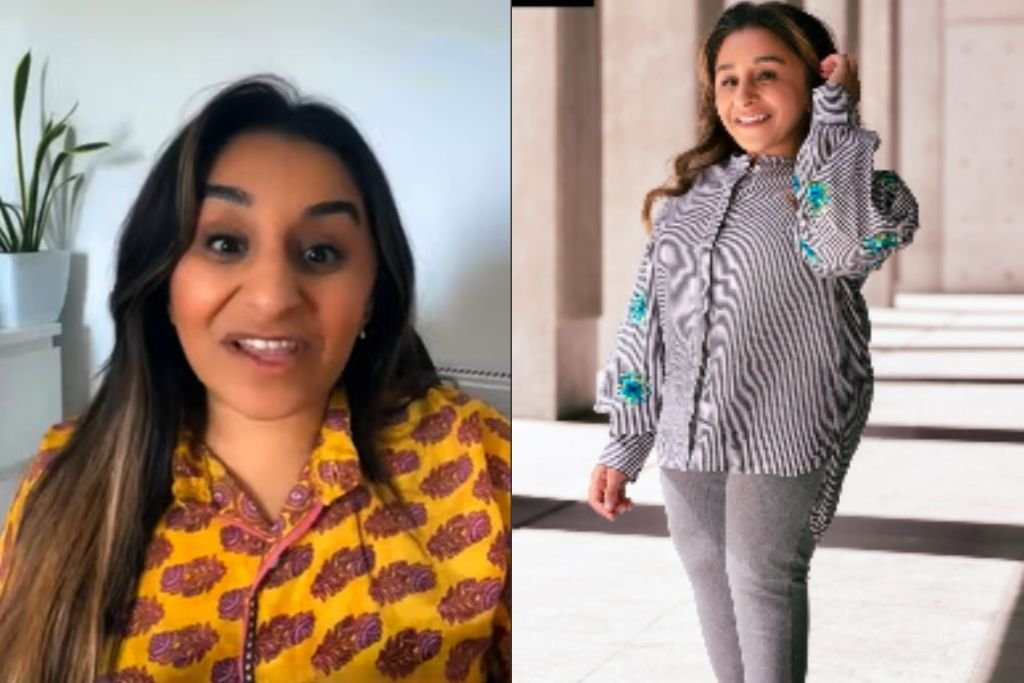
What happens when the world notices a person’s disability before it notices the person standing in front of it?
For Shani Dhanda, this has never been an abstract question. It has been part of the story she has lived, experienced and eventually turned into a powerful professional mission.
Born with osteogenesis imperfecta, commonly known as brittle bone disease, Shani Dhanda grew up understanding that the barriers faced by disabled people are not always created by their bodies. Many are created by society, workplaces, buildings, systems and assumptions.
Today, she is known as a disability inclusion specialist, accessibility consultant, broadcaster, author, entrepreneur and public speaker. But her story is about much more than professional titles. It is a story about taking personal experiences and turning them into something that could help change the experiences of others.
Who Is Shani Dhanda?
If you were introducing Shani Dhanda to an audience today, you would probably begin by describing her as one of the prominent voices in disability inclusion and accessibility.
She is a British professional whose work focuses on helping organisations understand what genuine inclusion should look like. Rather than treating accessibility as a simple checklist, Dhanda has spent years encouraging businesses and institutions to think about how their systems affect disabled people in real life.
Her career has brought together public speaking, consulting, broadcasting, entrepreneurship and advocacy. Along the way, she has worked to challenge assumptions about disability and encourage organisations to create environments where people with different needs can participate equally.
Her work has also received major recognition. She was included in the BBC’s 100 Women list in 2020 and was recognised as the UK’s most influential disabled person through the Shaw Trust Power 100 in 2023.
Those achievements tell us something important about her journey. Shani Dhanda is not simply someone speaking about disability. She has become a professional voice helping shape the wider conversation around inclusion.
Growing Up With Osteogenesis Imperfecta
To understand Shani Dhanda’s work, we have to go back to the beginning.
She was born with osteogenesis imperfecta, a condition commonly known as brittle bone disease. The condition is associated with fragile bones and can have significant physical effects.
Growing up with a visible disability meant that Dhanda encountered barriers from an early stage in her life. But what makes her story particularly interesting is the way she came to understand those barriers.
For her, disability was not simply about a medical condition.
She began to recognise that the environment around a person can sometimes create just as many difficulties as the impairment itself. An inaccessible building can prevent someone from entering. An inflexible workplace can make employment harder. Negative stereotypes can cause employers to underestimate someone’s abilities.
These experiences eventually became central to the message she would carry into her professional career.
Instead of allowing those experiences to define what she could achieve, Dhanda used them as motivation to question the systems that created unnecessary barriers.
Education and the Beginning of Her Career
Before becoming widely known for disability inclusion, Shani Dhanda studied Events and Venue Management at the University of Wolverhampton.
That educational background became useful as her career developed. She gained experience in the events sector and developed an understanding of how organisations, conferences and public events operate.
But gradually, her professional direction began to change.
Her personal experiences and professional knowledge started coming together. She understood what it was like to encounter accessibility barriers personally, while also understanding the practical challenges organisations face when designing events and workplaces.
That combination became one of her greatest professional strengths.
She was not discussing accessibility only from theory. She was speaking from lived experience while also understanding the organisational side of the problem.
From Personal Experience to Disability Inclusion
This is where Shani Dhanda’s story takes a significant turn.
Her career increasingly moved toward disability inclusion, accessibility consultancy, public speaking and advocacy.
And her message was clear: inclusion should be about more than symbolic gestures.
A wheelchair ramp alone does not necessarily make an organisation inclusive. A technically accessible website does not automatically mean that every disabled person can participate equally.
Real inclusion requires organisations to look at recruitment, communication, workplace design, digital accessibility and opportunities for people with different needs.
Dhanda has encouraged businesses to think about accessibility as something that belongs in everyday organisational practice.
The question is not simply, “Can a disabled person fit into this system?”
The bigger question is, “Was this system designed so that different people have a fair opportunity to succeed?”
That change in thinking has become an important part of modern accessibility discussions.
The Asian Disability Network
One of the important initiatives connected with Shani Dhanda is the Asian Disability Network.
The network was created to increase awareness, support and community for South Asian disabled people and their families.
This part of Dhanda’s work also reflects something deeper about her approach to inclusion.
Disability does not exist in isolation.
A person’s culture, gender, family background, socioeconomic circumstances and other aspects of identity can influence how they experience disability.
For South Asian communities, conversations about disability can sometimes be complicated by cultural expectations, stigma and a lack of open discussion.
Dhanda has used her platform to encourage more conversations and stronger representation of disabled people within Asian communities.
The Asian Disability Network therefore represents more than another professional project. It reflects the idea that people should not have to hide or separate different parts of who they are.
Diversability and Practical Support
Another initiative associated with Dhanda is Diversability.
The project has focused on providing disabled people with greater financial and practical support. One of its better-known ideas has been a discount card designed around the needs of disabled people.
At first glance, a discount card may sound like a small idea.
But the larger issue behind it is much bigger.
Disability can create additional costs. Travel, equipment, accessibility requirements and other everyday needs can place financial pressures on disabled people that others may not experience in the same way.
By combining awareness with practical solutions, Dhanda has shown that disability advocacy does not have to stop at raising awareness.
Sometimes, change also means creating something that people can actually use.
What Is Fair Dues?
Then there is Fair Dues, another important initiative connected with Shani Dhanda.
This project addresses a problem that many disabled freelancers, speakers and professionals can encounter: being asked to provide expertise or personal experiences without receiving appropriate compensation.
Fair Dues was created as a resource where disabled freelancers can anonymously share information about fees and rates.
The idea is straightforward but powerful.
If professionals can see what others are being paid, they can better understand the value of their own work and negotiate from a more informed position.
This becomes especially important when disabled people are asked to share their lived experiences for conferences, awareness campaigns, workplace training or other projects.
Dhanda’s approach challenges the idea that someone’s personal experience should automatically be available for free.
Fair Dues therefore connects disability inclusion with another important issue: professional fairness.
It also demonstrates how her work has moved beyond simply identifying problems. She has repeatedly looked for practical ways to help people navigate those problems.
Shani Dhanda as an Author
There is another side to Shani Dhanda that takes her message to a much younger audience.
She is also an author.
Her children’s book, No Horn Unicorn, was published by Collins in 2024, with illustrations by Letizia Rizzo.
The story follows Ugo, a unicorn who is different from the others because he does not have a horn.
But the story is not really about a unicorn without a horn.
At its heart, it is about difference, acceptance and understanding that being different does not make someone less valuable.
That message connects closely with the themes that have shaped Dhanda’s professional life.
Instead of suggesting that differences must always be corrected, the story encourages readers to recognise individuality as part of who someone is.
Through No Horn Unicorn, Dhanda has been able to take ideas about acceptance and inclusion beyond corporate workplaces and professional conferences and introduce them to younger readers.
Her Work in Broadcasting
Shani Dhanda’s career has also expanded into broadcasting.
Her presence in the media has given her another opportunity to discuss disability, accessibility, inclusion and wider social issues with audiences who may not normally engage with specialist disability organisations.
And that matters because media representation can influence how society understands disability.
For years, disabled people have sometimes been presented mainly through inspirational stories or through the medical aspects of disability.
But genuine representation means something broader.
Disabled people can also be journalists, broadcasters, experts, commentators, creators and decision-makers.
Dhanda’s work in broadcasting therefore adds another dimension to her advocacy.
At the Zero Project Conference 2026, UNESCO highlighted disability equality in media and featured Dr Shani Dhanda as a disability inclusion and accessibility consultant from the United Kingdom.
Her involvement in such international conversations demonstrates that her work continues to be relevant as organisations around the world reconsider how disability should be represented in media.
The BBC 100 Women Recognition
Then came one of the major recognitions of Dhanda’s career.
In 2020, she was included in the BBC 100 Women list.
The BBC 100 Women initiative highlights influential and inspiring women from around the world.
For Dhanda, the recognition represented more than a personal achievement.
It also provided a major platform for a different kind of disability representation.
Rather than seeing a disabled person only through the lens of disability, audiences were being introduced to Dhanda as a professional leader, campaigner and changemaker.
That distinction matters.
Representation becomes more powerful when people are recognised for their expertise, leadership and achievements rather than being defined entirely by their disability.
Recognised as the UK’s Most Influential Disabled Person
In 2023, another major recognition followed.
Shani Dhanda was named the UK’s most influential disabled person through the Shaw Trust Power 100.
The recognition reflected the growing reach of her work across disability inclusion, business and public life.
Her career by this point had demonstrated just how many forms disability advocacy can take.
It can happen through public speaking.
It can happen through consultancy.
It can happen through broadcasting, entrepreneurship, education and books.
And it can happen through creating practical resources that help people deal with real-world barriers.
Dhanda’s recognition also reflects a broader change in society’s understanding of disability.
Disabled professionals are increasingly being recognised not simply because they have overcome personal challenges, but because they possess expertise and leadership that can influence organisations and communities.
Shani Dhanda and Intersectionality
One of the most interesting parts of Dhanda’s story is her focus on intersectionality.
She has spoken about being a disabled Asian woman and about experiencing multiple identities at the same time.
Why does that matter?
Because discrimination rarely happens through only one category.
A disabled woman from a minority cultural background may encounter barriers that are different from those experienced by a disabled man or a non-disabled woman from the same community.
Dhanda’s work encourages organisations to recognise these overlapping experiences.
Rather than treating diversity as a collection of separate boxes, she encourages a more complete understanding of how different aspects of identity can interact.
This connects disability inclusion with gender equality, cultural representation and workplace diversity.
Employment Equality and the Workplace
Employment has remained one of the most important areas of Dhanda’s advocacy.
Her own experiences searching for work helped demonstrate how disability discrimination can sometimes operate in subtle ways.
A company might technically welcome disabled applicants, but its recruitment process could still contain assumptions about productivity, communication, physical ability or reliability.
Those assumptions can quietly influence decisions.
Dhanda has challenged employers to reconsider how they think about disabled candidates and employees.
The issue should not simply be whether a disabled person can adapt to an existing workplace.
Instead, employers should ask whether the workplace itself has been designed in a way that allows different people to succeed.
That shift represents one of the most important ideas behind modern accessibility.
Access to Work and Systemic Change
Dhanda’s recent professional work has also included attention to the UK’s Access to Work system.
Her professional portfolio has highlighted the Access to Work Collective, an initiative designed to bring disabled people, employers, suppliers and other stakeholders together around practical solutions.
This reflects an important development in her approach.
She is not interested only in individual stories.
She is also interested in the systems that determine whether disabled people can participate successfully in employment.
And that is significant because accessibility rarely depends on one person alone.
It can require cooperation between employees, employers, service providers and policymakers.
Creating Accessible Events
Events have remained connected to Shani Dhanda’s professional journey.
Her background in Events and Venue Management gives her practical knowledge of what happens behind the scenes when conferences, exhibitions and public events are organised.
A genuinely accessible event requires more than simply providing a wheelchair-accessible entrance.
Organisers may need to consider physical access, communication, digital information, transportation, sensory requirements and appropriate support.
Dhanda’s work in this area reinforces a simple principle: accessibility should be considered from the beginning.
It should not be something added only after someone discovers a barrier.
This becomes increasingly important as businesses organise hybrid conferences, online events and international meetings.
What Is Known About Shani Dhanda’s Husband?
When people search for Shani Dhanda, some also want to know about her personal life, including whether she has a husband.
But this is where responsible reporting becomes important.
The reliable public information available about Dhanda focuses mainly on her career, disability advocacy, accessibility work, broadcasting, books and social-impact initiatives.
There is not enough reliable publicly documented information to confidently provide the identity of a husband or detailed information about her marriage history.
So, rather than presenting speculation as fact, it is better to focus on what is actually documented.
And in Dhanda’s case, there is already a substantial professional story to tell.
Why Shani Dhanda’s Story Matters
So, why does Shani Dhanda’s story matter?
Perhaps the answer can be found in the way she has transformed personal experience into professional action.
Her disability is certainly part of her story.
But it is not the entire story.
She is an entrepreneur, author, broadcaster, consultant and speaker. She has created initiatives, advised organisations, appeared in media and worked to change the way businesses understand accessibility.
One of the strongest messages associated with her career is that inclusion is not charity.
It is about removing unnecessary barriers.
It is about allowing people to contribute their skills, ideas and experiences without being held back by systems that were never designed with them in mind.
Her career also demonstrates why representation matters.
When disabled people become experts, leaders and decision-makers, the conversation changes.
They are no longer simply the people being talked about.
They become the people helping shape the conversation.
The Continuing Legacy of Shani Dhanda
Today, Shani Dhanda’s work continues to evolve as accessibility becomes an increasingly important issue across business, technology, education and media.
Her participation in the Zero Project Conference in 2026 shows that disability equality remains an important part of her current professional work.
At the same time, her work as an author has opened another path for her message.
No Horn Unicorn introduces younger audiences to ideas about difference and acceptance, while Fair Dues addresses practical questions surrounding pay and professional value for disabled people.
Together, these projects show the breadth of Dhanda’s approach.
She is not simply asking society to think differently about disability.
She is building platforms, creating resources, telling stories and starting conversations that can help make that change possible.
Conclusion
If we look back at Shani Dhanda’s journey, the story begins with a girl born with osteogenesis imperfecta and continues with a woman who decided that the barriers she experienced would not be the limits of her future.
Her experiences could have remained personal.
Instead, she turned them into a professional mission.
From the Asian Disability Network and Diversability to Fair Dues and No Horn Unicorn, her work has consistently focused on creating opportunities, challenging assumptions and changing perceptions.
Her recognition through BBC 100 Women and the Shaw Trust Power 100 reflects the growing impact of that work.
Her involvement in international discussions about disability and media shows that the conversation she has helped build is continuing to reach wider audiences.
But perhaps the most important part of Shani Dhanda’s story is that it is not ultimately a story only about disability.
It is a story about challenging assumptions.
It is a story about questioning systems.
And it is a story about creating spaces where difference is understood as part of human diversity rather than a reason for exclusion.
Her career leaves audiences with a message that is increasingly difficult to ignore: accessibility is not an optional extra.
It is an essential part of creating a society where everyone has the opportunity to participate, contribute and be heard.