








One sweatshirt in this shop puts the word embroidered straight into its own name, and every other one leaves you working it out from a photograph. That little inconsistency nagged at me more than it probably should have, because thread and ink wear out along completely different timelines, and the sweatshirt listings at Crooks and Castles ask CA$160 to CA$179 either way. Same money, two quite different futures.
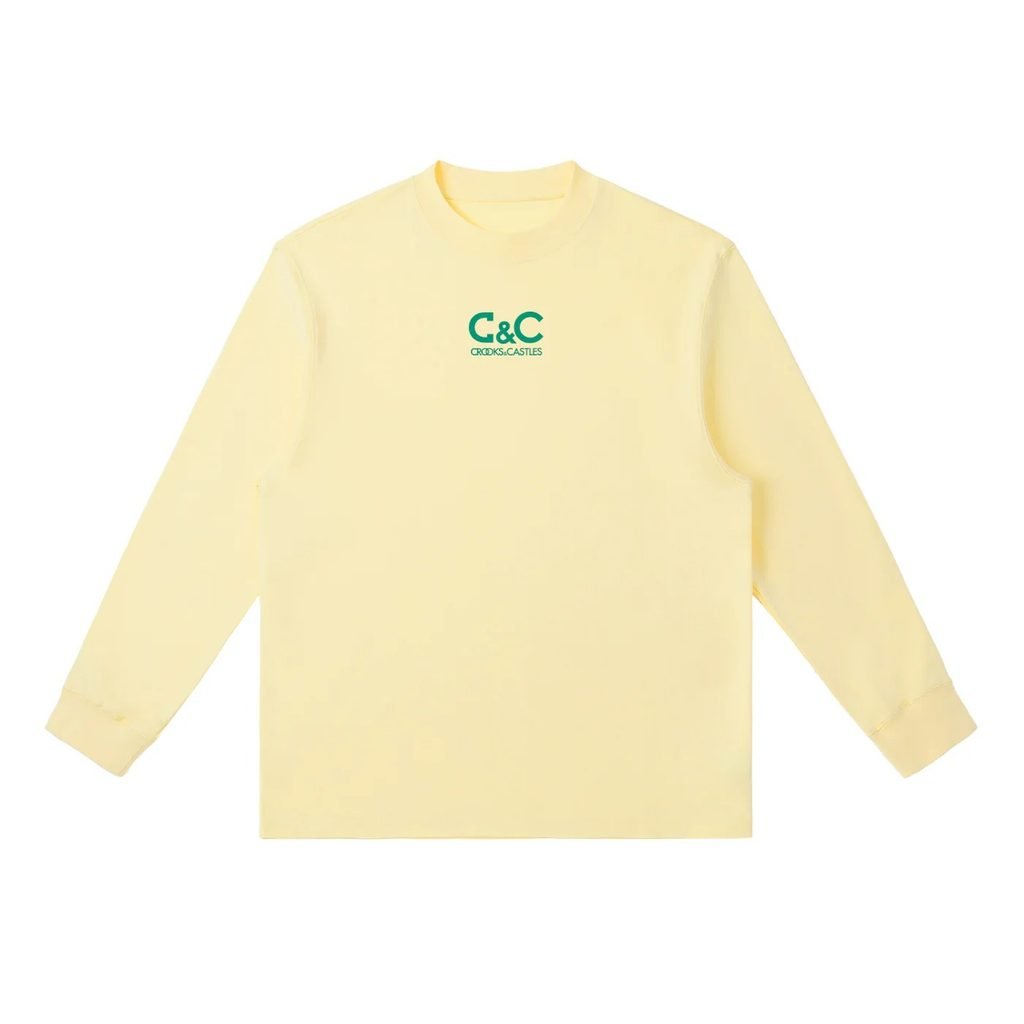
Only one listing says it out loud
The Core Flower Embroidered Sweatshirt carries its construction in the title, which makes it the only piece on that rail I didn’t have to squint at. Everything else — the Homegrown Sweatshirt, the Rugby Sweatshirt, the Gothic Elite Oversized Sweatshirt, the CRKS Dolman Boxy Sweatshirt — names a graphic or a cut and then stops talking. No stitch count. Nothing about thread, no note on how the artwork got onto the fleece in the first place, and no fabric weight published anywhere on this site either, so that handful of words in the product name genuinely is the whole specification.
What a needle does that ink can’t
Stitching lives in the cloth instead of on top of it. The thread goes through the fleece and locks itself there, so from that moment the artwork and the garment behave as one object, and nothing can crack off something it’s woven into. That buys you two things over a year of ordinary wear. The logo keeps its edges after a wash you’d rather not think about, and it shrugs off the drum, the iron and the balled-up-in-a-gym-bag treatment that quietly finishes off flat graphics.
What it costs you is movement. A dense stitched panel across the chest won’t flex with the fleece underneath it, and on an oversized cut that stiff rectangle can sit a little strangely once you’re sitting down, which is the sort of thing you notice on a long drive rather than in front of a mirror. How much it matters comes down to how big the artwork runs. A small chest mark you’d never feel. A full panel, you will.
And what ink does better than thread
Screen print wins everything a needle physically can’t attempt. Fine lines, photographic fades, a graphic spanning a whole front, four or five colours bleeding into one another — thread would turn all of that into armour plating. The printed graphic tees across the shop lean on ink for exactly that reason, and the Medusa artwork in particular holds detail that stitching would flatten into blocks. Print stays softer, too, so the fleece drapes the way it wants to.
A year of ordinary wear, side by side
Here is roughly how the two behave after a Canadian winter and the spring behind it. No spec sheet exists on this site to argue with.
| What happens to it | Stitched artwork | Screen print |
| Twenty-odd washes | Edges hold, though thread can fluff | Surface thins, colour lifts a little |
| A hot dryer | Comes through it, backing may pucker | Where most prints start going wrong |
| A backpack strap rubbing | Wears slowly, stays legible | Thins fastest at the contact point |
Under a coat, the difference turns up fast
Layering is where I actually changed my mind about all this. A sweatshirt worn under a winter coat spends its whole day rubbing along a lining, and a bag over one shoulder piles a few more hours of that into one small patch. Print thins there first. You can watch it happen across a couple of Toronto months — a slightly paler area where the strap sits — and nothing you do afterwards brings it back.
Thread copes with the friction far better, though it brings its own nuisance: a raised panel under a close-fitting coat makes a bump you can see through the shell, which sounds like nothing until it’s your own jacket. So for something living as a mid-layer most days I’d lean stitched, and for a sweatshirt worn as the outer piece with nothing over it, print is fine and frankly looks better doing the job.
Where the CA$160 to CA$179 band fits in
Both constructions sit inside the same band, which is the part that nags at me most. Sweatshirts run CA$160 to CA$179 here, a rung above the hoodies and well above the CA$99 tees, and nothing in the listing suggests one method carries a premium over the other. So you’re not paying for embroidery. You’re paying for the section you happen to be standing in, and the same holds further down the catalogue, where sweatpants and a quarter zip price off their category rather than their artwork.
| Key TakeawaysOnly one sweatshirt listing names its construction, the Core Flower Embroidered Sweatshirt. The rest leave it to the photograph.No stitch count, thread detail or fabric weight appears anywhere on this site, so the page itself won’t settle the question for you.Thread outlasts ink under heat and friction, ink carries fine detail and keeps the fleece soft, and both sit in the same CA$160 to CA$179 band. |
A few things I had to work out myself
Can I really tell from the photo?
Usually, if the image is big enough to zoom. Stitching shows a slight ridge and a shadow down one side, and its colour arrives in solid blocks because thread can’t blend into another thread. Flat artwork lies level and can hold a gradient. On a small or heavily styled shot it’s closer to a coin flip, and the product title becomes the only other clue going. The colourway makes no difference to any of this, incidentally.
Does embroidery mean a better sweatshirt?
Not by itself, no. It means the artwork will outlive the printed version, which isn’t the same claim at all — the fleece underneath, the ribbed cuff, how the shoulder sits and whether the body runs boxy or straight all matter more, and none of those show up in a construction word. A poorly cut stitched piece is still a poorly cut piece.
Does the same logic cover hoodies and zips?
Same logic, different garment. A quarter zip or a pullover hoodie carries its artwork in those two ways and no others, and a zip-neck wears its chest panel exactly where a seatbelt crosses, so friction weighs heavier there than on a plain sweatshirt. Sweatpants and tracksuit pieces tend to place their mark low on the leg, out of the way of most of it, which is one small mercy in a streetwear catalogue full of big front graphics.
So the word hiding in a product title is doing more work than the number beside it. If a sweatshirt is going to be the piece you grab twice a week from November onward, I’d track down the stitched one and live with a firmer panel across the chest. And if you fell for a graphic because the graphic is good, then ink is the only way that graphic exists at all. Open the next listing with that in mind — the clue is in the name, or in the shadow along an edge.