









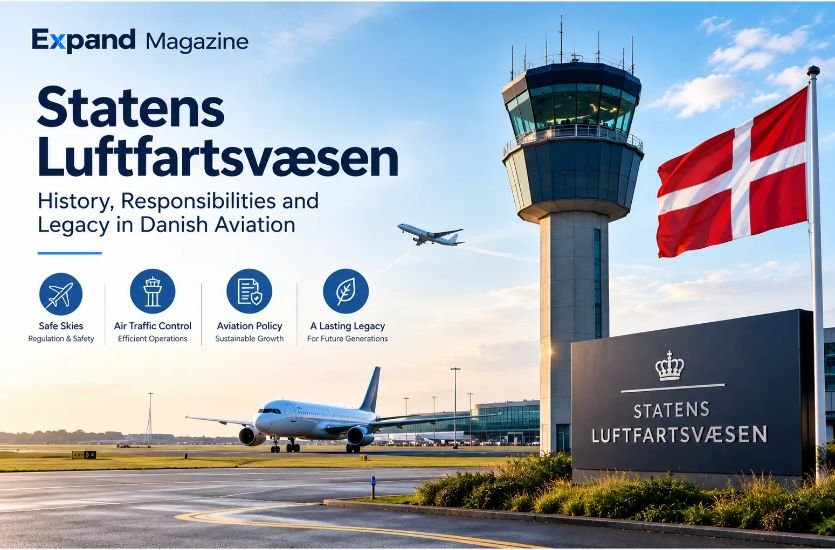
Statens Luftfartsvæsen, commonly abbreviated as SLV, was a Danish government authority responsible for regulating civil aviation and supporting the safe and efficient operation of the country’s aviation sector. Operating under Denmark’s transport administration, it played an important role in aviation safety oversight, air traffic services, technical infrastructure and the development of civil aviation regulations. Although the organization no longer exists under its former name, its history remains an important part of Denmark’s aviation administration.
Established in 1938 under the name Luftfartsdirektoratet, the authority underwent several organizational and naming changes before adopting the name Statens Luftfartsvæsen in the 1980s. On November 1, 2010, it merged with Trafikstyrelsen, Denmark’s Transport Authority, bringing its independent institutional history to an end.
What Was Statens Luftfartsvæsen?
Statens Luftfartsvæsen was the national government organization responsible for important regulatory and operational aspects of Danish civil aviation. Its main purpose was to help ensure that aviation operated safely, efficiently and in accordance with the applicable laws and standards.
The authority worked under the Danish transport ministry and supported the government in aviation-related matters. Its responsibilities included supervising civil aviation activities, developing aviation regulations and ensuring that relevant safety requirements were followed.
SLV also played a role in maintaining the technical and administrative systems necessary for aviation operations. Its work involved aircraft, aviation personnel, airports, flight operations and air traffic services. These responsibilities placed the organization at the center of Denmark’s civil aviation framework.
The abbreviation SLV was commonly used for Statens Luftfartsvæsen in official and historical records. Today, the name is primarily encountered in historical documents, aviation references and archival material because the organization was incorporated into Trafikstyrelsen in 2010.
The History and Development of Statens Luftfartsvæsen
The history of Statens Luftfartsvæsen can be traced to the early development of Danish aviation administration. As aviation became increasingly important for transportation, communication and commercial activity, Denmark developed government institutions to manage aviation-related legislation, safety requirements and public responsibilities.
The Danish National Archives records a succession of aviation bodies dating back to 1918. These included Luftfartskommissionen, established in 1918, followed by Luftfartsrådet in 1926. Subsequent administrative arrangements developed as the government expanded its involvement in civil aviation.
On March 1, 1938, the aviation authority was established as Luftfartsdirektoratet under the Ministry of Public Works. This marked an important stage in the formal organization of Danish aviation administration.
In 1947, the institution’s name changed to Direktoratet for Statens Luftfartsvæsen. The organization continued to develop alongside changes in aviation technology, regulatory requirements and the growing needs of the transportation sector.
The name Statens Luftfartsvæsen came into use in the 1980s, with the Danish National Archives recording the formal name for the period beginning in 1984 and reference sources identifying 1985 as the year the name was adopted. This distinction reflects the difference between the administrative record and the commonly cited naming date.
During its existence, the organization adapted to changes in civil aviation, including more complex aircraft operations, expanding air traffic, evolving safety standards and increasing international cooperation.
Its eventual merger into Trafikstyrelsen in 2010 represented another major change in Denmark’s approach to transportation administration.
Main Responsibilities of Statens Luftfartsvæsen
Statens Luftfartsvæsen carried out a combination of regulatory, supervisory and operational functions. Its responsibilities were divided among specialized areas that addressed different requirements of civil aviation.
Aviation Safety and Regulatory Oversight
One of SLV’s central responsibilities was to regulate civil aviation and supervise compliance with aviation safety requirements. The organization established standards and monitored whether relevant rules were followed by aviation operators and other regulated parties.
Safety oversight covered different aspects of aviation, including aircraft, technical equipment, maintenance activities and flight operations. It also extended to the qualifications and certification of aviation personnel.
These activities helped establish a regulatory framework intended to reduce risks and ensure that aviation operations complied with the requirements in force at the time.
The authority’s work was particularly important because civil aviation involves coordination among pilots, aircraft operators, maintenance organizations, airports and air traffic services. Consistent rules and effective supervision are essential for these activities to function safely.
Air Traffic Control and Flight Protection Services
Another important part of Statens Luftfartsvæsen was its flight protection service, which handled air traffic control and other air traffic services.
Air traffic services help aircraft operate safely by coordinating movements, providing relevant information and supporting the orderly use of airspace. Their effectiveness depends on trained personnel, reliable communication systems, technical equipment and established operating procedures.
SLV was also responsible for establishing and operating flight protection installations and other technical systems associated with its responsibilities. These systems supported the infrastructure needed to manage aviation activities.
Air traffic control is distinct from aviation safety regulation, even though both contribute to aviation safety. The regulatory function establishes requirements and supervises compliance, while air traffic services support aircraft movements and the safe coordination of flights.
The presence of both functions within the organization illustrates the range of responsibilities associated with Danish aviation administration during SLV’s existence.
Civil Aviation Regulations
Statens Luftfartsvæsen issued regulations known as Bestemmelser for Civil Luftfart, commonly abbreviated as BL. These provisions established requirements for various activities within Danish civil aviation.
The regulations addressed subjects including aircraft and aircraft equipment, maintenance workshops, airfields, flight operations, aviation training, airways, security installations, charter flights, air-taxi operations and airport regulations.
Such rules provided aviation businesses and other relevant parties with requirements for organizing their activities and complying with the applicable legal framework.
The authority’s regulatory role was supported by Danish aviation legislation. A 2009 regulation concerning SLV’s responsibilities and powers specified that the organization regulated and supervised civil aviation and issued its own aviation provisions within the applicable legal framework.
These historical regulations help explain how aviation administration operated before the 2010 merger. They should not automatically be treated as current requirements, because the legal and administrative framework has changed since SLV ceased to exist.
Airport Operations
Statens Luftfartsvæsen also had airport-related responsibilities. Historical reference material identifies Bornholm Airport in Denmark and Vágar Airport in the Faroe Islands among the airports operated by the organization.
Airport administration involves more than aircraft arrivals and departures. It can include operational coordination, infrastructure management and compliance with relevant aviation requirements.
The authority’s involvement in airport operations demonstrates that its work extended beyond issuing regulations and monitoring safety. It also participated in certain practical aspects of aviation infrastructure.
However, airport responsibilities and ownership arrangements can change over time. Historical descriptions of airports operated by SLV should therefore be understood within the period in which the organization existed rather than assumed to reflect present-day management arrangements.
Why Statens Luftfartsvæsen Was Important to Danish Aviation
Statens Luftfartsvæsen contributed to the development and administration of Denmark’s civil aviation system by combining regulatory oversight with specialized operational responsibilities.
Aviation depends on cooperation among government authorities, airlines, airport operators, maintenance organizations, pilots and air traffic service providers. Each participant must operate within a framework of established standards and responsibilities.
SLV helped maintain that framework through safety supervision, civil aviation regulations and technical support for air traffic services. Its activities addressed both the rules governing aviation and selected operational functions required to support aircraft movements.
The authority also provided an institutional structure through which Denmark could administer aviation-related legislation and respond to changes in the sector. As aircraft technology, international air travel and regulatory requirements evolved, aviation administration required increasingly specialized knowledge and coordination.
The historical significance of SLV therefore extends beyond its former name. It represents an important stage in the development of Danish civil aviation regulation and the organization of government responsibilities in the transportation sector.
Statens Luftfartsvæsen and International Aviation Standards
Civil aviation operates across national borders, making international coordination essential. Aircraft frequently travel between countries with different legal systems, but their operations depend on compatible safety standards, technical requirements and procedures.
During the period in which Statens Luftfartsvæsen existed, international aviation standards formed part of the wider regulatory environment in which Danish aviation authorities operated.
The International Civil Aviation Organization, or ICAO, develops international standards and recommended practices for civil aviation. European aviation regulation also developed through cooperation among European institutions and aviation authorities.
These international frameworks are relevant to understanding the responsibilities inherited by Denmark’s aviation administration after SLV was dissolved.
The existence of international standards does not mean that every national aviation authority performs exactly the same functions. Responsibilities depend on national law, European regulations, institutional arrangements and the division of duties between regulators and service providers.
SLV’s historical role should consequently be understood as part of Denmark’s participation in a wider international civil aviation system, rather than as an independent authority operating without external standards.
The Merger of Statens Luftfartsvæsen in 2010
A major turning point occurred on November 1, 2010, when Statens Luftfartsvæsen merged with Trafikstyrelsen. The resulting organization retained the name Trafikstyrelsen.
The merger formed part of a broader effort to bring government regulatory and supervisory responsibilities across different modes of transportation under a consolidated authority. These areas included road transport, railways and aviation.
Combining aviation responsibilities with the existing transportation administration changed the institutional structure through which Denmark managed its aviation sector.
The merger did not mean that civil aviation regulation became unnecessary. Instead, the responsibilities previously assigned to SLV became part of the successor authority’s work.
Historical legislative material subsequently replaced references to Statens Luftfartsvæsen in relevant legal provisions with references to Trafikstyrelsen. This reflected the change in the responsible government institution.
For researchers and readers examining older aviation documents, understanding the merger is essential. Records, regulations and historical publications may continue to use the SLV name even though the organization no longer operates independently.
Trafikstyrelsen: The Successor Authority
Trafikstyrelsen, known in English as the Danish Transport Authority, inherited the aviation regulatory responsibilities previously associated with Statens Luftfartsvæsen.
The aviation area remains an important part of the authority’s work. Its responsibilities include implementing relevant international standards and European aviation requirements within Denmark’s legal and administrative framework.
The authority’s modern role reflects the continued importance of aviation safety, regulatory compliance and cooperation with international organizations.
Although the institutional structure has changed since 2010, the underlying need for effective aviation oversight remains. Aircraft operators, aviation personnel, maintenance organizations and other regulated parties continue to operate within a system of legal requirements and technical standards.
It is important to distinguish the two organizations when discussing aviation history. Statens Luftfartsvæsen was the former authority, while Trafikstyrelsen is its institutional successor in the Danish aviation administration.
Historical Records and Research on Statens Luftfartsvæsen
Historical research on Statens Luftfartsvæsen can draw on government publications, archival records and specialist reference works.
The Danish National Archives preserve institutional records that document the authority’s official names, organizational history and administrative development. Such records are particularly useful for identifying when particular names were used and understanding the relationship between earlier aviation bodies.
Historical legislation provides another source of information. Regulations issued before the merger explain the authority’s legal responsibilities, its powers over civil aviation and the role of Bestemmelser for Civil Luftfart.
Encyclopedic references also provide useful summaries of the organization’s responsibilities, including aviation safety oversight, flight protection services and airport operations.
When comparing these materials, researchers should distinguish between an organization’s historical responsibilities and the current functions of its successor. They should also check the dates of regulations before describing them as applicable requirements.
This approach makes it easier to reconstruct the development of Danish aviation administration without confusing earlier institutional arrangements with the present system.
The Lasting Legacy of Statens Luftfartsvæsen
Statens Luftfartsvæsen remains a significant part of Denmark’s civil aviation history because it performed important regulatory and operational functions over several decades.
Its work covered aviation safety, regulatory supervision, air traffic services, technical infrastructure, civil aviation provisions and selected airport operations. These responsibilities illustrate the range of activities involved in administering a national aviation system.
The organization’s history also demonstrates how government institutions evolve in response to changing transportation needs. From the establishment of Luftfartsdirektoratet in 1938 to the adoption of the SLV name and the eventual merger in 2010, Danish aviation administration underwent several structural changes.
Today, Statens Luftfartsvæsen is best understood as a former Danish aviation authority whose responsibilities became part of Trafikstyrelsen. Its historical records continue to provide insight into the development of aviation regulation and public administration in Denmark.
Understanding the organization’s history helps explain how Denmark developed its civil aviation framework and how the responsibilities of aviation authorities have changed over time.
If You Want More Informative Articles With Different Categories, Visit Expand Magazine.