









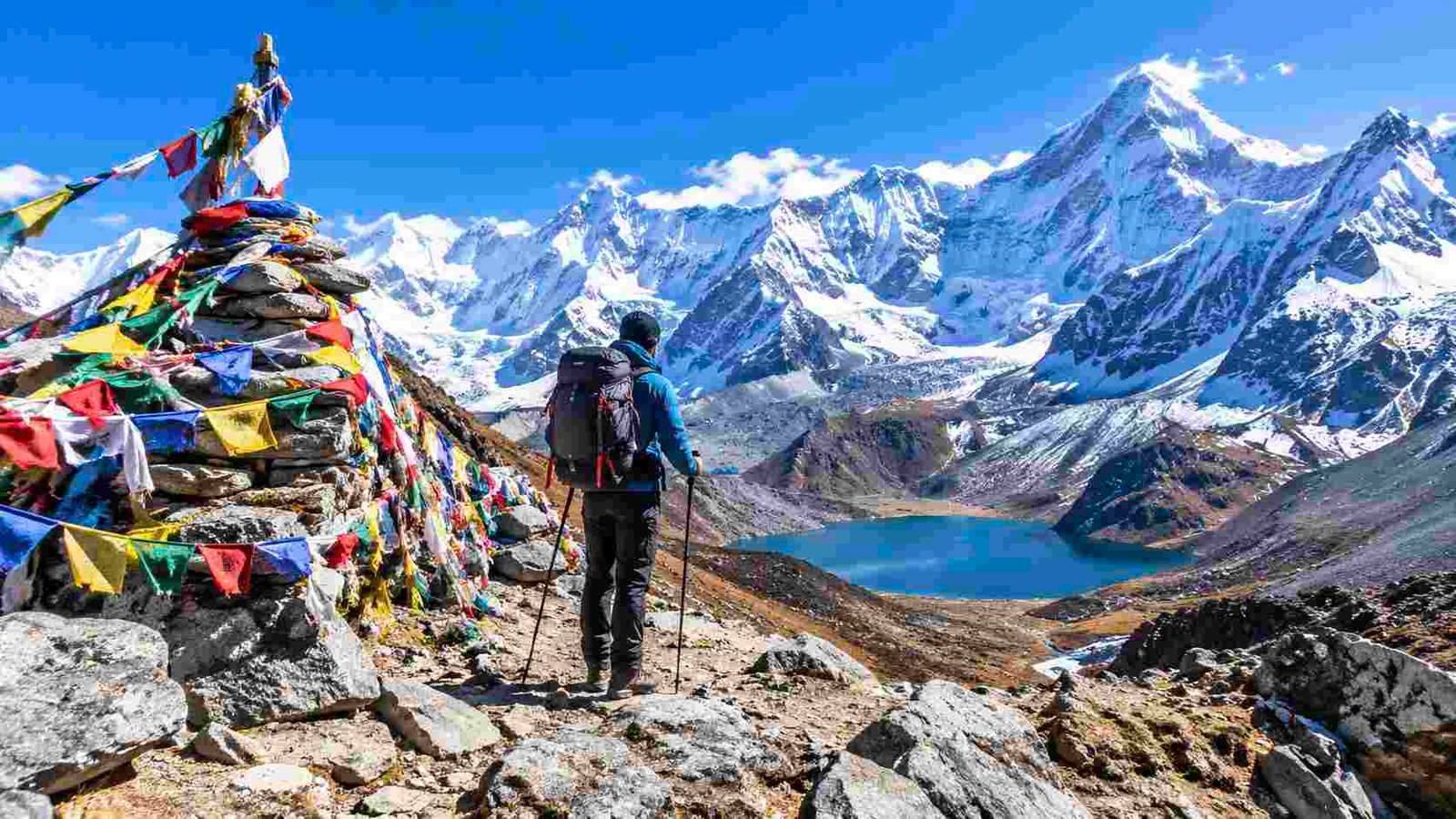
Thorong La Pass is one of the most famous and challenging high-altitude passes in Nepal, located within the Annapurna region along the popular Annapurna Circuit Trek. Standing at approximately 5,416 meters above sea level, the pass connects the Manang Valley on the eastern side with the Mustang region on the western side. Crossing Thorong La is considered one of the major highlights of the Annapurna Circuit because it combines physical challenge, dramatic mountain scenery, and a strong sense of accomplishment. The journey toward the pass takes trekkers through changing landscapes, from green valleys and forests to dry alpine terrain and snow-covered mountain slopes. The crossing also provides a remarkable transition between the wetter landscapes of Manang and the drier environment of Mustang, making Thorong La an important geographical and cultural point along the circuit.
Where Is Thorong La Pass Located?
Thorong La Pass is located in north-central Nepal within the Annapurna mountain region. It lies between the Manang and Mustang districts and forms a natural passage between the Marsyangdi Valley and the Kali Gandaki Valley. The pass is surrounded by high Himalayan landscapes and is reached after trekkers travel through several mountain settlements on the Annapurna Circuit. Because of its high elevation and remote location, the environment around Thorong La is significantly colder and more rugged than the lower sections of the trail. The pass is not located directly on the summit of a mountain but forms a high saddle between surrounding peaks. Its strategic position has made it one of the defining geographical features of the Annapurna trekking route.
Thorong La Pass Altitude
Thorong La Pass reaches an elevation of approximately 5,416 meters above sea level, making it one of the highest trekking passes accessible to travelers in Nepal. At this altitude, the air contains considerably less oxygen than at sea level, making physical activity more demanding. The high elevation is one of the main reasons why trekkers need to spend enough time acclimatizing before attempting the pass. Most Annapurna Circuit itineraries include an acclimatization period around Manang before progressing toward the higher settlements. The final approach generally involves staying at Thorong Phedi or High Camp before beginning the pass crossing. Understanding the altitude and preparing accordingly is essential because even fit trekkers can experience difficulties when walking above 5,000 meters.
Thorong La Pass Trek Difficulty
Crossing Thorong La is one of the most physically demanding sections of the Annapurna Circuit Trek. The challenge comes from a combination of high altitude, cold temperatures, steep sections, rocky terrain, and the long distance covered during the pass-crossing day. Trekkers generally begin very early in the morning because weather conditions can deteriorate later in the day, particularly at high elevations. The ascent toward the pass can feel slow because the thin air makes every step more demanding. However, the route does not require technical mountaineering skills or specialized climbing techniques under normal trekking conditions. Good physical preparation, gradual acclimatization, appropriate equipment, and a steady pace can help trekkers manage the crossing more comfortably.
Route to Thorong La Pass
The journey to Thorong La usually takes place after trekkers have passed through important settlements such as Chame, Pisang, Manang, and Yak Kharka. Manang is particularly important because it provides an opportunity for acclimatization before the route continues toward the higher elevations. From Yak Kharka, trekkers generally continue toward Thorong Phedi, which serves as one of the final overnight stops before crossing the pass. Some itineraries use Thorong High Camp instead, allowing trekkers to start the crossing from a higher elevation. On the pass-crossing day, the trail climbs gradually toward Thorong La before reaching the marked summit area. From the pass, trekkers descend toward Muktinath on the Mustang side, completing one of the most memorable sections of the Annapurna Circuit.
Best Time to Cross Thorong La
The best time to cross Thorong La Pass is generally during the spring and autumn trekking seasons, when weather conditions are more favorable and visibility is often good. Spring from March to May provides relatively stable conditions, although snow can remain around the pass depending on the season. Autumn from September to November is another popular period because the monsoon has generally cleared the atmosphere and mountain views can be excellent. Winter can bring heavy snowfall, freezing temperatures, and difficult trail conditions, potentially making the pass unsafe or inaccessible. During the monsoon season, rain at lower elevations can be accompanied by clouds and changing conditions, while snow and poor visibility may affect the higher pass. Weather conditions should always be checked before attempting the crossing.
Acclimatization Before Thorong La
Proper acclimatization is one of the most important factors when preparing to cross Thorong La. Trekkers should not rush from the lower valleys directly toward the pass because the body needs time to adjust to increasing elevation. Manang is commonly used as an acclimatization point, where trekkers can spend an additional day exploring nearby areas before continuing higher. The principle of gaining altitude gradually is particularly important because the pass reaches more than 5,400 meters. Trekkers should monitor their physical condition and take symptoms such as severe headache, dizziness, nausea, unusual weakness, or breathing difficulties seriously. If altitude-related symptoms worsen, continuing toward the pass may be unsafe. A carefully planned itinerary provides a better opportunity to enjoy the crossing without unnecessary altitude-related risks.
Weather Conditions at Thorong La
Weather at Thorong La can change quickly because of the pass’s high elevation and exposed location. Temperatures can remain extremely cold, especially during early morning hours when most trekkers begin the crossing. Strong winds, snowfall, clouds, and reduced visibility can occur even when conditions were pleasant at lower elevations. This is why trekkers generally aim to cross the pass early in the day, when weather conditions are more likely to be manageable. Appropriate clothing is essential, including thermal layers, an insulated jacket, gloves, a warm hat, and wind- and water-resistant outerwear. Trekkers should also follow local advice about current trail and weather conditions before beginning the pass-crossing day.
Views from Thorong La Pass
Reaching the top of Thorong La provides spectacular views across the surrounding Himalayan landscape. The pass itself is marked by colorful prayer flags and offers a dramatic sense of openness after the long ascent from the Manang side. Depending on weather and visibility, trekkers can see surrounding mountain ridges and the contrasting landscapes on both sides of the pass. The change from the green and rugged Marsyangdi Valley to the dry Mustang landscape becomes particularly noticeable after the descent. The panoramic surroundings, combined with the achievement of reaching such a high elevation on foot, make the pass one of the most memorable points of the Annapurna Circuit.
Descent from Thorong La to Muktinath
After reaching Thorong La, the trail descends toward Muktinath on the Mustang side. Although the descent means that trekkers are moving toward lower elevations, it can still be physically demanding because of the steep and rocky terrain. The landscape gradually becomes drier and more open as the route enters the Mustang region. Muktinath is an important religious destination and has significance for both Hindu and Buddhist communities. Reaching Muktinath after crossing Thorong La can therefore provide both a physical and cultural conclusion to the pass-crossing experience. Many trekkers choose to spend the night in the area before continuing toward Jomsom, Marpha, or other destinations along the Kali Gandaki Valley.
Thorong La Pass Packing and Preparation
Preparation for Thorong La requires particular attention to clothing, footwear, hydration, and personal equipment. Warm thermal layers, a good insulated jacket, waterproof outerwear, gloves, a warm hat, and comfortable trekking boots are essential for dealing with cold and changing weather. Sunglasses are particularly important because bright sunlight reflecting from snow can be uncomfortable and potentially harmful to the eyes. Sunscreen and lip balm can also help protect exposed skin from strong high-altitude sunlight and dry conditions. Trekking poles can provide additional support on steep sections, while a headlamp is useful because the pass-crossing day often begins before sunrise. Keeping essential items easily accessible in a daypack is recommended, even when a porter is carrying larger luggage.
Accommodation Near Thorong La
Accommodation near Thorong La is generally basic because of the remote and high-altitude environment. Thorong Phedi and High Camp provide simple lodges where trekkers can spend the night before attempting the pass. Facilities at these locations are more limited than those found in larger villages such as Manang. Rooms are generally basic, and dining areas provide simple meals for trekkers preparing for the following day’s crossing. Because temperatures are extremely cold at night, warm sleeping equipment is important. Trekkers should not expect the same level of facilities available in lower settlements, as the remote location makes transporting food, fuel, and other supplies difficult.
Thorong La Pass Safety Considerations
Safety should be a priority when crossing Thorong La because of the combination of high altitude, cold weather, steep terrain, and rapidly changing conditions. Starting early, following an appropriate itinerary, and avoiding unnecessary rushing can help reduce difficulties during the crossing. Trekkers should remain aware of their physical condition and communicate with guides or trekking companions if they begin experiencing concerning symptoms. Weather conditions should also be considered before setting out because snowfall or strong winds can make the pass considerably more difficult. Hiring an experienced local guide can provide additional support with route conditions, timing, accommodation, and decision-making. Travel insurance that includes high-altitude trekking and emergency evacuation is also recommended.
Why Is Thorong La Pass Famous?
Thorong La Pass is famous because it represents both a geographical and physical milestone on the Annapurna Circuit. Its elevation of approximately 5,416 meters makes the crossing a significant achievement for trekkers, while the dramatic change in scenery on either side of the pass adds to its appeal. The route combines the challenge of a high Himalayan crossing with spectacular views and cultural destinations such as Muktinath. Unlike a destination reached by vehicle or a short hike, crossing Thorong La requires sustained effort and preparation, which gives the experience a strong sense of accomplishment. For many trekkers, standing beside the prayer flags at the top after completing the long ascent becomes one of the defining memories of their Annapurna journey.
Conclusion
Thorong La Pass is one of the most remarkable highlights of trekking in Nepal and an essential feature of the classic Annapurna Circuit. Its high elevation, challenging ascent, changing weather, and spectacular Himalayan surroundings make crossing the pass a memorable achievement. The journey toward Thorong La also provides an opportunity to experience the diverse landscapes and cultures of the Annapurna region, from the valleys of Manang to the dry landscapes of Mustang. Proper acclimatization, physical preparation, suitable clothing, careful planning, and attention to weather conditions are essential for a successful crossing. For trekkers seeking a challenging yet rewarding Himalayan experience, Thorong La Pass offers an unforgettable combination of adventure, scenery, and personal accomplishment.