









Introduction
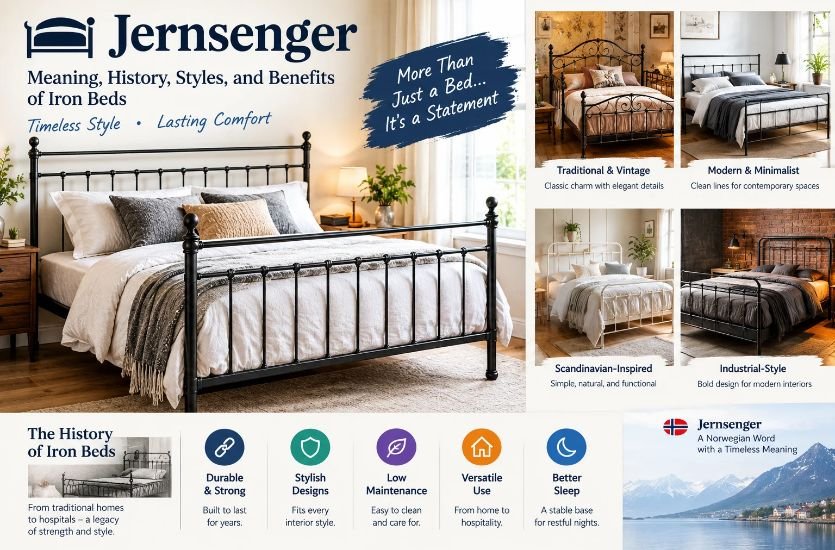
Jernsenger is a Norwegian word that refers to iron beds. The singular form, jernseng, describes a bed made of iron, while jernsenger is its plural form. Although the term may be unfamiliar to English-speaking readers, it connects to a well-established category of bedroom furniture that combines practical construction with distinctive design.
Iron beds have appeared in traditional homes, institutional settings, and modern interior designs. Their appearance ranges from decorative vintage frames with curved details to minimalist metal structures suited to contemporary bedrooms. Understanding Jernsenger involves more than its linguistic meaning; it also means exploring the history, materials, design options, advantages, and practical considerations associated with iron beds.
What Does Jernsenger Mean?
The meaning of Jernsenger comes from the Norwegian language. The word jern means iron, while seng means bed. Its plural form describes multiple iron beds rather than one specific furniture model or manufacturer.
In English, similar furniture is commonly described as iron beds, iron bed frames, metal bedsteads, or metal bed frames. These terms can overlap, although the materials used in individual products may differ. Some traditional beds are made from iron, while many contemporary designs use steel or other metals.
The distinction between the word and the furniture category is important. Jernsenger does not automatically refer to a particular brand, technology, or design philosophy. Its established meaning is connected to iron beds, while any broader interpretation depends on the context in which the term appears.
The History of Iron Beds
Iron beds have a documented history in furniture manufacturing, particularly as metalworking techniques developed and manufacturers began producing metal furniture for domestic and institutional use. Their construction offered an alternative to wooden bedsteads, allowing designers to create frames with different shapes, decorative details, and structural arrangements.
Norway has a specific connection to this history. Christiania Jernseng- og Jernvarefabrik began operating in Oslo in 1904. The company initially produced items that included hospital beds and ship beds, illustrating the practical role of metal bedsteads in environments where reliable construction was important.
Over time, metal furniture evolved alongside changes in manufacturing methods and interior design. Traditional iron beds often featured elaborate headboards, curved rails, and decorative ornaments. Later designs increasingly embraced simpler lines and more restrained forms.
Today, iron-style beds remain available in a variety of designs. Modern manufacturing also makes extensive use of steel tubing and protective coatings, allowing manufacturers to produce frames that resemble traditional iron furniture while offering different weights, finishes, and construction methods.
Popular Styles of Jernsenger
One reason Jernsenger can suit different interiors is the variety of styles associated with iron beds. Their overall appearance depends on the frame shape, metal finish, decorative details, and surrounding bedroom furniture.
Traditional and Vintage Iron Beds
Traditional iron beds often feature curved headboards, decorative bars, rounded finials, and intricate metalwork. These details create a classic appearance that works well in vintage-inspired bedrooms, cottages, and traditional homes.
Black, bronze, and antique-style finishes can complement wooden furniture, patterned bedding, and warm lighting. However, the quality and authenticity of vintage furniture vary, so buyers interested in older pieces should inspect their condition and stability before purchasing.
Modern and Minimalist Metal Beds
Modern metal beds typically feature straight lines, simple headboards, and limited decoration. Their understated appearance can suit contemporary apartments, smaller bedrooms, and interiors that prioritise practical use of space.
Black and white finishes are common design choices, although other colours may also be available. A simple metal frame can work with neutral bedding or provide contrast against brighter fabrics and textured walls.
Scandinavian-Inspired Bedroom Designs
Scandinavian-inspired interiors often emphasise simplicity, natural light, practical furniture, and uncluttered spaces. An iron bed with a clean silhouette can fit this approach when combined with light-coloured bedding, wooden flooring, and restrained decoration.
The Norwegian origin of the word Jernsenger makes it relevant to discussions of Nordic furniture terminology. Nevertheless, not every iron bed is Scandinavian in design or manufacture. The style depends on the actual product rather than the name alone.
Industrial-Style Metal Beds
Industrial-style beds use straightforward metal structures and finishes that complement exposed materials, darker colours, and functional furniture. Their appearance can suit loft apartments, urban interiors, and bedrooms with a contemporary industrial theme.
The frame should still be selected for comfort and stability rather than appearance alone. A visually striking design is not necessarily well constructed, so buyers should review the product specifications before making a decision.
What Are the Benefits of Jernsenger?
The practical benefits of Jernsenger depend on the materials, construction quality, and intended use of the bed. A well-designed metal frame can provide reliable mattress support while offering considerable flexibility in bedroom styling.
Durability and Structural Support
Metal bed frames can provide dependable support when their rails, joints, legs, and centre supports are appropriately designed. Quality construction helps the bed remain stable during normal use and reduces the likelihood of excessive movement.
However, metal does not automatically make a bed stronger than a wooden alternative. Material thickness, manufacturing quality, assembly, weight limits, and the overall design all affect durability. Buyers should evaluate these factors instead of relying on the material description alone.
Flexible Interior Design
Jernsenger can complement many bedroom styles because metal frames are available in both decorative and understated designs. A traditional frame may become a focal point, while a minimalist model can blend into the background.
Changing the bedding, curtains, rugs, and lighting can also alter the appearance of the room without replacing the bed. This flexibility makes metal frames worth considering for people who enjoy updating their interior design over time.
Straightforward Cleaning
Many metal bed frames have smooth, exposed surfaces that can be wiped with a soft cloth. Their open construction may also make certain areas beneath and around the bed easier to access during routine cleaning.
Nevertheless, cleaning requirements depend on the finish and frame design. Decorative joints, textured coatings, and intricate metalwork may collect dust. Protective coatings should be maintained to reduce the risk of corrosion where the underlying metal is vulnerable.
Options for Different Room Sizes
Metal beds are available in different dimensions, from compact single frames to larger double and king-size designs. Some feature slim profiles and open headboards that create a less bulky visual effect than solid furniture.
This can be useful in smaller bedrooms, although an open frame does not increase the room’s actual floor area. Buyers should measure the available space and account for walking paths, bedside furniture, doors, and drawers before selecting a bed.
Potential Disadvantages of Iron Beds
Despite their advantages, Jernsenger are not automatically the right choice for every household. Their suitability depends on individual preferences, room conditions, and product quality.
One possible drawback is noise. Poorly tightened bolts, moving joints, uneven floors, or components rubbing together can cause a metal bed to squeak. Correct assembly and periodic checks can help reduce these problems.
Rust is another consideration for frames made from iron or ordinary steel. Moisture and damaged protective coatings can expose metal to corrosion. Keeping the frame dry and repairing damaged finishes where appropriate can help maintain its condition.
Weight also varies considerably. Some metal frames are lightweight and easy to move, while heavy traditional designs can be difficult to transport. In addition, inexpensive products may have weak joints, inadequate support, or poorly finished components. These issues make construction quality more important than appearance alone.
How to Choose the Right Jernsenger
Selecting a suitable iron bed starts with accurate measurements. Buyers should consider the mattress size, the external dimensions of the frame, headboard height, and the space required for movement around the bed.
The support system is equally important. Check whether the frame includes suitable slats, a centre rail, and sufficient legs or other supports for its intended mattress and weight capacity. Mattress manufacturers may also specify maximum slat spacing or other support requirements, which should be followed.
Material specifications deserve careful attention. A product marketed as an iron bed may actually use steel tubing or a combination of metals. This is not necessarily a disadvantage, but buyers should understand what they are purchasing rather than assuming that all metal beds use solid iron.
The finish should suit both the room and the intended maintenance routine. Smooth, properly applied coatings can help protect the underlying metal, while damaged areas may require attention. Buyers should also review assembly instructions, available replacement parts, warranty conditions, and the seller’s return policy.
Finally, comfort depends on more than the frame. A suitable mattress, correct support, and a stable sleeping surface are essential. A visually attractive bed cannot compensate for an unsuitable mattress or an unstable structure.
How to Maintain Jernsenger
Regular maintenance can help keep an iron bed clean, stable, and attractive. Dusting the frame with a soft cloth or vacuum brush prevents the gradual accumulation of dirt around joints and decorative details.
Cleaning should follow the manufacturer’s recommendations. Avoid leaving moisture on exposed metal, especially where the protective finish is chipped or damaged. If rust appears, the affected area should be assessed and treated using a method appropriate for the material and coating.
Fasteners and joints should also be checked periodically. Loose connections can contribute to movement and squeaking, while damaged components may affect stability. Any replacement parts should be compatible with the original frame.
For beds placed in humid environments, paying attention to ventilation and moisture control is particularly useful. These simple measures can help preserve the finish and reduce the risk of corrosion over time.
Are Jernsenger Suitable for Modern Homes?
Jernsenger can be suitable for modern homes because metal beds are available in designs that accommodate different spaces and decorating preferences. Traditional frames can add character to older properties, while simple metal structures can complement contemporary apartments and guest bedrooms.
Their practicality ultimately depends on the individual product. A well-made frame with suitable support and a durable finish can serve as a useful piece of bedroom furniture, while a poorly constructed model may develop stability or maintenance problems regardless of its appearance.
For people choosing bedroom furniture, Jernsenger provides a useful term for exploring iron-bed designs. Comparing construction, dimensions, finish, mattress compatibility, and maintenance requirements offers a more reliable basis for choosing a bed than following design trends alone.
Conclusion
Jernsenger is the Norwegian plural term for iron beds, a category of furniture with both historical significance and contemporary design applications. From ornate vintage bedsteads to modern minimalist frames, iron beds offer a range of appearances for different bedroom environments.
Their potential benefits include dependable support, flexible styling, and straightforward cleaning, although durability and maintenance depend on the quality of the materials and construction. Buyers should examine frame stability, mattress compatibility, protective finishes, dimensions, and assembly requirements before making a purchase.
Ultimately, the value of Jernsenger lies in the combination of practical function and adaptable design. Understanding the word’s meaning and the characteristics of iron beds helps readers make informed decisions when exploring bedroom furniture.
If you want more informative articles with different categories, visit our website editorialmagazine.co.uk.