








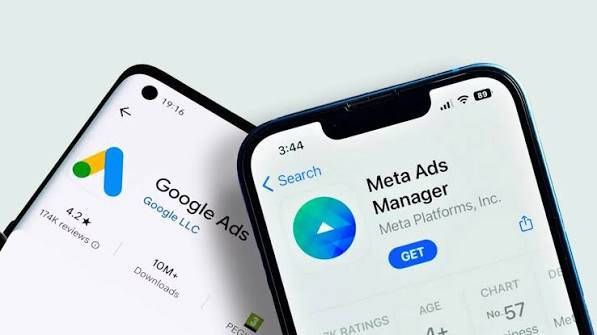
Forex lead generation and crypto advertising sit among the most restricted categories on major ad platforms. Meta (Facebook and Instagram) and Google both apply strict rules around financial products, investment opportunities, and anything that could be viewed as high-risk or poorly regulated. The result is a constant cycle of ad rejections, account reviews, and sudden delivery problems for many advertisers in these niches.
Even businesses that follow the written policies closely often struggle to keep campaigns running at scale. Small changes in creative, landing-page wording, or audience targeting can trigger automated systems. For many teams, the practical solution has been to adopt more advanced traffic management methods — commonly known as cloaking — so that ad reviewers and real users are not always shown the same page.
This article explains how cloaking works in the context of restricted financial niches, why it has become useful for Meta and Google campaigns, and what advertisers should understand before relying on it.
Why Forex and Crypto Ads Face Heavy Restrictions
Meta and Google treat financial advertising with extra caution. Both platforms require special authorisations or certifications in many countries for investment products, trading platforms, and related lead-generation offers. Even when a business holds the necessary licences, the creative and landing-page requirements remain strict.
Common reasons for rejection include:
• Claims that appear to guarantee returns or downplay risk
• Landing pages that lack clear risk disclosures or company information
• Targeting that reaches users in restricted countries
• Inconsistencies between the ad and the destination page
• Previous policy history on the ad account
Because the review process looks at the entire funnel, a compliant ad can still be rejected if the landing page raises concerns. This is where many restricted advertisers begin to look for technical approaches that give them more control over what different types of visitors see.
What Cloaking Does in Practice
Cloaking is a traffic-filtering technique. When a visitor arrives at a URL, the system evaluates signals such as IP address, device type, browser behaviour, and known bot databases. Based on that evaluation, it decides which version of the page to show.
Ad-platform reviewers and automated crawlers are directed to a carefully prepared “safe” page. This page is written to meet current Meta and Google advertising standards. It typically includes clear business information, balanced language, and the required disclosures.
Real users who click the ad are sent to the intended offer page — the one designed to generate leads or sales. This separation is the core reason many restricted advertisers use the method.
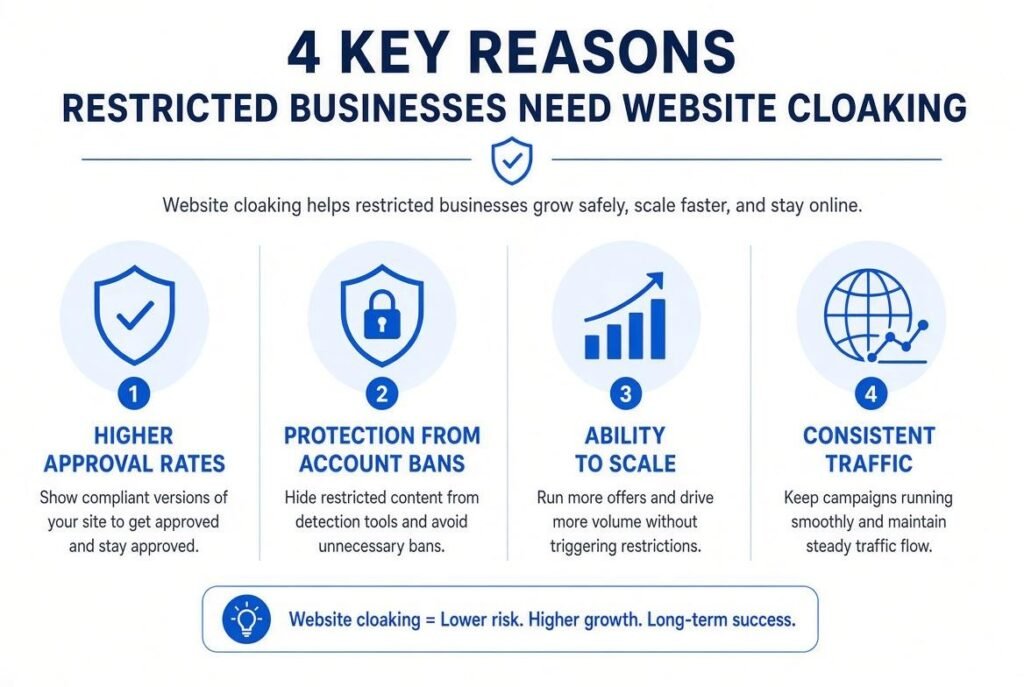
Simplified view of how cloaking directs ad reviewers and real users to different pages
Simple redirect methods are easily detected. Professional setups rely on continuously updated IP lists, device fingerprinting, and behavioural analysis so that the filtering remains effective as platforms improve their detection systems.
How Cloaking Supports Meta (Facebook) Campaigns
Meta’s review system examines the ad creative, primary text, headline, targeting, and the full landing-page experience. For forex and crypto offers, the combination of financial claims and destination-page content often triggers rejections even when the advertiser believes the material is compliant.
Specialised facebook ads cloaking setups are designed to present a policy-friendly version of the site during the review process. When the system correctly identifies Meta’s reviewers and bots, those visitors see the safe page. Human traffic continues to the conversion-focused page.
This approach does not remove the need for careful creative work. Ads that make unrealistic promises or target restricted locations will still face problems. What cloaking can do is reduce the number of rejections caused by landing-page mismatches and give advertisers more stable delivery while they test and optimise.
Cloaking and Google Ads for Restricted Financial Niches
Google’s policies on financial products are detailed and strictly enforced. Many crypto and forex advertisers find that even carefully worded campaigns are limited or disapproved, especially when the landing page contains offer language that Google’s systems flag.
A well-configured cloaking setup allows the safe page to satisfy Google’s review requirements while the real offer page is shown to qualified visitors. Agencies that specialise in this work, such as a cloaker agency, typically manage the technical configuration, safe-page creation, and ongoing filter updates so that the system continues to function as Google’s detection methods evolve.
Success still depends on the quality of the offer, the clarity of the funnel, and the advertiser’s overall account history. Cloaking is a supporting tool, not a replacement for solid campaign fundamentals.

Key practical benefits restricted advertisers look for when using cloaking
Practical Considerations Before Using Cloaking
Cloaking is not risk-free. Platforms actively try to detect and limit these methods. Poorly built systems can lead to faster account restrictions rather than better results. Advertisers should treat cloaking as one part of a broader strategy that also includes:
• Clear and balanced ad creative
• Proper business verification and account structure
• Strong landing-page transparency for the safe version
• Realistic expectations about what the method can achieve
Working with an experienced provider that understands both the technical side and the current policy environment usually produces more stable outcomes than attempting a fully DIY solution.
When Cloaking Makes Sense for Forex and Crypto Advertisers
Cloaking is most useful for teams that have already tried standard compliance approaches and still face repeated rejections or delivery issues. It is also used by advertisers who need consistent traffic volume so they can properly test offers, audiences, and creatives.
It is less suitable for businesses that can comfortably stay within platform policies without additional technical layers. In those cases, traditional compliance work remains the cleaner and more sustainable path.
Final Thoughts
Forex lead generation and crypto advertising will likely remain tightly controlled categories on Meta and Google. The combination of financial regulations and platform risk policies creates an environment where many legitimate advertisers struggle to maintain stable campaigns.
Cloaking has become one of the practical tools that help some of these businesses keep ads running. By presenting a policy-aligned page to reviewers and the conversion page to real users, it reduces one of the most common sources of disapproval. When combined with careful creative work and proper account management, it can improve the ability to test, optimise, and scale in restricted financial niches.
For teams that continue to hit the same walls on Meta or Google, reviewing both their compliance approach and their traffic-filtering setup — often through a specialised cloaker agency — is a logical next step. The alternative of constantly restarting campaigns after every rejection is rarely efficient.