








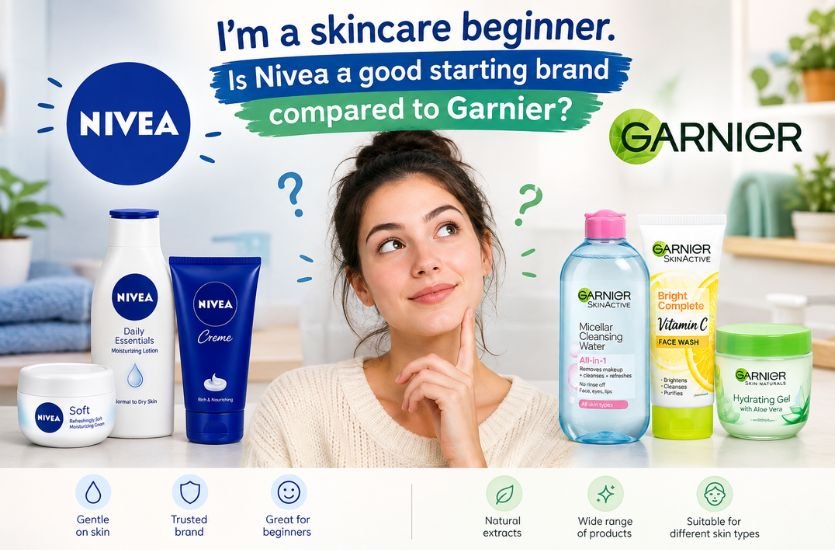
Starting a skincare routine can feel surprisingly complicated. There are cleansers, moisturizers, serums, exfoliators and sunscreens, all promising different benefits. For someone buying skincare for the first time, choosing a familiar brand such as NIVEA or Garnier can seem like an easier place to begin.
Both brands offer affordable and widely available skincare products, but they are not identical in their product ranges or approach. NIVEA has a strong reputation for everyday moisturizing and basic skin care, while Garnier offers many cleansing and targeted products designed around particular concerns. The better choice therefore depends less on the brand name and more on your skin type, routine and the individual formula you choose.
Quick Bio: NIVEA vs Garnier
| Detail | NIVEA | Garnier |
|---|---|---|
| Brand type | Skincare and personal care brand | Beauty and skincare brand |
| Beginner focus | Hydration, cleansing and everyday care | Cleansing, hydration and targeted concerns |
| Popular skincare products | Moisturizers, cleansers, sunscreens and micellar products | Micellar water, cleansers, moisturizers and targeted treatments |
| Suitable for beginners | Yes, depending on product | Yes, depending on product |
| Main consideration | Choose according to skin type and formula | Choose according to skin concern and formula |
Is NIVEA Good for Skincare Beginners?
NIVEA can be a practical starting point for someone who wants to build a simple skincare routine. Its range includes cleansers, moisturizers, sunscreens, micellar products and treatments for different skin concerns. NIVEA itself recommends adapting a routine according to skin type and notes that a basic routine can focus on cleansing, moisturizing and sun protection.
This makes NIVEA particularly relevant to beginners who do not want to start with a complicated collection of products. A person who mainly wants to keep the skin clean and moisturized does not necessarily need several serums or strong active ingredients.
However, NIVEA should not automatically be considered suitable for everyone. Different products from the same brand can have very different formulas. Some are designed for dry skin, some for sensitive skin, some for blemish-prone skin and others for specific concerns such as signs of ageing.
The important lesson is that choosing NIVEA is not the end of the decision. You still need to check what the particular product is designed to do and whether its ingredients suit your skin.
What Makes Garnier Different?
Garnier also has a broad skincare range, but beginners may notice a particularly strong focus on cleansing and products aimed at specific skin concerns. Its range includes micellar waters, facial cleansers, moisturizers and formulas featuring ingredients commonly associated with concerns such as excess oil, blemishes and dull-looking skin.
This can be useful when a beginner already understands what they want from a product. For example, someone primarily looking for a cleansing product may find Garnier’s micellar and cleanser ranges appealing, while someone searching mainly for a straightforward moisturizer may naturally look toward NIVEA.
Garnier’s wider selection of targeted formulas does not mean that it is automatically more effective than NIVEA. A product containing several active ingredients is not necessarily a better starting point for someone who has never followed a skincare routine. Beginners often benefit from understanding their skin first instead of adding multiple treatments immediately.
NIVEA vs Garnier for Different Skin Types
Your skin type is more useful than brand popularity when deciding where to start.
For dry skin, a beginner will generally want to prioritize gentle cleansing and consistent hydration. NIVEA has several products positioned around nourishment and moisturizing, making its range relevant for people whose main concern is dryness. The brand also recommends richer, hydrating approaches for dry skin.
For oily skin, the choice becomes more dependent on the individual product. Lightweight moisturizers and suitable cleansers can be more useful than simply choosing a brand associated with hydration. Garnier has products designed around cleansing and oily or blemish-prone concerns, while NIVEA also has targeted products containing ingredients such as salicylic acid and niacinamide.
Combination skin can be slightly more difficult because different areas of the face may have different needs. A gentle cleanser and a lightweight moisturizer can provide a simpler starting point than using multiple products for different parts of the face.
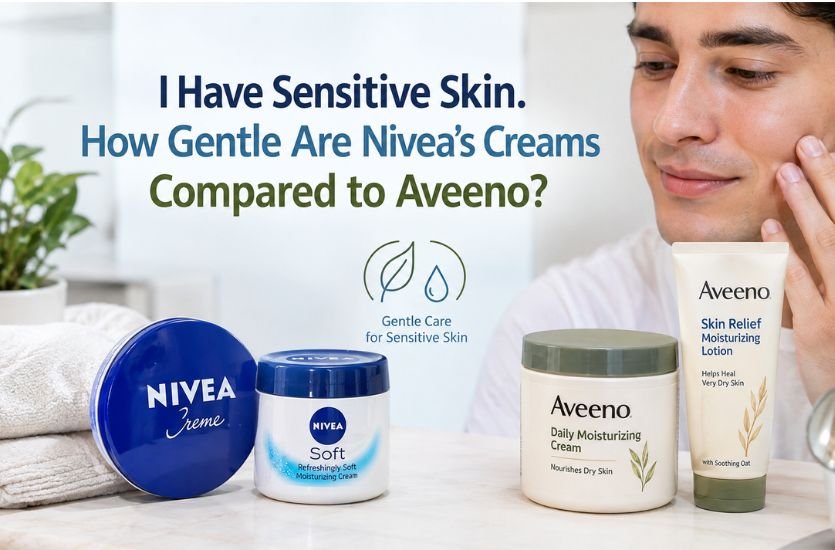
Sensitive skin requires additional care. Rather than automatically choosing NIVEA or Garnier, beginners should look for suitable formulas and pay attention to fragrance and other ingredients that may cause irritation. NIVEA’s own sensitive-skin guidance recommends a minimalist routine, fragrance-free products and patch testing when introducing something new.
Should Beginners Start With NIVEA or Garnier?
There is no universal winner between NIVEA and Garnier for every beginner. The better starting point depends on what you actually want your skincare routine to accomplish.
If your main goal is basic hydration and everyday skin care, NIVEA can be a straightforward place to explore. Its product range contains many conventional moisturizers and basic skincare options, including products specifically developed for sensitive or dry skin.
If your main interest is cleansing or addressing a particular concern such as excess oil or blemishes, Garnier may have products that fit those needs particularly well. Its range gives beginners access to products designed around specific skincare concerns.
The important distinction is that you should compare individual products rather than judging the two brands as complete categories.
A NIVEA moisturizer should not be directly compared with a Garnier micellar water simply because both come from popular skincare brands. They perform different jobs.
What Ingredients Should a Beginner Look For?
Skincare beginners do not need to memorize a long list of complicated ingredients. Understanding a few common ones can make product labels much easier to read.
Glycerin is a common moisturizing ingredient that helps attract and retain water in the skin. It appears in many hydration-focused products and can be useful when dryness is a concern.
Niacinamide is another widely used ingredient. It is associated with several skincare functions and is found in products designed for concerns such as uneven-looking skin, pores and blemishes. NIVEA’s ingredient education also identifies niacinamide as an ingredient used for supporting the skin barrier and improving the appearance of pores.
Salicylic acid is an exfoliating ingredient commonly used in products aimed at clogged pores and blemish-prone skin. Both brands have products featuring ingredients aimed at these concerns, which again shows why comparing formulas is more useful than simply comparing brand names.
For a beginner, however, introducing several active ingredients at once can make it difficult to understand how the skin is responding. A simpler routine is often easier to maintain and evaluate.
A Simple Skincare Routine for Beginners
A beginner does not need a ten-step routine. A basic routine can start with three fundamental areas: cleansing, moisturizing and sun protection. NIVEA’s skincare guidance similarly describes cleansing, moisturizing and sun protection as the foundation of a basic routine.
In the morning, start with a gentle cleanser if one is appropriate for your skin, followed by a moisturizer suited to your skin type. Finish with a broad-spectrum sunscreen with an appropriate SPF when your skin will be exposed to sunlight.
In the evening, cleanse the skin to remove accumulated dirt, oil, makeup or sunscreen, then apply a suitable moisturizer. Additional products can be introduced later if there is a specific reason to use them.
This approach also makes it easier to identify problems. If you introduce five new products simultaneously and develop irritation, it can be difficult to know which product caused the reaction.
Is NIVEA Better for Beginners Than Garnier?
Calling NIVEA better than Garnier would be too broad. NIVEA can be a good starting brand, but so can Garnier. The deciding factor should be the product’s purpose, ingredients and compatibility with your skin.
NIVEA may make particular sense for a beginner who wants simple moisturizing and everyday skincare products. Garnier may be attractive to someone looking for cleansing products or formulas targeted toward particular concerns.
There is also no requirement to use only one brand. A beginner could use a suitable cleanser from one brand and a moisturizer from another. Skincare routines are not competitions between brands; each product should earn its place based on what your skin actually needs.
Common Mistakes Skincare Beginners Should Avoid
One of the biggest mistakes is buying too many products at once. A large collection may look impressive, but it can make a routine unnecessarily complicated.
Another common mistake is choosing products because they are popular rather than because they match the person’s skin type. A product that works well for one person may not be comfortable or appropriate for another.
Beginners should also be careful about adding strong exfoliating or treatment products too quickly. Starting with basic cleansing, moisturizing and sun protection provides a clearer foundation before experimenting with additional ingredients.
It is also important not to assume that a familiar brand name guarantees that every product will suit your skin. Even within NIVEA or Garnier, formulas can vary considerably.
Final Verdict: Which Brand Should a Beginner Start With?
NIVEA is a perfectly reasonable starting point for a skincare beginner, particularly if the goal is straightforward hydration and everyday skin care. Garnier is also a reasonable choice, especially for beginners interested in cleansing or products designed around particular skin concerns.
The most sensible approach is to stop thinking in terms of choosing a permanent “NIVEA person” or “Garnier person.” Instead, identify your skin type, decide what your routine actually needs and then choose individual products accordingly.
For someone starting from zero, a simple cleanser, suitable moisturizer and daily sunscreen are more important than having an elaborate collection of branded products. As you learn how your skin responds, you can gradually add targeted products when there is a genuine reason to use them.
Ultimately, NIVEA vs Garnier for beginners is not really about which brand is better. It is about which specific products fit your skin, your routine and your skincare goals.