
Tracking used to mean following something from one place to another. Today, it can mean something far more sophisticated: knowing where an asset is, understanding how a vehicle is moving, finding a lost pet, analyzing digital behavior, or receiving an alert when something enters a defined area.
That transformation is at the heart of Tracqueur.
The term “Tracqueur” is commonly used online in connection with modern tracking technology. In practical terms, it can describe a tracker, tracking device, software system, or technology stack designed to collect, transmit, monitor, and analyze location, movement, activity, or behavioral data. Depending on the application, a Tracqueur may rely on GPS or broader GNSS positioning, cellular connectivity, Wi-Fi, Bluetooth, sensors, cloud platforms, and data analytics.
What makes the subject particularly interesting is that modern tracking is no longer limited to a small GPS device attached to a vehicle. It has become part of smartphones, logistics systems, wearables, connected vehicles, industrial equipment, digital platforms, and Internet of Things (IoT) environments.
Quick Bio of Tracqueur
| Attribute | Details |
|---|---|
| Term | Tracqueur |
| General meaning | Tracker or tracking system |
| Technology category | Location, movement, activity, and data tracking |
| Common technologies | GPS/GNSS, cellular, Wi-Fi, Bluetooth, sensors, cloud computing |
| Primary functions | Location monitoring, activity tracking, alerts, data collection, analysis |
| Common applications | Vehicles, logistics, assets, personal safety, pets, fitness, IoT and digital analytics |
| Tracking style | Real-time, periodic, historical, or event-based |
| Key advantages | Visibility, security, efficiency, convenience and data-driven decision-making |
| Main concerns | Privacy, consent, security, connectivity, battery life and accuracy |
What Is Tracqueur?
At its simplest, Tracqueur is a system used to track something over time.
That “something” could be a vehicle traveling across a city, a shipment moving between warehouses, a pet wandering outside its usual area, an item that has been misplaced, or a digital user interacting with an application.
Modern tracking systems generally perform several basic functions: they detect or collect information, determine or estimate a location or activity, transmit the information when necessary, store it, and make it available through an application, dashboard, map, notification system, or analytics platform.
This means Tracqueur should not necessarily be understood as one particular gadget. It is more useful to think of it as a category of tracking technology.
Some systems are hardware-based. A GPS tracker installed in a vehicle is one example. Others are software-based, monitoring activity through applications, websites, or connected platforms. Many modern solutions combine both hardware and software into one ecosystem.
How Does a Tracqueur Work?
The technology may appear simple from the user’s perspective. Open an app, look at a map, and see a location.
Behind that simple interface, however, several processes can take place.
A typical connected tracking system can be understood through six stages:
Detection → Positioning → Data Collection → Transmission → Processing → Visualization
First, the tracker gathers information. A GPS-enabled device may receive satellite signals and calculate its position. Sensors can also detect movement, speed, acceleration, temperature, or other conditions.
Next, the device determines its position using an available positioning technology. GPS is one option, but modern systems can also use other GNSS constellations and complementary technologies.
The collected information may then be transmitted through a cellular network, Wi-Fi, Bluetooth connection, satellite link, or another communications method.
A server or cloud platform can process the information and make it available to the user. The final result might appear as a live map, route history, activity report, dashboard, or alert.
The basic concept behind GPS is satellite-based positioning. GPS is part of the broader Global Navigation Satellite System (GNSS) ecosystem, which also includes systems such as Galileo, GLONASS, and BeiDou. The Federal Aviation Administration explains that GNSS uses satellite constellations to provide positioning, navigation, and timing services.
GPS and GNSS: The Positioning Foundation
When people hear the word “tracker,” they often immediately think of GPS.
GPS stands for Global Positioning System, the satellite navigation system operated by the United States. GNSS is the broader term covering multiple global satellite-navigation systems.
A GPS receiver determines its position by receiving signals from satellites and using timing information to calculate its location. The FAA notes that basic GPS service provides approximately 7-meter accuracy 95% of the time under its stated service conditions, although real-world performance can vary depending on the environment and receiver.
This distinction matters because saying that every Tracqueur is simply a “GPS tracker” would be too narrow.
Modern devices can combine satellite positioning with cellular networks, Wi-Fi, Bluetooth, inertial sensors, and other technologies to provide more useful tracking in different environments.
Key Features of Tracqueur Technology
A modern Tracqueur system can offer considerably more than a simple location pin.
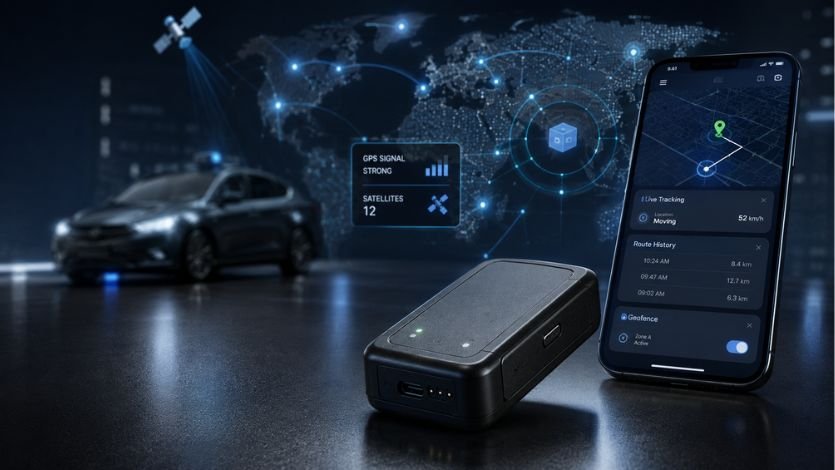
Real-Time Location Tracking
Real-time tracking allows users to see the current or most recently reported location of a connected device.
This feature is particularly useful for fleet operators, logistics companies, vehicle owners, and personal safety applications.
Location History
Knowing where something is now is useful. Knowing where it has been can be even more valuable.
Historical tracking can provide routes, stops, movement patterns, timestamps, and other information that helps users understand past activity.
Geofencing
Geofencing creates a virtual boundary around a physical area.
When a tracked device enters or leaves that area, the system can generate an alert. Businesses can use geofencing for vehicles and assets, while consumer applications can use it for personal belongings or pets.
Alerts and Notifications
Tracking systems can send notifications when predefined conditions occur.
Depending on the platform, alerts may relate to movement, speed, location, battery status, geofence activity, or other events.
Route Monitoring
Route monitoring helps users understand how a vehicle, delivery, person, or asset moved between locations.
For logistics and fleet management, this information can support better scheduling and operational planning.
Data Analytics
Modern tracking is increasingly about more than location.
Collected data can be analyzed to identify recurring patterns, unusual activity, inefficient routes, excessive idle time, or other operational behaviors.
Multi-Device Management
Professional platforms may allow organizations to manage multiple trackers from one dashboard.
Instead of checking individual devices separately, fleet managers or asset operators can view multiple connected units in one environment.
Types of Tracqueur Systems
There is no single form of tracking technology. Different environments require different approaches.
GPS Trackers
GPS trackers use satellite positioning to determine geographic location. They are widely associated with vehicles, pets, personal safety, luggage, and valuable assets.
Many connected GPS trackers also use cellular networks to send their location information to a server or smartphone application.
Vehicle Trackers
Vehicle tracking systems can monitor cars, motorcycles, trucks, and other vehicles.
Depending on the system, they may provide location information, route history, movement alerts, driving information, and other telematics data.
Fleet Tracking Systems
Fleet tracking expands the concept from one vehicle to an entire fleet.
Companies can use fleet tracking to understand vehicle locations, routes, utilization, and operational performance. This can help businesses make more informed decisions about logistics and transportation.
Asset Trackers
Not everything that needs tracking has wheels.
Asset trackers can be used for equipment, machinery, packages, containers, tools, and other valuable movable objects.
Personal Trackers
Small tracking devices can help people locate personal belongings or provide location visibility for specific safety applications.
The technology is particularly useful when the device is small, portable, connected, and capable of transmitting location information.
Pet Trackers
Pet tracking has become another practical application of location technology.
A GPS-enabled pet tracker can help owners locate an animal and, depending on the product, may provide activity monitoring and geofence-style alerts.
Wearable Trackers
Smartwatches and fitness devices demonstrate another side of tracking technology.
Instead of simply answering “Where is it?”, wearable technology can answer questions such as “How much did I move?”, “How active was I?” or “What was my activity pattern?”
Digital Trackers
Tracking does not always involve physical movement.
Software can track website visits, application interactions, clicks, sessions, device identifiers, and other forms of digital behavior. Research into the mobile advertising ecosystem has shown how third-party services can use tracking technologies for analytics, advertising, and other purposes.
Where Is Tracqueur Technology Used?
The most important characteristic of modern tracking technology may be its versatility.
Transportation and Fleet Management
Transportation companies need visibility.
A fleet manager cannot physically follow every truck, van, or car throughout the day. Tracking technology provides a centralized view of vehicle movement.
This can support route management, operational monitoring, scheduling, and asset visibility.
Logistics and Supply Chains
Modern supply chains involve thousands of movements.
Packages move from manufacturers to warehouses, distribution centers, delivery vehicles, and customers. Tracking technology can provide greater visibility throughout that journey.
The result is not merely convenience. Better visibility can help organizations identify delays and improve logistics planning.
Personal Belongings
Losing keys, luggage, bags, bicycles, or other valuable objects can turn a normal day into a frustrating search.
Small tracking devices can reduce that uncertainty by allowing users to locate connected objects through compatible tracking systems.
Vehicle Security
Vehicle tracking can provide owners with location information and movement alerts.
In the event of unauthorized movement or theft, location information may become an important part of the recovery process, although no tracking system can guarantee recovery.
Pet Monitoring
For pet owners, location tracking can provide an additional layer of reassurance.
A tracker can help identify where a pet has traveled and, where supported, alert an owner when the animal moves beyond a defined area.
Fitness and Activity Monitoring
Wearables have transformed tracking from an industrial technology into a personal habit.
Steps, movement, workouts, sleep-related information, and other activity metrics can be collected and presented through consumer applications.
Industrial IoT
Factories and industrial environments can contain large numbers of machines, tools, vehicles, and connected assets.
Tracking and sensor systems can help organizations monitor equipment and understand operational activity.
Digital Analytics
Tracking also exists inside the digital world.
Websites and applications can collect information about interactions and usage patterns. This can help organizations understand how users navigate digital services, although responsible data collection requires attention to privacy, transparency, and applicable laws.
Why Is Tracqueur Technology Important?
Imagine running a delivery company without knowing where your vehicles are.
Or managing expensive equipment without knowing whether it has moved.
Or searching for a lost pet without any location information.
In each situation, the biggest problem is uncertainty.
Tracking technology reduces that uncertainty by converting movement and activity into information.
That information can then support security, planning, efficiency, accountability, and decision-making.
This is why modern tracking has evolved from a niche technical capability into a major part of connected technology.
Benefits of Using a Tracqueur
Better Visibility
The most obvious advantage is visibility.
Users can gain a clearer understanding of where an object, vehicle, or connected device is located.
Improved Security
Tracking can provide additional visibility for vehicles, assets, belongings, and other valuable items.
Operational Efficiency
Businesses can examine routes, movement patterns, and activity to identify potential inefficiencies.
Faster Response
Alerts can notify users when predefined events occur, reducing the need to constantly monitor a dashboard.
Historical Insights
Tracking data creates a record that can be reviewed later.
That historical information can be useful for investigating incidents, analyzing routes, and understanding recurring patterns.
Convenience
For consumers, tracking can turn an otherwise difficult search into a simple map-based process.
Limitations of Tracqueur Technology
Every technology has limitations, and tracking is no exception.
Battery Life
Portable trackers depend on batteries. Frequent location updates can increase power consumption, while long battery life may require less frequent reporting.
Connectivity
A tracker may determine its position but still need a communications connection to send that information elsewhere.
Cellular coverage, Wi-Fi availability, satellite connectivity, and network conditions can therefore affect performance.
Indoor Positioning
Satellite positioning can become more difficult in environments where signals are obstructed or weakened, such as inside buildings or around dense structures.
For that reason, modern tracking systems may combine multiple positioning methods.
Accuracy
A location displayed on a screen should not automatically be interpreted as a perfectly precise physical point.
Environmental conditions, signal quality, device design, network conditions, and positioning technology can all affect accuracy.
Cost
Some systems require hardware purchases, connectivity plans, cloud subscriptions, or maintenance.
Privacy
Perhaps the most significant challenge is not technical at all.
It is ethical.
Tracqueur and Privacy
A tracking system can provide valuable information, but location information can also be highly sensitive.
A location history may reveal where someone lives, works, travels, or regularly spends time. Digital tracking can similarly expose patterns of online behavior.
That creates an important principle:
The ability to track something does not automatically mean that someone has the right to track it.
Responsible tracking should therefore involve appropriate consent, transparency, access controls, data security, and clear policies regarding collection and retention.
Organizations should collect only information that is genuinely necessary for the intended purpose and should protect that information against unauthorized access.
The privacy issue becomes even more important when tracking involves people rather than vehicles or assets.
Tracqueur vs. Traditional Tracking
The evolution of tracking technology can be viewed as a progression.
Manual tracking relied on people and physical records.
Radio-based tracking introduced electronic communication over distances.
GPS tracking made satellite-based location information widely accessible.
Connected tracking combined location with cellular and internet connectivity.
Cloud tracking made large-scale monitoring and historical data analysis practical.
IoT tracking connected sensors, machines, vehicles, and assets.
AI-assisted tracking increasingly focuses on interpreting data and identifying patterns rather than merely displaying coordinates.
The important change is that tracking has moved from simply asking “Where is it?” toward asking “What is happening, why is it happening, and what might happen next?”
The Role of AI in Modern Tracking
Artificial intelligence is changing the potential of tracking systems.
A traditional tracker might report that a vehicle stopped at a certain location.
An advanced analytics platform could potentially compare that stop with previous journeys, identify unusual behavior, detect recurring delays, and highlight an anomaly for review.
In visual tracking research, computer-vision systems can follow objects across video sequences and address challenges such as movement prediction, object re-identification, and temporary occlusion.
This illustrates a broader trend: tracking is becoming increasingly intelligent.
Instead of presenting raw information alone, future systems are likely to place greater emphasis on interpretation, prediction, automation, and contextual understanding.
Tracqueur and the Internet of Things
The Internet of Things has expanded what tracking can mean.
An IoT device can combine a physical object with sensors, connectivity, software, and cloud infrastructure.
Consider a connected delivery vehicle. A modern system could potentially collect location, movement, temperature, status, and other operational information and send it to a central platform.
The tracker therefore becomes more than a location device.
It becomes a data-generation point within a connected ecosystem.
What Is the Future of Tracqueur Technology?
The next generation of tracking will likely become smaller, smarter, more connected, and more integrated.
Improved satellite positioning can increase location capabilities. Cellular IoT can support connected devices that require relatively efficient communications. Bluetooth and other short-range technologies can complement satellite positioning in local environments.
AI can help analyze large volumes of tracking information.
Cloud platforms can make that information accessible across devices and locations.
At the same time, privacy-enhancing technologies and stronger security practices will become increasingly important.
The future of Tracqueur technology is therefore not simply about tracking more things.
It is about tracking more intelligently and responsibly.
How to Choose a Tracqueur
Anyone considering a tracking system should begin with the purpose rather than the technology.
Ask:
What needs to be tracked?
A pet, vehicle, shipment, personal item, industrial asset, or digital interaction may require completely different technology.
Next, consider:
How frequently must the location update?
A system requiring real-time visibility will have different connectivity and battery requirements from one that only needs periodic updates.
Then consider:
Where will the tracker operate?
Indoor, outdoor, urban, rural, underground, and remote environments can create very different technical challenges.
Other important considerations include battery life, connectivity, positioning accuracy, geofencing, alerts, data storage, application quality, security, privacy controls, durability, and ongoing costs.
Frequently Asked Questions About Tracqueur
What does Tracqueur mean?
Tracqueur is used online as a term associated with tracking technology. In modern technology discussions, it can refer broadly to a tracker, tracking device, software system, or monitoring technology used to collect and analyze location, movement, activity, or behavioral data.
Is Tracqueur the same as a GPS tracker?
Not necessarily. GPS is one important positioning technology used by many trackers, while Tracqueur can be understood more broadly as a tracking concept encompassing hardware, software, connectivity, and data analysis.
Can a Tracqueur track a vehicle?
Yes. Vehicle and fleet tracking are among the most common practical applications of modern tracking technology.
Can Tracqueur technology work without GPS?
Some tracking systems can operate without direct GPS positioning by using technologies such as Wi-Fi, Bluetooth, cellular positioning, sensors, or other location methods. The exact capability depends on the device and environment.
Does a Tracqueur require the internet?
Not every tracker requires an internet connection for every function. However, connected systems that need to transmit location information to a remote application or cloud platform generally require some form of communication network.
Is Tracqueur technology accurate?
Accuracy varies. GPS/GNSS performance depends on the device, satellite visibility, environment, signal conditions, and other factors. Additional technologies can improve positioning in environments where satellite signals are limited.
Is tracking technology safe for privacy?
Tracking technology itself is neither automatically safe nor unsafe from a privacy perspective. Its privacy impact depends on what data is collected, who has access to it, whether the subject has provided appropriate consent, how long information is retained, and how securely it is handled.
What is the difference between GPS and GNSS?
GPS is a specific satellite navigation system operated by the United States. GNSS is the broader category that includes GPS and other satellite navigation constellations such as Galileo, GLONASS, and BeiDou.
Final Thoughts
The story of Tracqueur is ultimately the story of how tracking has changed.
What began as a relatively simple question—“Where is it?”—has evolved into an entire technology ecosystem capable of collecting location, movement, activity, and behavioral information.
Today, tracking systems can help companies manage fleets, logistics operators monitor shipments, owners locate belongings, families use personal safety tools, pet owners find animals, athletes understand activity, and organizations manage connected assets.
But greater visibility also brings greater responsibility.
The most advanced tracking system is not necessarily the one that collects the most data. It is the one that delivers useful information while maintaining reliability, security, transparency, and respect for privacy.
As GPS and GNSS, IoT, cloud computing, sensors, connectivity, and artificial intelligence continue to converge, the future of Tracqueur technology will likely be defined not simply by how accurately we can track, but by how intelligently and responsibly we use what tracking tells us.