








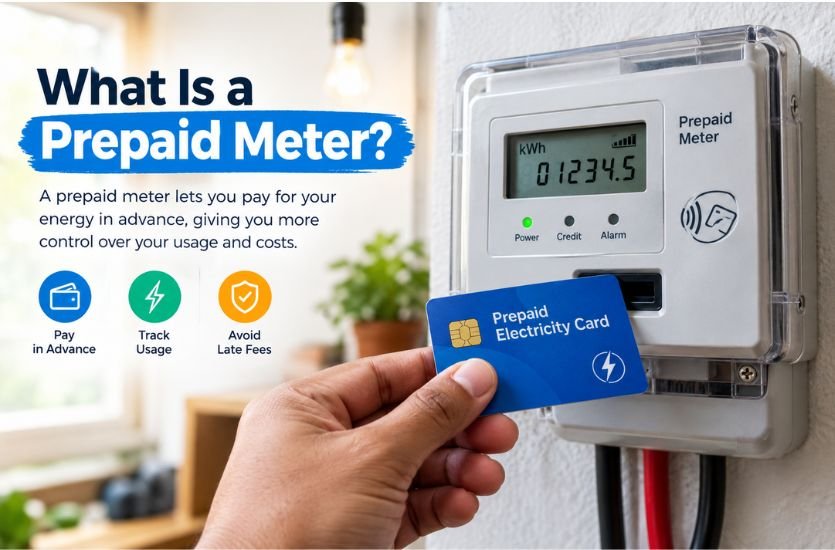
A prepaid meter is an energy measurement device that allows consumers to pay for electricity or gas before using it. Instead of waiting for a monthly bill, users purchase credit in advance and use that balance as they consume energy. This system helps households monitor their spending, manage energy budgets, and understand how much credit remains available. Prepaid meters are used in different countries and can operate through keypads, smart cards, tokens, or digital payment systems, depending on the meter and utility provider.
Understanding what a prepaid meter is can help consumers decide whether this payment method suits their household needs. Although prepaid metering offers greater visibility into energy spending, it also requires users to maintain sufficient credit to avoid possible interruptions in their energy supply.
Quick Answer: What Is a Prepaid Meter?
A prepaid meter is a device that measures electricity or gas consumption while deducting the cost from credit purchased in advance. Users recharge the meter when their balance becomes low, allowing them to manage energy expenses and monitor their remaining credit. If the credit runs out and no emergency credit or alternative arrangement is available, the energy supply may be interrupted.
How Does a Prepaid Meter Work?
A prepaid meter operates by recording the amount of electricity or gas consumed and deducting the corresponding cost from the available credit. The process is designed to help consumers pay for energy in advance rather than settle the entire amount after a billing period.
Purchasing Energy Credit
The first step is purchasing credit through a method approved by the energy supplier. Depending on the meter, consumers may use a recharge token, smart card, mobile application, online payment service, or authorized payment outlet. The amount purchased determines the credit available for energy consumption, subject to the applicable tariff and charges.
Adding Credit to the Meter
After purchasing credit, the consumer transfers it to the meter. In a token-based system, this may involve entering a numerical code using the meter’s keypad. A smart-card system transfers the credit through a compatible card, while certain smart meters receive credit electronically. Once the transaction is accepted, the available balance updates accordingly.
Monitoring Energy Consumption
As electricity or gas is consumed, the meter measures usage and calculates the corresponding cost. The remaining balance decreases according to the applicable rates and any relevant charges. Many prepaid meters display the available credit, consumption information, or warning indicators that help users understand their energy usage.
Recharging When Credit Is Low
When the remaining balance becomes low, some meters provide a warning to encourage users to recharge before their credit runs out. Certain systems also offer emergency credit or special arrangements under defined conditions. If the balance reaches the point at which the meter can no longer supply energy, the connection may be interrupted until sufficient credit is restored.
Different Types of Prepaid Meters
Prepaid meters are available in several forms, and their features depend on the manufacturer, technology, and energy provider. Understanding these types helps consumers identify how each system manages payments and energy consumption.
Keypad Prepaid Meter
A keypad prepaid meter includes buttons that allow users to enter recharge tokens or access information about their credit and energy usage. These meters are often used in systems where consumers purchase a code and enter it manually. Their operation is generally straightforward, although users must follow the instructions for their particular meter model.
Smart Prepaid Meter
A smart prepaid meter combines advance payment with digital metering capabilities. Depending on the system, it may communicate with the utility provider, transmit readings remotely, display detailed consumption information, and accept electronic credit transfers. These features can reduce the need for manual meter readings and make account management more convenient.
Smart-Card Prepaid Meter
A smart-card prepaid meter uses a compatible card to transfer purchased credit to the meter. The consumer obtains credit through an approved vending or payment system and then updates the meter using the card. The exact process depends on the equipment installed and the provider’s operating procedures.
Prepaid Electricity Meter
A prepaid electricity meter measures electrical energy consumption, commonly in kilowatt-hours (kWh). It deducts the relevant charges from the prepaid balance and may display the remaining credit or units. These meters are used in residential and commercial settings where electricity is supplied through a compatible prepayment arrangement.
Prepaid Gas Meter
A prepaid gas meter applies the same general advance-payment principle to gas consumption. Customers purchase credit before using gas, and the meter calculates charges based on recorded consumption and the applicable tariff. Availability, safety features, and recharge arrangements vary by provider and location.
Benefits of Using a Prepaid Meter
Prepaid metering can offer several practical benefits to consumers who want greater control over their energy spending. However, the advantages depend on the tariff structure, the features of the meter, and the availability of reliable recharge facilities.
Better Control Over Household Budgets
One of the main advantages of a prepaid meter is the ability to decide how much money to allocate to energy in advance. Households can purchase credit according to their available budget and monitor how quickly it is being used. This approach can encourage more deliberate spending and help consumers plan their energy expenses.
Greater Awareness of Energy Consumption
A prepaid meter makes it easier to connect electricity usage with the remaining balance. When consumers notice that their credit is decreasing quickly, they may investigate which appliances are consuming the most electricity or reconsider how frequently certain devices are used. This awareness can encourage more efficient energy habits.
Fewer Unexpected Billing Surprises
Traditional postpaid systems generally produce a bill after energy has been consumed. A prepaid system instead shows how much credit remains, helping users track their available spending balance. This can reduce surprises associated with a large bill at the end of the month, although it does not eliminate tariff changes, existing debts, or other applicable charges.
Convenient Digital Payment Options
Compatible smart prepaid meters may allow users to recharge through mobile applications, online services, or electronic payment channels. This can make topping up more convenient, particularly for people who prefer digital transactions. However, not every prepaid meter supports online payments, so users should confirm the available methods with their provider.
Improved Visibility Into Energy Costs
Prepaid meters can help consumers understand how their everyday activities affect energy expenses. For example, users may compare their consumption before and after changing appliance settings or reducing unnecessary usage. This information can support more informed household decisions without requiring a complete change in lifestyle.
Disadvantages of a Prepaid Meter
Although prepaid meters offer spending control, they also have limitations that consumers should consider before choosing this payment arrangement.
Risk of Electricity or Gas Disconnection
The most significant drawback is the possibility of losing the energy supply when the available credit runs out. This can be inconvenient for households that forget to recharge or cannot access payment facilities. Consumers who depend on electricity for essential equipment should carefully consider the protections and alternative arrangements available in their area.
Frequent Recharging Requirements
Prepaid users must maintain enough credit to cover their energy needs. Households with high consumption may need to recharge frequently, which can become inconvenient if payment facilities are limited or unavailable at certain times.
Potential Additional Charges
A prepaid meter does not necessarily provide cheaper energy. Depending on the provider and local regulations, consumers may face different tariffs, service fees, standing charges, taxes, or other costs. Comparing the full cost of each payment arrangement is more useful than assuming that prepayment always saves money.
Technical and Payment Problems
Recharge transactions may occasionally fail because of payment errors, communication problems, incorrect tokens, or meter faults. Such problems can be particularly frustrating when the remaining balance is low. Consumers should know how to contact their provider and retain transaction details when a recharge does not appear on the meter.
Limited Convenience for Some Households
Some older systems require a physical card, key, or manually entered code. These arrangements may be difficult for consumers who cannot easily access recharge outlets or operate the equipment. Before selecting a prepaid meter, users should make sure that its controls and payment methods suit their circumstances.
Prepaid Meter vs. Postpaid Meter
The main difference between prepaid and postpaid metering is when the consumer pays for energy. Both systems can measure electricity consumption, but they use different payment arrangements.
A prepaid meter requires consumers to purchase credit before using energy. The available balance is reduced as consumption occurs, making it easier to monitor the amount of credit remaining. This arrangement can be useful for people who prefer to manage their spending in smaller amounts.
A postpaid meter measures energy consumption during a billing period, after which the utility provider calculates the bill. Customers generally receive a monthly statement showing their recorded usage and applicable charges. They then pay the amount by the specified due date.
Neither system is automatically cheaper. The total expense depends on energy consumption, applicable tariffs, taxes, service charges, and any additional fees. Consumers should compare these factors before deciding which arrangement is more suitable.
What Is the Difference Between a Prepaid Meter and a Smart Meter?
A prepaid meter and a smart meter describe different aspects of energy metering. A prepaid meter refers primarily to a payment arrangement, while a smart meter refers to technology that can record and communicate information electronically.
A smart meter may transmit readings remotely, provide detailed consumption information, and support digital communication with the utility provider. These features can reduce manual reading requirements and improve the visibility of energy usage.
A prepaid meter, meanwhile, focuses on paying for energy in advance. It may use a basic keypad, a smart card, or smart technology to manage credit. Some smart meters support prepaid billing, while others operate under conventional postpaid arrangements.
Therefore, not every smart meter is a prepaid meter, and the presence of a digital display does not necessarily mean that a device supports advance payments. Consumers should confirm the meter’s capabilities and payment configuration with their energy supplier.
Are Prepaid Meters Available in Pakistan?
Pakistan has been working to modernize its electricity metering infrastructure through smart-meter deployment and broader digitalization initiatives. These developments are intended to improve reading accuracy, provide better visibility into consumption, and strengthen customer service. The Ministry of Energy’s Power Division announced smart-metering reforms in October 2025 and identified future enablement of prepaid services as one potential benefit.
However, smart-meter installation does not automatically mean that prepaid electricity billing is available to every customer. Availability depends on the relevant utility’s arrangements, the type of connection, the approved metering equipment, and applicable regulations.
Consumers should contact their electricity distribution company to confirm whether a prepaid option is available for their connection. They should also ask about installation requirements, approved recharge methods, tariffs, service charges, emergency credit, and the procedure for reporting meter faults.
Before changing to a prepaid arrangement, customers should understand how their credit will be calculated and whether any existing balance or outstanding charges affect the account. Obtaining these details in advance can help prevent confusion and unexpected costs.
How to Choose the Right Prepaid Meter
Choosing a suitable prepaid meter requires more than comparing the appearance or features of different devices. Consumers should first determine whether the meter is approved for their electricity or gas connection and whether it is compatible with the provider’s billing system.
The available recharge methods are also important. A meter that supports convenient digital payments may be more practical for someone who regularly uses mobile banking, while a token-based system may suit consumers who prefer authorized payment outlets.
Consumers should examine the display and monitoring features to determine whether the meter shows the remaining balance, consumption information, and low-credit warnings. They should also ask whether emergency credit is available and what happens when the balance reaches zero.
Finally, the total cost should be evaluated carefully. Installation expenses, tariffs, recurring fees, and other applicable charges can influence whether a prepaid arrangement offers good value. Reviewing these factors helps consumers make a decision based on their actual energy needs rather than assumptions about savings.
Frequently Asked Questions About Prepaid Meters
Does a prepaid meter reduce electricity bills?
A prepaid meter does not automatically reduce electricity bills or the price per unit. It can help consumers monitor their spending and adjust energy use, but the final cost depends on consumption, tariffs, and applicable charges.
What happens when a prepaid meter runs out of credit?
When the available credit is exhausted, the meter may interrupt the energy supply. Some systems provide emergency credit or special arrangements, but these features are not available everywhere. Recharging the meter or following the provider’s instructions may be necessary to restore the supply.
Can a prepaid meter be recharged online?
Some smart prepaid meters support online or mobile-app recharging. Other models require a token, smart card, or another approved method. Consumers should check the instructions provided for their specific meter.
Is a prepaid meter better than a postpaid meter?
The better option depends on the consumer’s preferences and circumstances. Prepaid metering may suit people who want to monitor their balance and control spending in advance. Postpaid billing may be more convenient for those who prefer to receive a periodic bill and pay it later.
Does a smart meter always work as a prepaid meter?
No. A smart meter can support prepaid payments, but this depends on its configuration and the utility provider’s system. Some smart meters continue to operate with conventional postpaid billing.
Can a prepaid meter help save energy?
A prepaid meter can encourage energy-saving habits by showing how quickly credit is being used. Consumers may respond by reducing unnecessary appliance use or improving efficiency. However, actual savings depend on their behaviour and the cost of the energy they consume.
Conclusion
A prepaid meter is an energy metering device that allows consumers to pay for electricity or gas before using it. By maintaining a prepaid balance, users can monitor available credit, understand their consumption, and plan their energy spending more carefully. Depending on the model, the system may use a keypad, token, smart card, or digital payment facility.
Despite these advantages, prepaid metering also requires regular recharging and can lead to supply interruptions when credit runs out. It does not automatically guarantee lower energy costs, and the available features vary between providers and locations. Understanding how the meter works, checking the applicable tariffs, and confirming the available payment methods can help consumers decide whether prepaid metering is suitable for their household.
If you want more informative articles with different categories, visit Expand Magazine.