









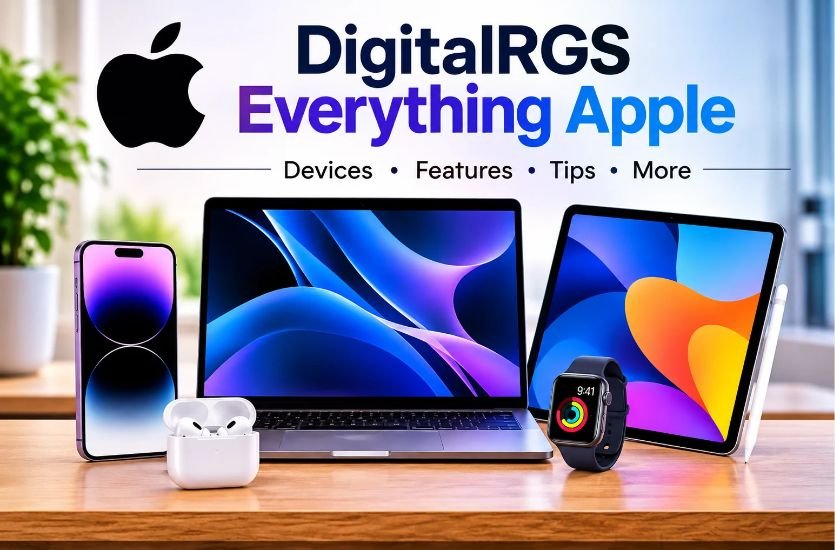
Technology has become an essential part of everyday life, and Apple remains one of the most recognised names in the digital industry. From smartphones and computers to smartwatches, wireless accessories, and cloud services, Apple’s products have created a connected ecosystem used by millions of people worldwide. However, understanding the different devices, software features, and services can sometimes be challenging, particularly for people who are new to Apple technology.
DigitalRGS Everything Apple is a search topic associated with online information about Apple’s products, features, services, and digital ecosystem. It brings together discussions about iPhones, Mac computers, iPads, Apple Watches, AirPods, software updates, privacy, and practical technology tips. Rather than focusing on one particular device, the subject provides a broader perspective on how Apple’s products work and how users can make better use of them.
As interest in connected technology continues to grow, readers increasingly look for straightforward explanations that help them understand their devices. Exploring DigitalRGS Everything Apple provides an opportunity to examine Apple’s technology, its major products, useful features, and the importance of staying informed about digital developments.
Quick Answer: What Is DigitalRGS Everything Apple?
DigitalRGS Everything Apple is a search phrase associated with Apple-related technology content published under the DigitalRGS name. It covers subjects such as Apple’s devices, software, services, connected features, buying advice, troubleshooting, and digital security. It is not an official Apple product, application, or service.
| Detail | Information |
|---|---|
| Main keyword | DigitalRGS Everything Apple |
| Website name | DigitalRGS |
| Main subject | Apple technology |
| Industry | Technology and digital media |
| Products covered | iPhone, Mac, iPad, Apple Watch, AirPods |
| Software | iOS, macOS, iPadOS, watchOS |
| Related services | iCloud, Apple Music, App Store |
| Main audience | Apple users and technology enthusiasts |
| Official Apple affiliation | Not established |
What Does DigitalRGS Everything Apple Cover?
DigitalRGS Everything Apple represents a broad subject rather than a single technology product. Its central theme is Apple’s collection of devices and services and the ways people interact with them.
Apple has developed different types of hardware for communication, entertainment, education, productivity, and everyday activities. Each product serves a particular purpose, but many become more useful when connected with other compatible devices.
For example, an iPhone can be used for communication and photography, while a MacBook provides a larger working environment. An iPad offers a portable screen for reading, drawing, and studying, whereas an Apple Watch provides convenient access to notifications and fitness information.
Understanding these differences helps consumers choose suitable devices instead of purchasing products simply because they are popular. It also allows existing users to discover features that they might not have explored previously.
Exploring Apple’s Major Products
Apple’s product range includes smartphones, computers, tablets, wearables, and entertainment devices. These products represent different parts of the company’s wider technology ecosystem.
iPhone: Apple’s Popular Smartphone
The iPhone is one of Apple’s most recognisable products. First introduced in 2007, it changed expectations for smartphones by bringing communication, internet browsing, multimedia, and applications together in one device.
Modern iPhones offer advanced cameras, powerful processors, high-quality displays, and numerous software features. Users can take photographs, record videos, communicate through messaging applications, manage documents, browse the internet, and access digital services.
Camera improvements have also made iPhones useful for content creators and people who regularly photograph or record videos. Depending on the model, users may have access to advanced photography controls, optical zoom, image processing, and professional video capabilities.
Battery performance, storage capacity, display quality, and software compatibility are important considerations when choosing an iPhone. DigitalRGS Everything Apple provides a useful keyword context for exploring these subjects and helping readers understand the differences between Apple’s smartphone options.
Mac and MacBook: Computers for Productivity
Apple’s Mac computers are designed for professional work, education, entertainment, and creative activities. The product family includes MacBook laptops, iMac desktop computers, Mac mini systems, and Mac Studio workstations.
MacBook Air models are generally suitable for students, office workers, and people who need portable computers for everyday tasks. MacBook Pro models offer additional performance options for demanding activities such as video editing, software development, graphic design, and professional content production.
Apple’s transition to its own silicon processors has significantly shaped the modern Mac lineup. Apple silicon combines processing capabilities and energy efficiency to support demanding workloads while maintaining relatively efficient power consumption.
The macOS operating system provides the environment for managing applications, files, settings, and connected devices. Its integration with other Apple products is one of the reasons some users prefer working within the company’s ecosystem.
iPad: A Flexible Tablet Experience
The iPad occupies an interesting position between smartphones and traditional computers. It offers a larger display than an iPhone while maintaining a lightweight and portable design.
People use iPads for reading, online classes, digital note-taking, entertainment, drawing, and creative projects. With compatible keyboards and styluses, certain models can also support more advanced productivity activities.
Different iPad models serve different requirements. Standard models are suitable for everyday activities, while the iPad Air and iPad Pro offer additional capabilities for users who need more performance or advanced displays.
The iPadOS operating system includes multitasking features, application management tools, and productivity options designed specifically for Apple’s tablets.
Apple Watch: Technology on the Wrist
The Apple Watch brings several digital functions into a compact wearable device. It allows users to check notifications, monitor supported health and fitness measurements, manage timers, and interact with selected applications without constantly reaching for their smartphones.
Fitness tracking is one of its most recognised functions. Depending on the model and region, Apple Watch devices can provide information about physical activity, heart rate, workouts, sleep, and other health-related measurements.
The device also supports communication features, including notifications and calls when the required connectivity is available.
Apple Watch models differ in design, durability, battery capabilities, and available features. Choosing between them depends on personal requirements and compatibility with the user’s iPhone.
AirPods and Apple’s Audio Products
AirPods are Apple’s wireless audio accessories designed for listening to music, watching videos, and making calls. Their integration with compatible Apple devices makes switching between supported devices convenient.
Different AirPods models provide different audio capabilities. Depending on the model, users may receive active noise cancellation, transparency mode, spatial audio, and improved microphone performance.
AirPods can connect to an iPhone, iPad, or Mac, allowing users to enjoy audio across several devices. However, available features depend on the particular model, connected hardware, and software version.
Understanding the Apple Ecosystem
One of the most important subjects associated with DigitalRGS Everything Apple is Apple’s connected ecosystem. Apple designs its products and software to work together, creating a more consistent experience across supported devices.
For example, someone using an iPhone and MacBook can access certain information on both devices without repeatedly transferring files manually. Cloud synchronization and continuity features make everyday tasks more convenient.
iCloud and Data Synchronisation
iCloud is Apple’s cloud service for storing and synchronising information across compatible devices. It can support photographs, documents, contacts, calendars, backups, and other information, depending on account settings and available storage.
When users enable the appropriate synchronisation options, changes made on one device can appear on other connected devices. This reduces the need to manage separate copies of information.
iCloud can also support device backups, helping users preserve important information when replacing or restoring a compatible device. However, users should understand what is included in their backups and regularly check that important information is protected.
AirDrop and Handoff
AirDrop allows users to transfer supported files between compatible Apple devices without relying on traditional cable connections. It is particularly useful for sharing photographs, documents, and other content.
Handoff provides another useful feature by allowing people to continue certain activities on another compatible Apple device. For example, a user may begin a supported task on an iPhone and continue it on a Mac.
These features demonstrate how Apple’s connected ecosystem can simplify everyday digital activities. Readers can explore Apple’s official Continuity features to learn more about AirDrop, Handoff, Universal Clipboard, and other connected capabilities.
Universal Clipboard and Continuity
Universal Clipboard allows users to copy supported content on one Apple device and paste it on another compatible device. It can be useful when transferring short pieces of text, images, or other supported information.
Continuity includes several features designed to make compatible Apple devices work together. Depending on hardware and software requirements, users may benefit from shared workflows, device integration, and improved productivity.
Understanding these functions can help Apple users get more value from products they already own.
Apple Software and Digital Services
Hardware is only one part of Apple’s technology ecosystem. Software and digital services also play an important role in the company’s overall experience.
Apple develops operating systems for its different devices, with each platform designed around specific hardware and user requirements.
iOS, iPadOS, and macOS
iOS powers the iPhone and provides features for communication, applications, privacy, notifications, and device management.
iPadOS is designed for Apple’s tablets. It includes features that support multitasking, touch interaction, digital creativity, and productivity.
macOS powers Mac computers and provides tools for managing files, applications, system settings, and professional workflows.
These operating systems receive updates that can introduce new features, improve performance, resolve software problems, and address security vulnerabilities. Users should check compatibility requirements before installing major updates, particularly on older devices.
App Store and Apple Applications
The App Store is Apple’s digital marketplace for applications. It provides access to software covering education, entertainment, business, communication, photography, productivity, and gaming.
Apple also develops applications that support everyday activities. These include Safari for browsing, Messages for communication, Photos for managing pictures, Notes for writing information, and Pages for document creation.
Application availability and certain features can vary depending on the device, operating-system version, and geographical region.
Apple Music, Apple TV+, and Apple Arcade
Apple’s subscription services extend its ecosystem beyond physical devices.
Apple Music provides access to a large music catalogue, while Apple TV+ focuses on original films and television programmes. Apple Arcade offers access to a collection of games through a subscription.
Apple One combines selected Apple services into subscription packages. Its availability and included services depend on the country and subscription plan.
Understanding these services helps consumers decide which subscriptions offer practical value and which ones they may not need.
DigitalRGS Everything Apple and Technology Buying Decisions
Buying an Apple product can require careful consideration because different devices have different specifications and prices. A product that works well for one person may not be the right choice for another.
DigitalRGS Everything Apple is relevant to purchasing discussions because it brings attention to the major product categories and the factors that influence buying decisions.
For example, students may prioritise portability, battery life, and affordability when choosing a MacBook or iPad. Professionals working with demanding creative applications may require more processing power, memory, and storage.
Smartphone buyers may focus on camera quality, display size, battery performance, and long-term software compatibility.
Purchasing a refurbished or second-hand Apple device can also be an option for people working with limited budgets. However, checking the battery condition, physical damage, device history, activation lock status, and ownership information is essential before completing a transaction.
Consumers should also compare the total cost of ownership. Accessories, repairs, subscriptions, storage upgrades, and extended coverage can influence how much a device costs over time.
Privacy and Security Across Apple Devices
Digital security is an important consideration for anyone using connected technology. Smartphones and computers often contain personal photographs, messages, financial information, documents, and account details.
Apple includes several security features designed to help users protect their information.
Face ID and Touch ID provide biometric authentication on supported devices. They allow users to unlock devices and authenticate certain activities without repeatedly entering a password.
Two-factor authentication adds another layer of protection to an Apple Account. It requires an additional verification step when signing in under certain circumstances.
Find My can help users locate supported devices and take available protective actions if a device is lost. Users can also manage application permissions to control access to information such as location, photographs, and contacts.
Regular software updates are equally important because they can address security weaknesses and improve system protection. Apple provides detailed information about its built-in security technologies, encryption, account protection, and device safeguards through its Apple Platform Security guide. Understanding these protections helps users make more informed decisions about managing their personal information and securing their devices.
Although Apple provides built-in security tools, users still need to follow sensible digital habits. Using strong passwords, avoiding suspicious downloads, reviewing account activity, and keeping recovery information updated can reduce common digital risks.
Common Apple Problems and Troubleshooting
Even well-designed devices can experience technical problems. Connectivity issues, application crashes, storage limitations, and software errors are common challenges for smartphone and computer users.
Understanding basic troubleshooting methods can help resolve simple issues without immediately requiring professional assistance.
Wi-Fi and Bluetooth Connectivity
Wi-Fi problems can sometimes occur because of router issues, incorrect network settings, or temporary software errors. Restarting the device and checking the network connection are reasonable first steps.
Bluetooth issues may involve disconnected accessories, pairing problems, or outdated software. Turning Bluetooth off and on, checking accessory compatibility, and repeating the pairing process may help.
Battery and Storage Management
Battery performance can change over time as a device ages and its usage patterns develop. Checking battery health on supported devices can help users understand whether reduced battery performance may be related to battery deterioration.
Storage limitations can also affect everyday use. Removing unnecessary downloads, reviewing large files, and managing unused applications can help free up space.
Users should be careful when deleting photographs or documents that may be synchronised through cloud services, as deleting content can affect other connected devices.
Software Updates and Application Errors
Applications may occasionally stop responding or behave unexpectedly. Closing and reopening the application, restarting the device, and checking for available updates can help resolve certain problems.
If a Mac experiences startup or performance problems, macOS includes diagnostic and troubleshooting options such as Safe Mode. More advanced recovery procedures should be followed carefully because some actions can affect stored information.
For serious hardware problems, account security concerns, or persistent software failures, professional support is generally a better option than attempting unfamiliar repair procedures.
Why DigitalRGS Everything Apple Is Relevant to Modern Users
Apple’s technology ecosystem continues to attract attention because it combines hardware, software, applications, and digital services. People who understand these connections can make more informed decisions about purchasing, maintaining, and using their devices.
DigitalRGS Everything Apple brings these subjects together under one search topic. It provides a way to explore different parts of Apple’s technology world without limiting the discussion to a single product category.
For beginners, this subject can make unfamiliar technology easier to understand. Existing Apple users can also benefit from learning about connected features, software settings, security options, and maintenance practices.
However, readers should distinguish between independent online information and official product documentation. DigitalRGS is not established as an Apple-owned or Apple-authorised platform. Its articles should therefore be treated as third-party content rather than official technical guidance.
When researching important product specifications, compatibility requirements, security settings, or repair procedures, users should verify information against Apple’s official documentation.
Frequently Asked Questions (FAQs)
What Is DigitalRGS Everything Apple?
DigitalRGS Everything Apple is a search phrase associated with online content about Apple’s products, software, services, and ecosystem. It covers subjects ranging from iPhones and Mac computers to connected features, privacy, troubleshooting, and buying advice.
Is DigitalRGS an Official Apple Website?
DigitalRGS is not established as an official Apple website or an Apple-owned service. It should be understood as an independent digital-content name rather than an official Apple support platform.
What Apple Products Are Covered Under Everything Apple?
The subject can include iPhones, MacBooks, iMac computers, iPads, Apple Watches, AirPods, Apple TV, and other products within Apple’s ecosystem.
Why Is the Apple Ecosystem Important?
The Apple ecosystem allows compatible devices and services to communicate and share information through features such as iCloud, AirDrop, Handoff, and Continuity. These connections can make everyday digital activities more convenient.
Does DigitalRGS Everything Apple Provide Technical Support?
The phrase is associated with informational technology content, not an official Apple technical-support service. Users experiencing serious device problems should consult Apple Support or an authorised service provider.
How Can Apple Users Protect Their Devices?
Users can improve device security by enabling two-factor authentication, using strong passcodes, installing security updates, reviewing application permissions, and maintaining secure backups.
Is DigitalRGS Everything Apple Useful for Beginners?
Yes, the topic can help beginners understand Apple’s different devices, operating systems, services, and connected features. However, important technical instructions should always be checked against reliable documentation.
Final Thoughts
DigitalRGS Everything Apple brings attention to the wide range of products, services, and technologies associated with Apple’s ecosystem. From the iPhone and MacBook to the iPad, Apple Watch, and AirPods, Apple’s products serve different purposes while offering several ways to connect and share information.
Understanding software updates, cloud services, privacy features, and troubleshooting methods can help users make better use of their technology. It can also make purchasing decisions easier by highlighting the differences between devices and their intended uses.
Ultimately, the value of DigitalRGS Everything Apple lies in exploring Apple’s technology from a broader perspective. Readers should use independent articles as starting points for learning and verify important technical information through official documentation. Those interested in exploring more topics related to technology and digital developments can also discover additional insights through Expand Magazine. This approach makes it easier to stay informed, protect personal information, and get more value from compatible Apple devices.