









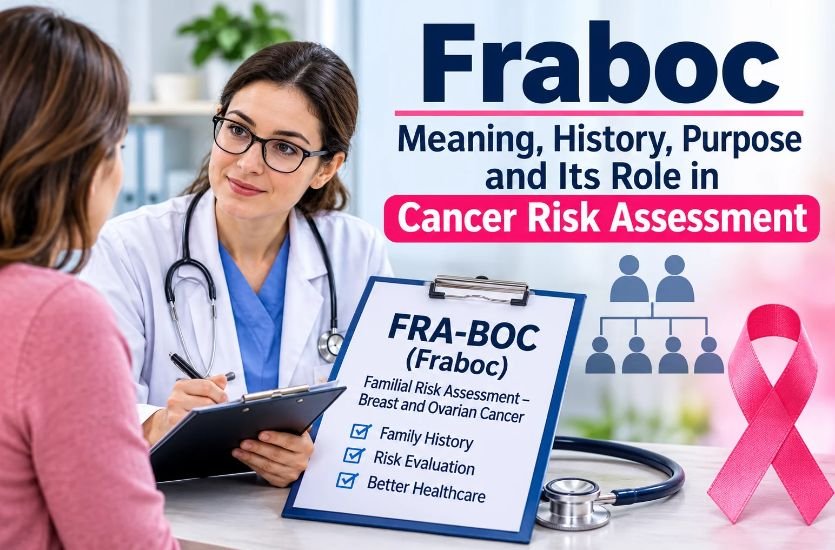
Fraboc, formally known as FRA-BOC (Familial Risk Assessment – Breast and Ovarian Cancer), was an Australian clinical tool designed to help healthcare professionals identify women who might have an increased risk of breast or ovarian cancer because of their family medical history. It provided a structured way to examine cancer patterns among relatives and determine whether further medical assessment was necessary.
Although the original Fraboc tool is no longer available through Cancer Australia, its role in familial cancer risk assessment remains relevant. It helped doctors and nurses recognize potentially significant family-history patterns and make informed decisions about specialist referrals, genetic counselling, and preventive healthcare. Understanding Fraboc also explains how modern cancer risk assessment tools have developed.
Quick Answer: What Is Fraboc?
| Detail | Information |
|---|---|
| Name | Fraboc (FRA-BOC) |
| Full Form | Familial Risk Assessment – Breast and Ovarian Cancer |
| Origin | Australia |
| Field | Healthcare |
| Main Purpose | Assessing familial breast and ovarian cancer risk |
| Intended Users | Doctors, nurses, and healthcare professionals |
| Assessment Method | Family medical history |
| Original Provider | Cancer Australia |
| Current Status | Original tool discontinued |
| Related Modern Tool | iPrevent |
What Does Fraboc Stand For?
Fraboc stands for FRA-BOC, meaning Familial Risk Assessment – Breast and Ovarian Cancer. It was developed to help healthcare professionals evaluate whether a woman’s family history suggested an increased likelihood of developing these cancers.
The term familial describes health conditions or patterns that occur within families. Certain genetic changes can pass from parents to children, increasing susceptibility to particular diseases. When several relatives develop breast or ovarian cancer, especially at younger ages, healthcare professionals may investigate whether inherited genetic factors are involved.
FRA-BOC provided a structured approach to examining these family patterns. It helped clinicians organize medical information, recognize possible warning signs, and decide whether additional investigation was appropriate.
Importantly, Fraboc was a risk-assessment resource, not a diagnostic system. It could help identify potential concerns, but it could not confirm whether someone had cancer or would develop it in the future.
The History and Development of Fraboc
FRA-BOC was introduced as part of Australia’s efforts to improve the identification of women with a potentially increased familial risk of breast and ovarian cancer. Cancer Australia supported resources that helped healthcare professionals assess inherited cancer risks and guide patients toward appropriate medical care.
Evaluating family cancer history can be complicated. A doctor may need to consider several relatives, their relationships, the types of cancer they experienced, and their ages at diagnosis. Without a structured approach, identifying important patterns can become difficult.
FRA-BOC addressed this challenge by providing an online assessment tool for healthcare professionals, including general practitioners and nurses. It helped organize relevant family information and supported decisions about whether a patient might benefit from specialist evaluation.
The tool also formed part of a wider approach to identifying individuals who could require additional attention from family cancer clinics. Its development reflected the growing importance of inherited cancer risk in preventive healthcare.
How Did the Fraboc Assessment Tool Work?
The original Fraboc assessment focused on a woman’s family medical history. Healthcare professionals entered information about relatives who had experienced breast or ovarian cancer, allowing the assessment to examine possible patterns across the family.
The relationship between affected relatives was important. Cancer occurring in close blood relatives, such as a mother, sister, or daughter, could provide different information from a diagnosis involving a more distant relative.
Age at diagnosis was another relevant factor. Breast or ovarian cancer occurring at a relatively young age can sometimes indicate an increased possibility of inherited susceptibility. Multiple related diagnoses across different generations may also require further investigation.
After reviewing the available information, FRA-BOC helped clinicians estimate familial risk and consider whether additional assessment or referral to a specialist service was appropriate.
However, its results were not definitive medical conclusions. A healthcare professional needed to interpret the assessment alongside the patient’s wider medical history and individual circumstances.
Why Is Family History Important in Cancer Risk Assessment?
Family history helps doctors identify patterns that may indicate an increased likelihood of inherited cancer susceptibility. Some genetic changes can pass through generations, meaning that biological relatives may share certain health risks.
Breast and ovarian cancers are particularly relevant when investigating inherited cancer patterns. Healthcare professionals may ask whether close relatives have experienced these conditions, how old they were when diagnosed, and whether similar diagnoses have occurred across multiple generations.
For example, a woman whose mother and sister developed breast cancer at relatively young ages may benefit from a more detailed risk assessment. A family history of ovarian cancer can also be important when investigating inherited breast and ovarian cancer susceptibility.
However, having relatives with cancer does not mean that someone will automatically develop the same disease. Many people with a family history never develop cancer, while individuals without known affected relatives can also receive a diagnosis.
This is why family history should be evaluated professionally. Doctors consider the available evidence before recommending routine screening, additional investigations, genetic counselling, or specialist assessment.
Understanding BRCA1 and BRCA2 in Familial Cancer Risk
BRCA1 and BRCA2 are genes that help repair damaged DNA and maintain genetic stability. Certain inherited harmful variants in these genes can significantly increase the risk of developing breast and ovarian cancer.
These genetic variants can pass from one generation to another through either the maternal or paternal side of a family. Consequently, both sides of a person’s family history can be important when assessing inherited cancer susceptibility.
Healthcare professionals may examine diagnoses among parents, siblings, grandparents, aunts, uncles, and other blood relatives. Particular attention may be given to multiple related cancer diagnoses or unusually young ages at diagnosis.
FRA-BOC helped organize family-history information, but it was not a BRCA1 or BRCA2 genetic test. Genetic testing is a separate medical procedure that examines DNA to identify specific inherited variants.
When family history suggests a possible inherited risk, a doctor may recommend genetic counselling or referral to an appropriate specialist. These professionals can explain the potential benefits, limitations, and implications of genetic testing.
What Were the Main Benefits of Fraboc?
FRA-BOC provided healthcare professionals with a more organized way to assess familial breast and ovarian cancer risk. Its structured approach helped clinicians examine several relatives and generations rather than focusing on individual cancer diagnoses in isolation.
Another important benefit was identifying women who might need additional medical attention. When family history suggested increased risk, doctors could consider further assessment or specialist referral.
The tool also supported better communication between patients and healthcare professionals. Family cancer history can involve complicated relationships and incomplete medical information. A structured assessment helped make these discussions more focused and useful.
FRA-BOC also supported more informed healthcare decisions. It helped clinicians distinguish between family histories that appeared less concerning and those that might require closer investigation.
Its main contribution was making familial cancer risk assessment more systematic within the Australian healthcare environment.
Is Fraboc Still Available?
No. The original FRA-BOC assessment tool is no longer available on the Cancer Australia website.
This is important for anyone searching for Fraboc today. Older medical publications and educational resources may still describe the tool, but these references do not mean that the original online assessment remains operational.
Australian healthcare guidance now identifies newer resources for breast cancer risk assessment, including iPrevent. These modern tools support more updated approaches to evaluating individual risk and discussing appropriate healthcare options.
Fraboc should therefore be understood as a historical clinical assessment resource rather than an active online medical service.
What Replaced Fraboc? Understanding iPrevent
iPrevent is an Australian breast cancer risk assessment and risk management decision-support tool. It helps women and healthcare professionals discuss individual breast cancer risk and consider appropriate prevention and screening options.
Unlike the original FRA-BOC tool, iPrevent considers a broader range of information when estimating breast cancer risk. Depending on the assessment, this may include family history, personal medical information, reproductive factors, and other relevant characteristics.
The assessment can support conversations between patients and doctors about screening recommendations and possible risk-management strategies. It provides information that healthcare professionals can use when discussing appropriate next steps.
Cancer Australia identifies iPrevent as a validated resource for breast cancer risk assessment. However, it is important to understand that iPrevent is not an identical replacement for every function of FRA-BOC. Its main focus is breast cancer risk assessment and management, while familial ovarian cancer concerns may require additional specialist evaluation.
Other clinical resources, including CanRisk and IBIS, can also help healthcare professionals estimate cancer risk using relevant personal and family information.
Fraboc vs. Modern Cancer Risk Assessment Tools
Cancer risk assessment has developed considerably since the introduction of FRA-BOC. Modern clinical resources can consider additional information and support more individualized medical decisions.
The original FRA-BOC tool concentrated on family history to help identify women with potentially increased familial breast and ovarian cancer risk. Its main purpose was to organize relevant information and support decisions about further assessment.
Modern resources have different functions. Some estimate breast cancer risk, while others examine inherited genetic susceptibility or help healthcare professionals decide whether specialist referral is necessary.
For example, iPrevent supports breast cancer prevention and screening discussions. CanRisk and IBIS are additional clinical risk assessment resources that can incorporate family and personal information.
These tools are not interchangeable, and each has its own purpose and limitations. Healthcare professionals select an appropriate assessment based on the patient’s circumstances and the clinical question being investigated.
The transition from FRA-BOC to newer resources demonstrates how medical research and technology continue to improve the way inherited and individual cancer risks are evaluated.
Who Should Discuss Familial Cancer Risk With a Doctor?
Anyone concerned about breast or ovarian cancer in their family should consider discussing their family medical history with a qualified healthcare professional.
A more detailed assessment may be appropriate when several close relatives have experienced related cancers, when diagnoses occurred at younger ages, or when a known inherited cancer-related genetic variant exists within the family.
A doctor can review the available information and determine whether additional assessment is necessary. Depending on the circumstances, this may involve a validated risk assessment tool, genetic counselling, genetic testing, or referral to a specialist family cancer clinic.
Providing accurate family information is particularly helpful. Details about the type of cancer, age at diagnosis, and relationship between affected relatives can help clinicians evaluate potential inherited patterns.
People should not rely on historical FRA-BOC information to make personal medical decisions. Current medical advice and appropriate clinical assessments are essential for understanding individual risk.
Common Misconceptions About Fraboc
Several misconceptions can arise when people encounter FRA-BOC in older medical publications.
The first is that Fraboc was a cancer diagnosis system. It was not. Its purpose was to help assess familial risk and support healthcare professionals in deciding whether further investigation might be appropriate.
Another misunderstanding is that FRA-BOC performed genetic testing. The tool reviewed family medical history rather than directly examining a person’s DNA. Identifying specific inherited genetic variants requires a separate testing process.
Some people may also assume that a higher risk category means cancer is certain to develop. This is incorrect. Risk assessments estimate possibilities and cannot guarantee future medical outcomes.
Finally, the original FRA-BOC tool should not be confused with a currently available online service. Although its historical purpose remains relevant, modern medical assessment should rely on current clinical resources and professional guidance.
Frequently Asked Questions About Fraboc
What is Fraboc?
Fraboc refers to FRA-BOC, which stands for Familial Risk Assessment – Breast and Ovarian Cancer. It was an Australian clinical tool designed to help healthcare professionals assess familial cancer risk using family medical history.
What was the main purpose of FRA-BOC?
Its purpose was to help doctors and nurses identify women who might have an increased familial risk of breast or ovarian cancer and determine whether further medical assessment was appropriate.
Is Fraboc still available online?
No. The original FRA-BOC tool is no longer available through the Cancer Australia website. Newer resources are now used for relevant cancer risk assessments.
Was Fraboc a genetic test?
No. FRA-BOC assessed family medical history. Genetic testing is a separate procedure used to identify inherited genetic changes, including certain BRCA1 and BRCA2 variants.
What replaced Fraboc?
iPrevent is identified in Australian healthcare guidance as a replacement resource for breast cancer risk assessment. Additional clinical resources may be needed to evaluate familial ovarian cancer risk.
Can Fraboc predict whether someone will develop cancer?
No. It helped healthcare professionals estimate potential familial risk based on available information. It could not determine with certainty whether an individual would develop breast or ovarian cancer.
Why is family history important in cancer assessment?
Family history can reveal patterns that suggest inherited genetic susceptibility. Information about affected relatives, their diagnoses, and their ages can help doctors determine whether additional assessment is appropriate.
What should someone do if breast or ovarian cancer runs in their family?
They should discuss their family medical history with a qualified healthcare professional. A doctor can determine whether risk assessment, genetic counselling, or specialist referral is appropriate.
Conclusion
Fraboc played a valuable role in Australia’s approach to familial breast and ovarian cancer risk assessment. The FRA-BOC tool helped healthcare professionals identify important family-history patterns, evaluate potential inherited risks, and decide when patients might need further medical attention.
Although the original assessment tool has been discontinued, the need to understand familial cancer risk has not changed. Modern resources such as iPrevent, CanRisk, and IBIS provide updated approaches to assessing individual and inherited cancer risks.
The most important takeaway is that family history should never be ignored or treated as a guaranteed prediction. A proper medical assessment can help identify potential concerns and guide appropriate screening, genetic counselling, and preventive care.