









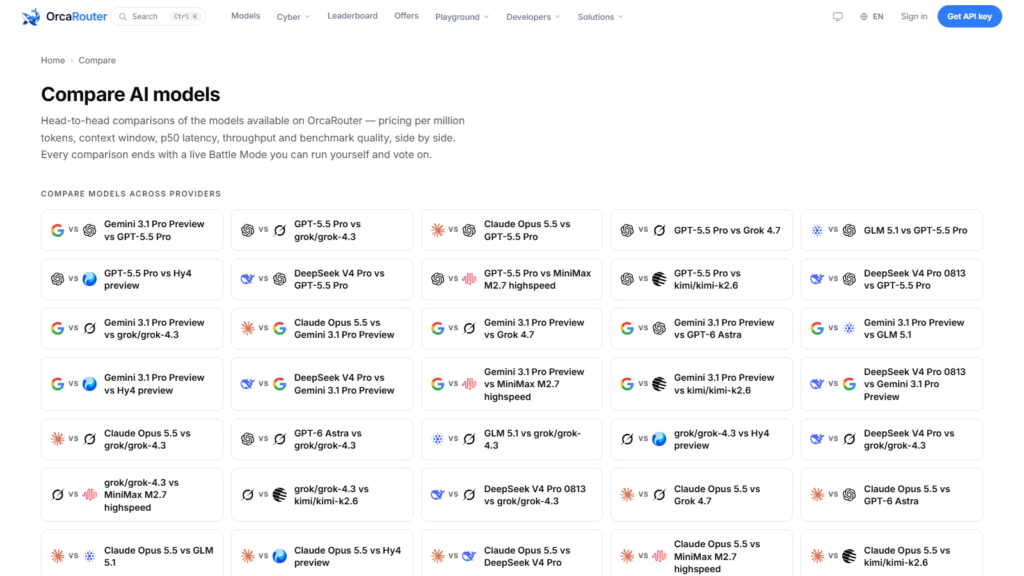
Some of the strangest rows in any model table are the ones labeled preview, because a preview is a promise with a price tag already attached. On the OrcaRouter comparison page, two rows from the same vendor tell opposite stories: the pro preview is being outrun on coding by the cheaper flash model it was meant to tower over. Scroll the llm comparison table and the exact shape of that upset is right there in the numbers.
The flash card is not just close to the pro — it is ahead of it, on the column that matters most to developers, and it charges a fraction of the price while it does it.
One vendor, two previews, two fates
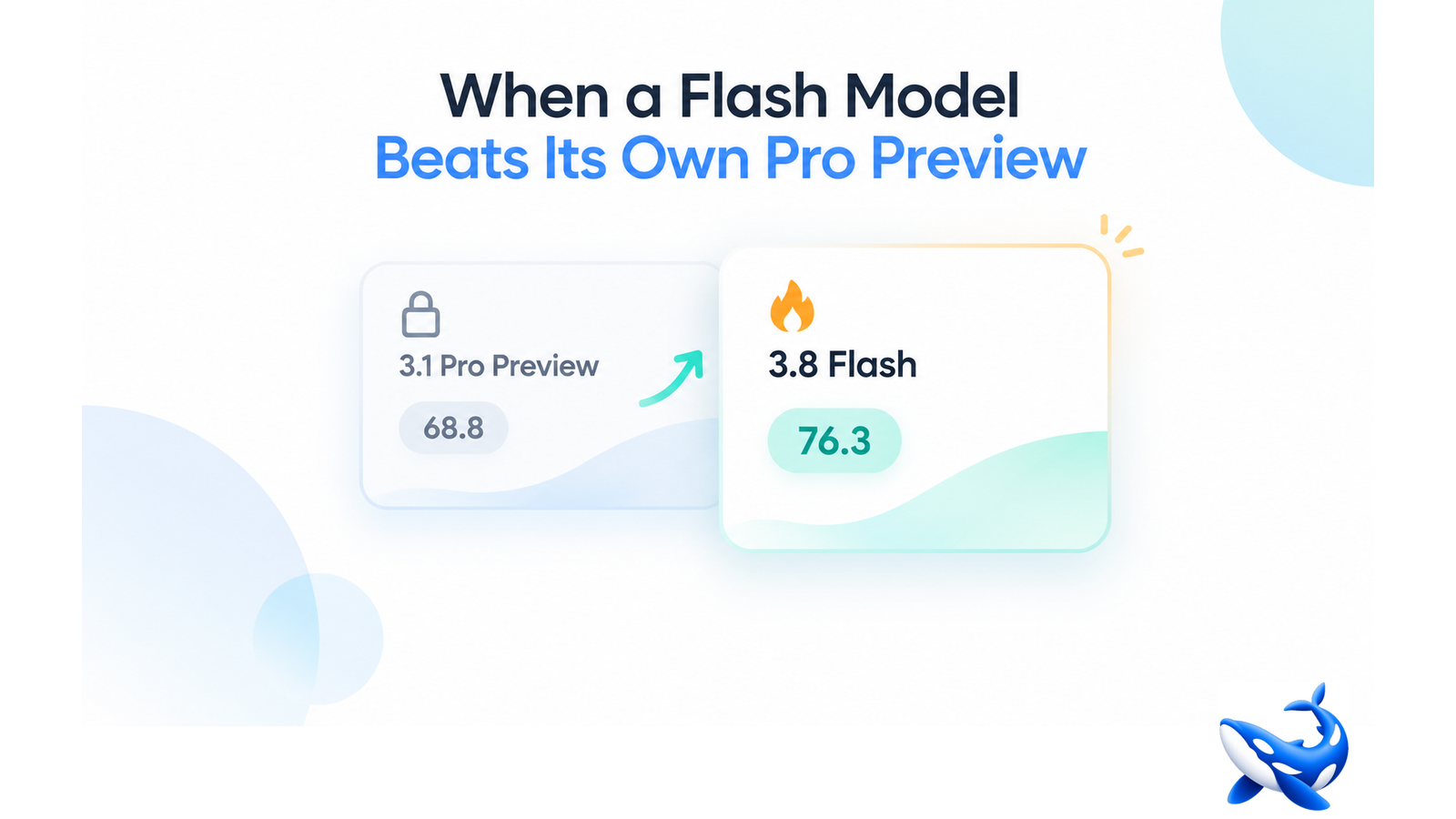
Gemini 3.1 Pro Preview is the premium row of the pair. It costs $2.00 per million input tokens and $12.00 per million output, carries a one-million-token context window, and our own composite quality score for it is a perfect 10 out of 10 — that composite is our score, built from the quality dimensions we grade each model on ourselves, not any third-party benchmark. On an independent coding index of 138 models it posts 68.8, thirtieth place.
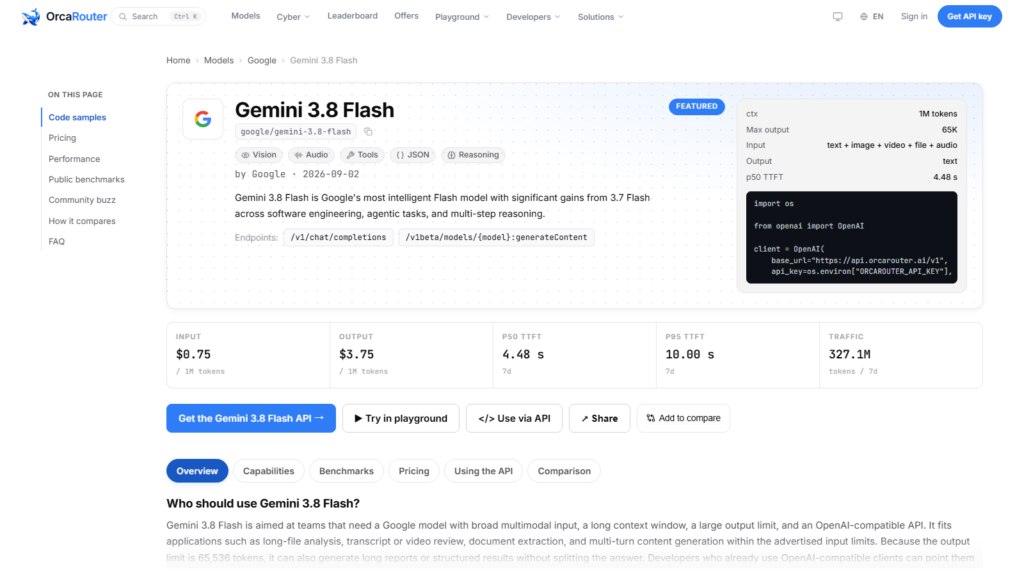
Gemini 3.8 Flash is the affordable row. It costs $0.75 per million input tokens and $3.75 per million output — less than a third of the pro preview’s input price and about a third of its output price — with the same one-million-token window and a composite quality score of 9 out of 10 on our own scale. On that same independent coding index it posts 76.3, eighth place. Same vendor, same table, opposite outcomes: the cheaper flash card outscores the more expensive pro preview by more than seven points and twenty-two places on the board.
Why the pro still costs more
The price gap is not an accident, and it is not a mistake. Gemini 3.1 Pro Preview still carries the more expensive rate card because it is positioned as the flagship row — the one that leads on reasoning, sells the enterprise story, and carries the marketing weight of a premium name. Gemini 3.8 Flash is the workhorse: built to be cheap, fast, and good enough at the everyday jobs that make up the bulk of production traffic. The two rows were aimed at different budgets on purpose, and for a long time that segmentation held together.
What changed is the scoreboard. When the affordable row posts the better coding index on the same independent board, the segmentation starts to leak. The pro preview still costs more — that part of the story has not moved — but the reason a buyer was supposed to pay that premium, superior coding ability on paper, no longer holds for anyone whose workload is mostly code. The price and the performance have quietly drifted apart.
There is a second signal in the same two rows, and it is worth reading carefully: the pro preview is also the slower one. Gemini 3.1 Pro Preview sits pinned at the 10.00 second ceiling on time-to-first-token in our production data — that is the measurement ceiling, not a genuine latency, which is exactly why it appears at the same value for nearly every model in the table. A row that lives at the ceiling tells you it frequently takes a long time to start answering, while the flash row underneath it posts a real 4.34-second p50. For interactive work, that difference is the difference between a tool that feels fast and one that feels stuck, and it costs extra to be on the slow side.
What the telemetry says about real usage
The comparison page does not stop at the index; it also shows what real traffic does with the two rows. Gemini 3.8 Flash has handled 335.5 million tokens of traffic on our side in the trailing seven days, against 42.8 million for Gemini 3.1 Pro Preview. The flash card is being run about eight times as much, and that is the market voting with actual requests, not with a scoreboard.
Part of the volume is price — at a third of the cost, more teams can afford to leave the flash card on all day. Part of it is latency: the flash model posts a 4.34-second p50 time-to-first-token in our production telemetry, well under the 10.00 seconds that pins Gemini 3.1 Pro Preview to the measurement ceiling — that value is the ceiling itself, not a real latency, and it says the pro row is frequently slow to answer while the flash row starts faster most of the time. When the cheaper card is also the faster card and the better coder, the pro preview has to win on something else entirely.
When a preview row is worth paying for
None of this means the pro preview is a bad model. Its composite quality score of 10 out of 10 on our own scale is the top of the table, its output multiplier — six times the input price — is the pricing shape of a reasoning-heavy card, and on the independent intelligence index it still has a story of its own. But the story is no longer “the most capable model from this vendor on every column.” It is “the premium row, priced for premium work, outperformed on code by its own cheaper sibling.”
The lesson generalizes beyond one vendor. A preview row is a moving target by definition: it ships, gets scored, gets compared, and sometimes gets overtaken while it is still in its preview window. When you are building a shortlist, price the row as it is today, not as its name promises tomorrow. If the cheaper flash card beats the pro preview on the index you care about, then the pro preview’s premium is paying for a label, and that is a line item you can usually trim.
There is a counter-argument worth stating plainly, because it keeps the comparison honest. The two rows are not built for identical jobs: the flash card is tuned for high-volume, cost-sensitive, everyday requests, and the pro preview is tuned for the long, reasoning-heavy calls where a coding index is only half the picture. A team that runs almost no code and spends its budget on deep analytical work should still look at the pro row first, price premium and all, because the column it needs is not the column where the flash card wins. The upset only matters for the workload where the two rows actually compete.
The takeaway
Gemini 3.1 Pro Preview costs $2.00 per million input tokens and $12.00 per million output and posts 68.8 on the coding index. Gemini 3.8 Flash costs $0.75 and $3.75 and posts 76.3 on the same index — the cheaper row is ahead by more than seven points, faster to first token in real traffic, and roughly eight times busier on seven-day volume. The pro is more expensive, and the scoreboard no longer justifies it for code-heavy work.
Buy the row for what it does today, not for the tier its name promises. A flash card that out-scores its own pro preview on the index you depend on is the better purchase for that workload, and the money you save on the difference can fund the longer, reasoning-heavy calls where the premium row still earns its keep.